

Some streets are just for getting from A to B, but others are destinations in themselves. They're arteries of culture, history, and art. Here’s a journey through ten streets around the globe that offer more than just a path to follow.
Lombard Street, San Francisco, USA
Often called the
'crookedest street in the world,' this one-block section of Lombard Street features eight sharp hairpin turns. The design was suggested in 1922 to reduce the hill's dangerously steep 27 percent grade, making it safer for vehicles. Surrounded by manicured flowerbeds and beautiful Victorian mansions, driving or walking down this brick-paved road is a quintessential San Francisco experience, offering stunning views of the city.
Abbey Road, London, UK
This otherwise quiet street in North London became a global icon thanks to The Beatles. In 1969, the band photographed their 'Abbey Road' album cover on the zebra crossing just outside their recording studio. Today, fans from all over the world make a pilgrimage to recreate the famous walk. The crossing and the adjacent Abbey Road Studios, where artists from Pink Floyd to Lady Gaga have recorded, are now culturally protected landmarks.
Champs-Élysées, Paris, France
Arguably the most famous avenue in the world, the Champs-Élysées stretches nearly two kilometres from the Place de la Concorde to the magnificent Arc de Triomphe. Its name translates to 'Elysian Fields,' a paradise for heroes in Greek mythology. Lined with luxury shops, theatres, and cafes, the avenue hosts major events like the Bastille Day military parade and the final stage of the Tour de France, embodying the grandeur and spirit of Paris.
La Rambla, Barcelona, Spain
More than just a street, La Rambla is a 1.2-kilometre-long series of boulevards that form the vibrant heart of Barcelona. A central tree-lined promenade is flanked by lanes of traffic, and it's constantly buzzing with street performers, flower stalls, and outdoor cafes. Along its path, you can explore the famous La Boqueria market, the Liceu opera house, and a mosaic by artist Joan Miró embedded in the pavement.
The Blue Streets of Chefchaouen, Morocco
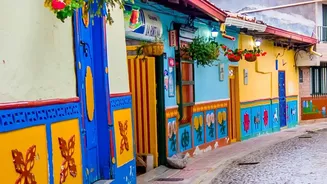
Nestled in Morocco's Rif Mountains, the entire old town, or medina, of Chefchaouen is a maze of streets washed in countless shades of blue. The most popular theory is that Jewish refugees who settled here in the 15th century and 1930s introduced the colour to symbolise the sky and heaven. Other theories suggest it repels mosquitoes or keeps buildings cool. Whatever the reason, wandering through this serene 'Blue Pearl' is a magical experience.
Shibuya Crossing, Tokyo, Japan
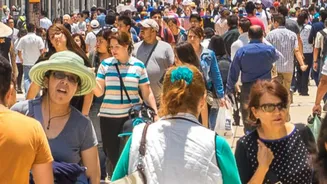
It's the world's busiest pedestrian crossing, and a sight to behold. When the traffic lights turn red, they all turn red at once, and a flood of people—sometimes up to 2,500 at a time—surges into the intersection from all directions. This 'scramble' has become a symbol of modern, fast-paced Tokyo. Surrounded by giant video screens and neon lights, the crossing is an unforgettable spectacle of organised chaos.
Hosier Lane, Melbourne, Australia
This bluestone laneway in Melbourne's city centre is a world-renowned gallery for street art. Since the late 1990s, its walls, windows, and even bins have been covered in an ever-changing tapestry of stencils, murals, and paste-ups from local and international artists. As a 'free-to-paint' area, the artwork is constantly evolving, making every visit a new discovery of colour and creativity.
The Dark Hedges, Northern Ireland
This enchanting avenue of beech trees was planted by the Stuart family in the 18th century to impress visitors approaching their Georgian mansion. Over two centuries, the branches have grown across the road, creating a hauntingly beautiful natural tunnel. Its fame skyrocketed after being featured as the Kingsroad in the TV series 'Game of Thrones'. The road is now pedestrianised to protect the ancient trees.
Via dei Fori Imperiali, Rome, Italy
Walking down this street is like taking a stroll through history. The Via dei Fori Imperiali, or 'Road of the Imperial Forums,' cuts directly through the heart of ancient Rome. It connects the Colosseum to Piazza Venezia, flanked on both sides by the ruins of the most important forums of the Roman Empire, including those of Caesar and Augustus. The road itself was constructed under the orders of Benito Mussolini in the 1930s, offering unparalleled views of Rome’s monumental past.
Acorn Street, Boston, USA
Often called the most photographed street in America, Acorn Street offers a charming glimpse into colonial Boston. Located in the historic Beacon Hill neighbourhood, this narrow lane is paved with original cobblestones from the 1820s and lined with Federal-style brick row houses. It was originally home to artisans and servants who worked in the grander mansions nearby. Its perfectly preserved 19th-century character makes it feel like stepping back in time.