






Why the Monsoon is a High-Risk Season
The rainy season's defining features—high humidity and warm temperatures—create the perfect storm for microbial growth. Bacteria and fungi thrive in these conditions, causing food to spoil much faster than in drier months. The Food Safety and Standards
Authority of India (FSSAI) regularly issues advisories during this period because the risk of foodborne illnesses like diarrhoea, typhoid, and cholera increases significantly. Every time you open your refrigerator, you let in warm, moist air, which can lead to condensation inside and make even refrigerated food vulnerable to spoilage. This makes understanding the science of food safety more important than ever.
The Golden Rules of Refrigeration
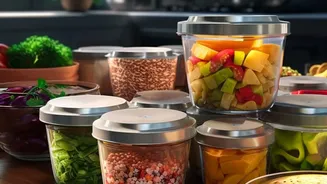
Your refrigerator is your first line of defence, but only if used correctly. The key is to minimise the time food spends in the 'danger zone'—the temperature range between 5°C and 60°C where bacteria multiply rapidly. First, follow the 'two-hour rule': never leave cooked food at room temperature for more than two hours. Transfer perishable items like dal, curries, milk, and paneer into airtight containers and refrigerate them promptly. Letting food cool completely to room temperature before refrigerating is a good practice to prevent condensation buildup inside containers, which accelerates spoilage. It is also recommended to store food in glass or steel containers and ensure your fridge has enough space for air to circulate properly, maintaining a consistent temperature.
Reheating for Absolute Safety
Reheating leftovers is not just about making them palatable; it's a critical safety step to kill any bacteria that may have developed during storage. Simply warming the food is not enough. Health authorities recommend heating leftovers to an internal temperature of at least 75°C (165°F). For gravies, soups, and dals, this means bringing them to a full, rolling boil for at least a minute. If you're using a microwave, ensure the food is steaming hot throughout by stirring it midway to eliminate cold spots where bacteria can survive. Crucially, you should only reheat the portion you plan to eat. Repeatedly cooling and reheating the same dish degrades its nutritional value and increases the chances of contamination.
Handling Specific Indian Foods
Different foods have different shelf lives, especially during the monsoon. Cooked dal and rice, staples in most Indian homes, should ideally be consumed within 18 to 24 hours of refrigeration. Dry sabzis (like those made with potatoes or beans) can last slightly longer, up to 36 hours. It's wise to be extra cautious with dairy products like paneer and curd. Always store them in clean, airtight containers and consume them quickly. When it comes to pantry staples like atta, rice, and dals, protect them from the damp air by storing them in airtight containers, perhaps with a few bay leaves to ward off pests.
Surviving a Monsoon Power Cut
Power outages are a common frustration during the rainy season, and they can wreak havoc on your food supplies. To prepare, keep your refrigerator and freezer doors closed as much as possible to retain cold air. A closed refrigerator can keep food safe for about four hours. A full freezer will hold its temperature for about 48 hours, while a half-full one will last about 24 hours. If you have advance warning, freeze containers of water to act as ice packs. After the power returns, check your food. You cannot rely on smell or appearance alone. Any perishable food that has been above 5°C for more than two hours should be discarded. However, if frozen food still contains ice crystals or has remained at 4°C or below, it is safe to cook or refreeze.