






The Challenge: Water Scarcity and Costly Energy
For generations, farmers in Maharashtra have contended with the dual pressures of unpredictable monsoons and fluctuating energy supplies. Many agricultural regions, particularly in Marathwada and Vidarbha, are drought-prone, making water a precious resource.
Traditionally, farmers have relied on electric or diesel pumps to draw groundwater for irrigation. However, grid electricity is often unreliable, especially in remote areas, and the rising cost of diesel places a heavy financial burden on farmers. This dependency not only squeezes profit margins but also contributes significantly to carbon emissions through the burning of fossil fuels and the use of a coal-heavy electricity grid.
The Solution: A Solar-Powered Shift
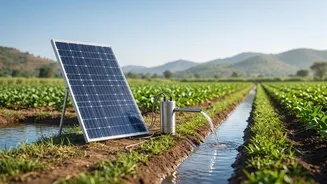
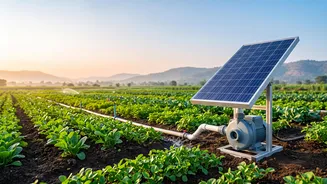
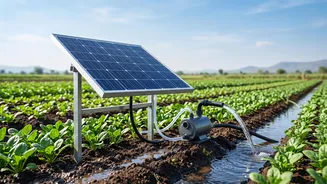
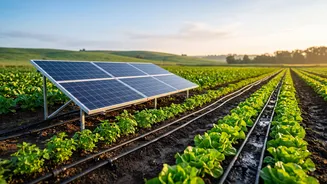
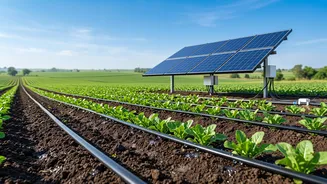
Solar drip irrigation infrastructure offers a powerful alternative. The system combines two effective technologies: solar panels that generate electricity from sunlight and drip irrigation networks that deliver water directly to the roots of plants. Solar panels power a water pump, which draws water from a well, borewell, or pond. This water is then distributed through a network of pipes and emitters, providing a slow, steady supply that minimizes evaporation and wastage. By providing a reliable, daytime source of energy that aligns perfectly with peak irrigation needs, this technology frees farmers from dependence on erratic grid power and expensive diesel fuel.
Slashing the Carbon Footprint
The primary environmental benefit comes from replacing fossil fuel-based energy sources. Every solar pump that replaces a diesel one eliminates the direct emission of carbon dioxide, nitrogen oxides, and particulate matter. For pumps connected to the grid, switching to solar reduces the demand on power plants, which in India are predominantly coal-fired. Studies show that a highly utilized solar pump can reduce life cycle CO2-equivalent emissions by over 90% compared to a diesel alternative. Across India, the total annual carbon emission from groundwater pumping is estimated to be between 45 and 62 million metric tons. The widespread adoption of solar pumps is a key strategy for significantly lowering this figure and helping India meet its climate goals.
Economic and Agricultural Gains
For farmers, the benefits extend far beyond environmental stewardship. The combination of solar power and drip irrigation is a formula for greater efficiency and profitability. Drip systems can reduce water consumption by 30-70% compared to traditional flood irrigation, a crucial advantage in water-scarce regions. With reliable, zero-cost energy during the day, farmers can ensure their crops get water when needed, leading to higher yields and better crop quality. This newfound stability allows them to diversify into cash crops like fruits and vegetables, which require precise watering. In villages like Tulyachapada in Palghar district, the introduction of shared solar pumps has turned single-crop farmers into year-round cultivators, boosting incomes and reducing the need for seasonal migration to cities for work.
Government Support and the Path Forward
The transition is being actively supported by government initiatives. The Pradhan Mantri Kisan Urja Suraksha evam Utthaan Mahabhiyan (PM-KUSUM) scheme is a central pillar of this effort, providing significant subsidies to help farmers cover the initial installation cost of standalone solar pumps. Maharashtra has emerged as a leader in the adoption of this scheme. While the upfront investment can still be a hurdle for small and marginal farmers, the long-term savings on diesel and electricity bills make it a financially sound decision. As technology becomes more accessible and awareness grows, this sustainable model of farming holds the promise of transforming India's agricultural landscape, making it more resilient, profitable, and climate-friendly.