
A Royal Legacy Over 400 Years Strong
Mysuru Dasara, or 'Nadahabba' (state festival), is not a modern invention but a tradition with roots stretching back to the 15th-century Vijayanagara Empire. It was formally established on a grand scale by the Wadiyar dynasty in 1610, making it a celebration
with over four centuries of recorded history. This deep historical context is the festival's foundation. It commemorates the victory of Goddess Chamundeshwari over the demon Mahishasura, a legend that gives the city its very name. Unlike many events, Dasara in Mysuru is inextricably linked to the city's identity and royal past, with the Wadiyar family still performing private rituals that continue the ancient traditions. This unbroken lineage gives the festival an authenticity that cannot be manufactured.
More Than a Single Event
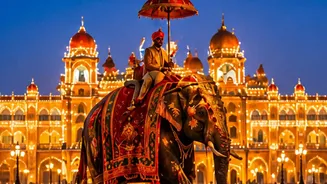
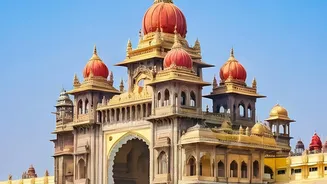
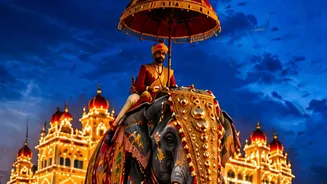
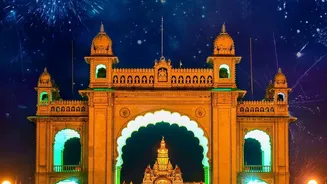
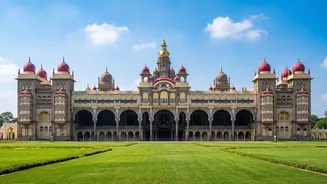
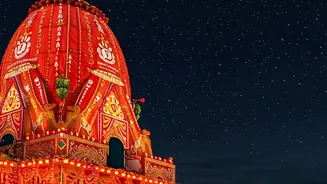
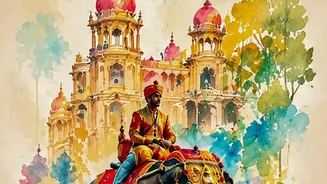
What elevates Mysuru Dasara from a simple observance to a travel destination is its sheer variety. The ten-day festival is a meticulously curated collection of events that cater to every interest. The most famous is the 'Jamboo Savari', a grand procession on Vijayadashami day featuring decorated elephants, with one carrying the idol of Goddess Chamundeshwari in a 750-kg golden howdah. But the experience starts long before that. The entire city becomes a stage. The magnificent Mysore Palace is illuminated by nearly 100,000 bulbs every evening, creating a breathtaking backdrop for cultural programmes featuring artists from across India. Beyond the palace, the city hosts a Dasara Exhibition that runs for months, a food festival ('Aahara Mela'), film festivals, wrestling competitions, and even a Yuva Dasara for the youth with contemporary music acts.
An Entire City Geared for Tourism
A festival's success as a travel experience hinges on infrastructure, and Mysuru excels here. The city understands it is hosting not just a festival, but tens of thousands of visitors. During Dasara, the state government and local bodies work in tandem. Special transport services are rolled out, with the Karnataka State Road Transport Corporation (KSRTC) running additional buses to handle the influx. Hotels report near-full occupancy weeks in advance, indicating a thriving hospitality sector that is well-prepared for the rush. Information is streamlined for tourists, with clear schedules for events like the palace illumination and the final day's Torchlight Parade. This level of organisation ensures that visitors can focus on the experience rather than logistical nightmares, a crucial factor in successful tourism.
A Blueprint for Other Festivals
Mysuru Dasara offers a powerful blueprint for how other regional festivals in India can be scaled into global cultural attractions. The first lesson is to embrace and amplify local history; Dasara's power comes from its deep connection to the Wadiyar dynasty and the city's foundational myths. Second is diversification. By creating a wide array of events—from the spiritual and traditional (palace rituals) to the modern and entertaining (Yuva Dasara, food festivals)—it broadens its appeal to families, youth, and international tourists alike. Finally, it demonstrates the importance of public-private partnership. The collaboration between the state government, the royal family, and local businesses creates a seamless experience that benefits the entire region's economy, from large hotels to small traders. Reports have shown the 10-day festivities can generate significant revenue, boosting the local economy after periods of slowdown.