



The Battery Price Barrier
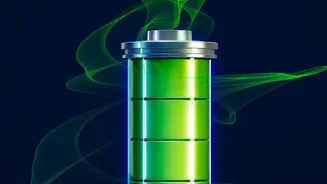
For years, the single biggest obstacle to affordable electric vehicles (EVs) has been the battery. It’s the heart of the car, but also the most expensive component, accounting for anywhere from 30% to 40% of the vehicle's total cost. This is why even
a modest electric hatchback could cost significantly more than its petrol-powered equivalent. The journey to bring down this cost has been a long one. A decade and a half ago, the price of a lithium-ion battery pack was astronomical, making mass-market EVs an impossibility. However, thanks to incredible advancements in manufacturing and economies of scale, battery pack costs have plummeted by over 85% in the last 15 years. This dramatic drop laid the groundwork, but the final push towards true affordability is coming from the core ingredients themselves.
The Volatile World of Raw Materials
An EV battery is a complex cocktail of minerals. The most well-known are lithium, cobalt, and nickel. The prices of these materials are notoriously volatile, subject to global demand, mining capacity, and geopolitical tensions. Between 2020 and 2022, a surge in EV demand caused prices for materials like lithium to skyrocket, a phenomenon some called "greenflation". This temporarily reversed the trend of falling battery costs and raised concerns that EVs would remain a premium product. However, as new mining and refining capacities have come online, prices for these key metals have cooled significantly from their peaks. This downturn in the commodity markets is a crucial factor, as raw materials can make up over half the cost of a finished battery. Analysts predict that falling raw material prices alone could account for a significant portion of battery cost reduction in the coming years.
A Shift in Chemistry
Beyond just cheaper ingredients, automakers are embracing smarter recipes. For years, the dominant battery chemistry was Nickel-Manganese-Cobalt (NMC), which offered high energy density, meaning more range. But its reliance on expensive and ethically fraught cobalt was a problem. The new champion of affordable EVs is Lithium Iron Phosphate (LFP) chemistry. LFP batteries don't require any cobalt or nickel, making them inherently cheaper to produce. While they are slightly less energy-dense, they are incredibly safe and offer a very long lifespan, making them perfect for entry-level and mid-range cars where a 300-400 km range is more than sufficient. The market is shifting rapidly, with LFP’s share predicted to grow substantially as it becomes the default choice for cost-effective models. This change alone is a massive step towards making EVs accessible to a wider audience.
The Sodium-Ion Revolution
An even more radical cost-cutting innovation is on the horizon: sodium-ion batteries. This technology completely eliminates the need for lithium, another expensive and geographically concentrated material. Instead, it uses sodium, which is one of the most abundant and cheapest elements on Earth. Global battery giants are already rolling out their first-generation sodium-ion batteries, which promise to be materially cheaper than even LFP cells. While they currently offer lower energy density, making them suitable for smaller city cars and two-wheelers initially, the technology is improving rapidly. For the Indian market, which is dominated by smaller vehicles and shorter commutes, sodium-ion technology could be a game-changer, potentially slashing the entry price for a new electric car.
The Indian Context
These global trends are converging to create a massive opportunity in India. The Indian EV market is already experiencing explosive growth, driven by government incentives, rising fuel prices, and a greater variety of models. Electric two-wheeler and three-wheeler segments are leading the charge, but the passenger car segment is also picking up pace. Carmakers are increasingly focusing on localized production and developing India-specific platforms to bring down costs. The availability of cheaper LFP and, eventually, sodium-ion batteries will allow manufacturers to finally crack the sub-₹10 lakh price point for a family car, a critical barrier in the Indian market. As battery costs continue to fall, analysts expect EVs to reach price parity with petrol cars—without subsidies—in the near future, accelerating mass adoption.