






What is the Gaganyaan Mission?
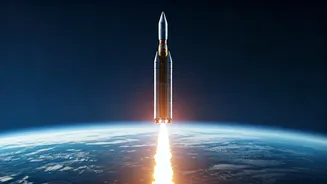
Gaganyaan, which translates from Sanskrit as "sky vehicle," is the Indian Space Research Organisation's (ISRO) ambitious endeavour to demonstrate the capability for human spaceflight. [3] The core objective is to launch a crew of up to three astronauts
into a Low Earth Orbit (LEO) of 400 kilometres for a three-day mission and bring them back safely to Earth, with a planned splashdown in the Indian Ocean. [3, 13] A successful mission would make India only the fourth nation in the world—after the United States, Russia, and China—to have an independent human spaceflight capability. [3, 7] The programme involves a series of uncrewed test flights leading up to the main crewed launch, which is currently planned for 2027. [10, 12, 15]
The Astronauts: India's Chosen Four
In February 2024, the nation was introduced to the four astronaut-candidates selected for this historic mission. [13] All distinguished test pilots from the Indian Air Force, they are Group Captains Prashanth Balakrishnan Nair, Ajit Krishnan, and Angad Pratap, and Wing Commander Shubhanshu Shukla. [5, 6] These candidates have undergone a rigorous selection process and extensive training, including a 13-month programme at Russia's Yuri Gagarin Cosmonaut Training Center. [2, 6] Further preparation has continued at ISRO's own Astronaut Training Facility in Bengaluru. [6] As part of the extensive preparation, Group Captain Shubhanshu Shukla also flew to the International Space Station (ISS) in mid-2025 as part of the Axiom-4 mission to conduct microgravity experiments, gaining invaluable firsthand experience. [11, 24]
The Path to Launch: Milestones and Technology
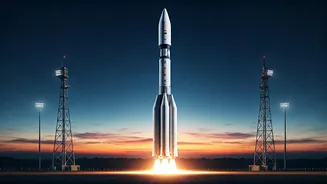
The journey to sending humans to space is paved with meticulous testing and technological development. The Gaganyaan programme includes several uncrewed test flights to validate every system. [4, 25] The first uncrewed flight, G1, is scheduled for the second half of 2026 and will carry a humanoid robot named Vyommitra. [17, 21] Vyommitra, meaning "space friend," is designed to simulate human functions, monitor module parameters, and interact with the life support systems, providing crucial data before astronauts are on board. [5, 8] ISRO has been systematically testing critical components, including the human-rated launch vehicle (HLVM3), crew escape systems, and a complex 10-parachute system designed for a safe and smooth landing. [18, 20]
More Than Just a Flight
The significance of Gaganyaan extends far beyond the prestige of joining an exclusive club of spacefaring nations. The mission is a powerful catalyst for scientific and industrial growth within India. [7] It is expected to create around 15,000 new employment opportunities and will see an estimated 60% of its equipment sourced from the Indian private sector, boosting domestic industries. [7] Furthermore, mastering human spaceflight opens doors to future international collaborations, potentially including participation in global space station development. [4] It lays the foundation for even more ambitious goals, such as the Bharatiya Antariksh Station (BAS), India's own planned space station, with its first module targeted for a 2028 launch. [9, 22] This capability is also a stepping stone for future lunar sample return missions like Chandrayaan-4. [21]