






A Land of Hills and Rivers
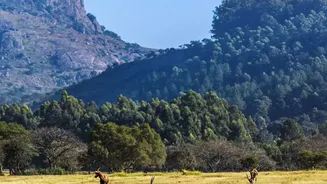
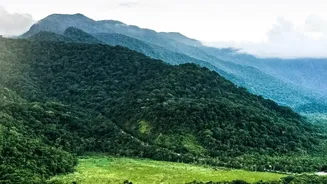
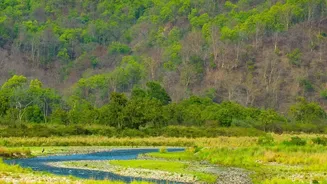
Covering just over 192 square kilometres in Gujarat's Saurashtra region, Barda Wildlife Sanctuary is a compact but ecologically vital area. Its terrain is a mix of undulating hills, steep slopes, and rocky outcrops, with elevations ranging from about
80 to over 600 metres. This hilly landscape, which was once the private hunting reserve for the royal families of Porbandar and Jamnagar, acts as a natural barrier against salinity creeping in from the nearby coast. Two main rivers, the Bileshvary and Joghri, flow through the sanctuary, feeding its diverse ecosystems and filling crucial reservoirs that sustain its wildlife.
A Rich Floral Tapestry
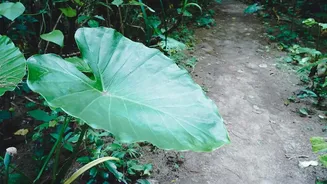
Barda is celebrated for having one of the highest levels of floral diversity in Gujarat, with records showing over 650 species of flowering plants. The sanctuary's vegetation is a mosaic of different forest types, primarily southern dry mixed deciduous and northern tropical thorn forests. Visitors will find dense patches of dry deciduous scrub, Euphorbia scrub, and even dry bamboo brakes in some areas. Key tree species include Gorad, Babul, Dhav, Jamun, and Rayan. This rich plant life doesn't just define the landscape; it also includes a significant number of medicinal plants, making Barda a natural pharmacy of immense value.
Diverse Habitats and Their Inhabitants
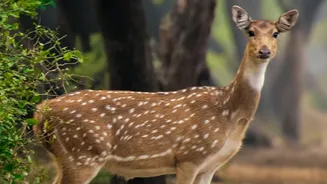
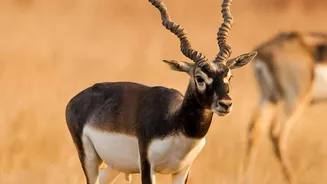
The varied landscape creates several distinct habitats. The forested hills provide cover for leopards, striped hyenas, and jackals, while the grasslands and scrublands are home to herbivores like bluebull (nilgai) and wild boar. The sanctuary supports a remarkable array of fauna, including 22 mammal species, nearly 270 bird species, and dozens of reptiles and butterflies. Birdwatchers can spot rare species like the crested hawk-eagle and spotted eagle. While historically home to animals like sambar and chital (spotted deer), local extinctions occurred in the past. However, efforts are now underway to reintroduce these species to strengthen the prey base.
The Second Home for an Icon
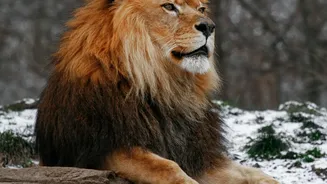
Perhaps the most significant ecological story of Barda today is its emergence as a second home for the Asiatic lion. For decades, the world's entire wild population of these lions was confined to the Gir landscape, making them vulnerable to disease or other catastrophes. The 'Gir-Barda Project' was initiated as far back as 1979 to prepare the sanctuary as an alternative habitat. This vision became a reality in January 2023 when a male lion naturally dispersed from Gir to Barda. Following this, forest officials introduced several females to establish a new breeding population. Studies show the habitat is highly suitable, with the lions primarily preying on wild pigs and, to a lesser extent, domestic cattle.
Conservation and the Future
The successful return of lions to Barda after 144 years is a landmark conservation achievement. As of mid-2025, the population had already grown to include adults and cubs. To support this growing population, conservation efforts are focused on enhancing the prey base by reintroducing species like spotted deer. The government is also working on a scheme to voluntarily relocate local pastoralist communities, known as 'maldharis', from within the sanctuary to reduce human-wildlife conflict and biotic pressure on the forest. These efforts are solidifying Barda's role not just as a thriving ecosystem, but as a critical stronghold for the future of the Asiatic lion.