






The Last Stand of the Asiatic Lion
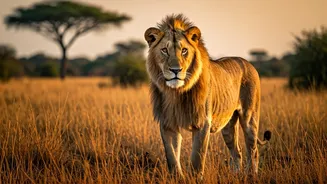
Once roaming across Western Asia, the magnificent Asiatic lion now finds its only wild home in Gujarat's Gir National Park. This conservation success story has seen the lion population rebound from a perilous few dozen to over 600. A safari in Gir offers
the unparalleled thrill of seeing these social cats in their natural habitat, a landscape of dry deciduous forests and scrubland. Unlike their African cousins, Asiatic lions have a distinctive longitudinal fold of skin on their belly and slightly smaller manes on the males. The best time to visit is between December and March, when the weather is cooler and sightings are more frequent as the lions prowl at dawn and dusk.
The Armoured Giant of Assam
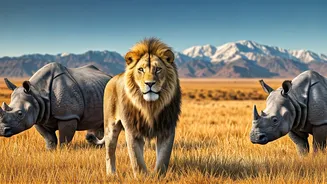
In the lush grasslands and wetlands of Assam’s Kaziranga National Park, the great one-horned rhinoceros thrives. This UNESCO World Heritage Site hosts the world's largest population of these prehistoric-looking giants, accounting for about two-thirds of the global total. A visit to Kaziranga is practically a guarantee for a rhino sighting. Exploring the park via a jeep or an early morning elephant-back safari offers incredible proximity to these herbivores as they graze in the tall elephant grass or wallow in muddy pools. The park, open from November to April, is a testament to one of India's most successful conservation efforts.
The Ghost of the Mountains
High in the formidable Himalayas of Ladakh and Spiti resides the snow leopard, one of the most elusive and sought-after sightings in the animal kingdom. Known as the 'grey ghost', its smoky-grey coat with dark rosettes provides perfect camouflage against the rugged, rocky terrain. Spotting this solitary predator requires patience, expert guides, and a journey into some of the world's most breathtaking landscapes, often at altitudes above 3,000 meters. Winter, from November to March, is the best time for an expedition, as the leopards follow their prey, like the blue sheep (bharal), down to lower, more accessible altitudes.
The Adorable Himalayan Native
Venture into the Eastern Himalayas, specifically Singalila National Park in West Bengal, to find the charming and endangered red panda. This small, arboreal mammal, with its fiery fur and long, bushy tail, is not a bear but belongs to its own unique family. Red pandas spend most of their lives in trees, munching on bamboo in the misty, high-altitude forests. A trek through Singalila's rhododendron and bamboo groves, especially with local guides, offers the best chance to spot this shy creature, which is most active at dawn and dusk. The experience is a blend of rewarding trekking and the thrill of seeking out one of the forest's most secretive residents.
The Shaggy Sloth Bear of the Deccan
Near the ancient ruins of Hampi in Karnataka lies a sanctuary dedicated to a truly unique Indian animal: the sloth bear. The Daroji Sloth Bear Sanctuary, the first of its kind in Asia, protects these shaggy, nocturnal creatures in their natural habitat of rocky hillocks and scrub forests. With a population of around 150 bears, the sanctuary offers excellent viewing opportunities from watchtowers, especially in the evenings when the bears are most active. Known for their love of termites and honey, these bears were the inspiration for Baloo in Rudyard Kipling's "The Jungle Book." A visit, best between October and March, provides a fascinating glimpse into the life of this distinct species.