




The Ultimate Deep Freeze
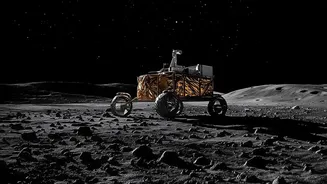
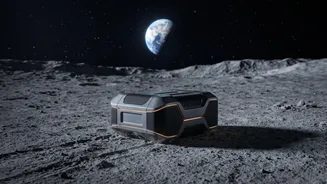
Imagine a night that lasts for 14 Earth days, where temperatures drop to an unimaginable -173° Celsius, and in some permanently shadowed regions, as low as -250°C. This is the reality of the lunar night. Without an atmosphere to hold onto heat, the Moon’s
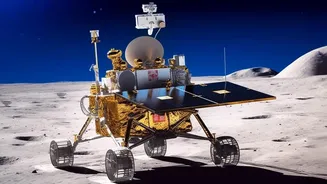
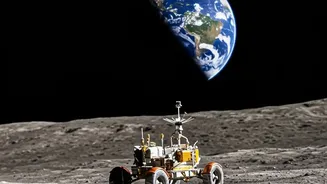
surface rapidly radiates its warmth into space, creating one of the most hostile environments in the solar system for any machine. For a lunar rover, this isn't just an inconvenience; it's a life-or-death struggle. Batteries lose their ability to hold a charge in the extreme cold, sensitive computer chips can crack, and lubricants can freeze solid, immobilizing the vehicle forever. This challenge has historically limited the lifespan and scope of lunar missions, often confining them to a single lunar day.
The Old Way: A Nuclear Heartbeat
For decades, the primary solution for surviving this deep freeze has been the Radioisotope Heater Unit, or RHU. These small but powerful devices are the unsung heroes of many deep space missions. They work by harnessing the natural heat produced by the radioactive decay of a plutonium-238 pellet. An RHU provides a constant, reliable source of warmth, independent of sunlight, keeping a rover's core components from freezing solid. While effective, RHUs have significant drawbacks. The radioactive material they rely on is expensive, scarce, and presents political and logistical challenges for mission approval. Furthermore, they are always 'on', meaning engineers must also design complex cooling systems to prevent the rover from overheating during the scorching 127°C lunar day. It’s a bit like having a heater you can't turn off, forcing you to run the air conditioning at the same time.
A Breakthrough in Thermal Control
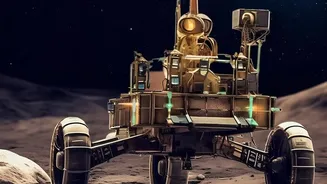
The latest innovations move beyond the brute-force approach of RHUs, focusing instead on smarter, more adaptive thermal management. The headline-making technology isn't a single 'self-heating module' but a suite of advanced 'heat-switch' devices. One promising technology, developed by researchers at Nagoya University in Japan, combines a Loop Heat Pipe (LHP) with an electrohydrodynamic (EHD) pump. Think of it as a highly advanced, switchable refrigerator for the rover. During the hot lunar day, the LHP passively circulates a refrigerant to carry heat away from the electronics and radiate it into space. But the real magic happens at night. The EHD pump uses a tiny amount of electricity to create an electric field that stops the flow of the refrigerant, effectively turning the cooling system into a high-tech insulator and trapping the electronics' own operational heat inside.
Smarter, Not Just Warmer
This 'heat-switch' concept is a game-changer because it addresses both of the Moon's temperature extremes with minimal energy use. By actively managing heat flow—dissipating it during the day and containing it at night—these systems allow rovers to survive without relying solely on power-hungry heaters or radioactive sources. Other related technologies include flexible PTC (Positive Temperature Coefficient) heaters that are thin, durable, and self-regulating, providing warmth exactly where needed with low voltage. Companies like Advanced Cooling Technologies are creating entire 'toolboxes' of thermal devices, including variable conductance heat pipes that act as passive switches, automatically shutting down heat loss as temperatures drop. These systems are lighter, cheaper, and more flexible than their nuclear predecessors, opening the door for a new class of long-duration missions.
The Dawn of a New Lunar Era
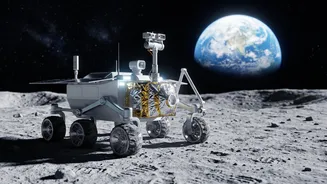
The ability to reliably survive the lunar night is more than an engineering milestone; it is the key to unlocking the Moon's full potential. With rovers that can operate for months or even years, space agencies can conduct long-term scientific studies, mapping resources over vast areas. This is especially critical for exploring the permanently shadowed craters at the lunar south pole, which are believed to hold vast quantities of water ice—a vital resource for future human bases. Missions like NASA's upcoming VIPER rover are built around this kind of advanced thermal technology. For India's ambitious Chandrayaan program and the global pursuit of a sustained lunar presence, this technology means the difference between a short visit and setting up a permanent foothold on another world. It enables a future of mining, long-term science, and perhaps one day, a true lunar settlement.