



An Eye in the Sky for Every Farm
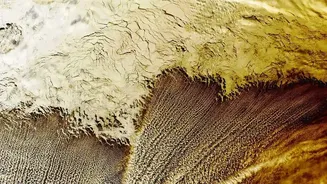
For centuries, farming has been a hands-on profession, relying on a farmer's experience and a close watch over their fields. Today, that ground-level view is being enhanced by a perspective from space. Satellite technology, once the domain of spies and scientists,
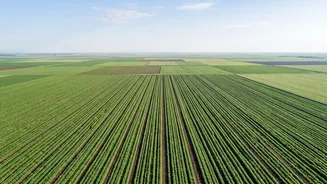
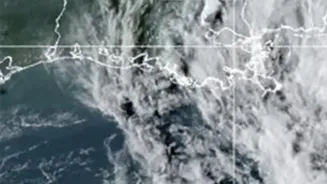
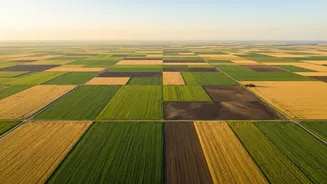
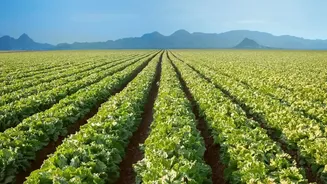
is now a cornerstone of modern precision agriculture. This approach uses data to make farming more accurate and efficient. Satellites equipped with advanced sensors orbit the Earth, continuously capturing detailed information about croplands. This allows farmers and agronomists to monitor vast areas remotely, moving agriculture from a reactive practice to a proactive, data-driven one. Instead of walking every row, a farmer can now get a comprehensive health report for their entire farm delivered to a screen, enabling smarter decisions that save time and resources.
Seeing the Unseen: The Science of Plant Health
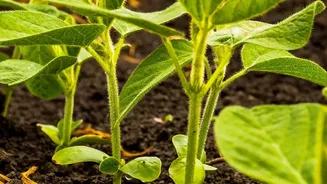
So, how can a satellite tell if a plant is healthy? The answer lies in how plants reflect light. Healthy, thriving vegetation is rich in chlorophyll, the pigment that drives photosynthesis. Chlorophyll is very good at absorbing visible red light but reflects near-infrared (NIR) light, a spectrum invisible to the human eye. Stressed or unhealthy plants, on the other hand, reflect less NIR light. Satellites carry sensors that measure the intensity of both red and NIR light reflecting off the Earth's surface. By comparing these two values, scientists calculate what is known as the Normalized Difference Vegetation Index, or NDVI. Think of NDVI as a greenness score; high values indicate dense, healthy vegetation, while low values can signal stress from drought, nutrient deficiency, or disease, often before a farmer could spot the problem with the naked eye.
From Data to Actionable Insights
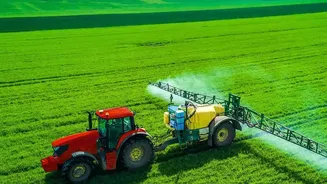
Receiving a map covered in different colours is one thing, but the real power of satellite data is turning it into action. These NDVI maps allow farmers to practise precision agriculture, treating different parts of a field according to their specific needs rather than applying water and fertiliser uniformly. An area with low NDVI might alert a farmer to an irrigation leak, a pest infestation, or a nutrient shortage in a specific zone. This allows for targeted interventions, such as applying fertiliser only where it's needed, which reduces waste, lowers costs, and minimises environmental runoff. Furthermore, by tracking NDVI values over an entire season, farmers can monitor growth stages, predict crop yields with greater accuracy, and create a historical record to compare performance year after year.
A Game-Changer for Indian Agriculture
In a nation like India, where croplands cover over half the land and the sector employs hundreds of millions, this technology is particularly transformative. Many farms are small, making field-by-field manual assessment at a national scale nearly impossible. Satellite remote sensing bypasses this challenge, providing a crucial vantage point for monitoring agriculture across the country. Indian organisations like ISRO are playing a key role, integrating satellite data with AI to provide everything from crop forecasts to drought monitoring. This helps improve food security planning and informs policy decisions. For individual farmers, platforms like AgriBhumi are making this satellite intelligence accessible, helping to verify land boundaries, monitor crop development, and even support applications for agricultural loans by providing objective, data-backed evidence of a farm's health and potential.
The Future of Farming Is Data-Driven
The evolution of this technology is far from over. The integration of high-resolution satellite imagery with other technologies like drones, ground-based soil sensors, and artificial intelligence is creating an even more powerful toolkit for farmers. AI algorithms can analyse years of satellite data to identify patterns and predict issues with incredible accuracy. As these tools become more accessible and affordable, they promise to empower even small-scale farmers with the kind of analytical power once reserved for large agricultural corporations. This shift towards data-driven practices is not just about boosting efficiency; it's about building a more sustainable and resilient agricultural system capable of feeding a growing global population.