



A New Science for an Old Question
Astrobiology is the study of the origin, evolution, and distribution of life in the universe. It’s a field built on the premise that life might exist elsewhere and that understanding our own origins can guide the search. To tackle this enormous question,
astrobiology brings together experts from different fields, treating the search for life not as a single problem, but as a complex puzzle. Each discipline provides a crucial piece, from locating distant worlds to deciphering the fundamental chemical recipes of life.
Astronomy: The Cosmic Mapmakers
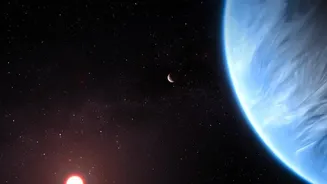
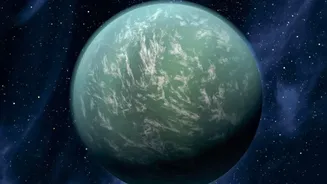
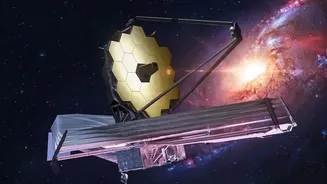
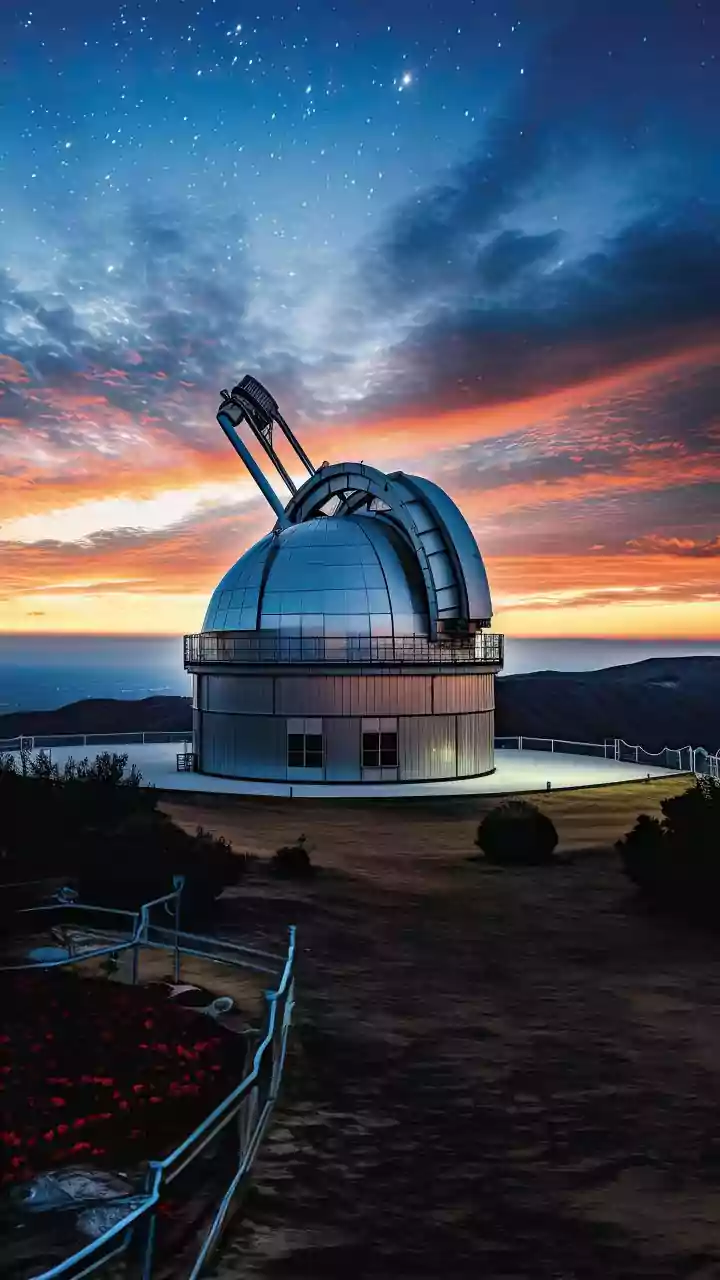
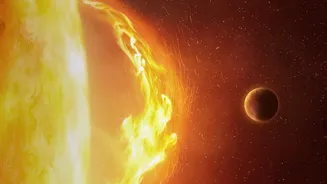
The first step in finding life is finding somewhere for it to live. This is astronomy’s primary role. Astronomers use powerful telescopes to discover exoplanets—plantes orbiting stars other than our Sun. Their work goes beyond just spotting them; they identify planets within the 'habitable zone', the not-too-hot, not-too-cold region where liquid water could exist on a planet's surface. Furthermore, by analyzing the light that passes through an exoplanet's atmosphere, astronomers can hunt for 'biosignatures'—gases like oxygen or methane that could indicate biological processes at work. Essentially, astronomers create the list of potential candidates for further investigation.
Geology: Reading a Planet’s Story
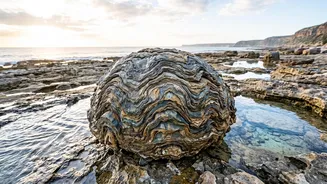
Once a potentially habitable world is found, geologists step in to understand its context. Geology is crucial for assessing whether a planet truly is, or ever was, habitable. By studying Earth's geology, scientists learn how planetary processes like volcanism and plate tectonics contribute to a stable climate and cycle the elements necessary for life. Geologists apply this knowledge to other worlds, like Mars, to reconstruct their past environments and identify locations, such as ancient lakebeds or hydrothermal vents, where life could have thrived. They also study how fossils are preserved on Earth to better understand what kinds of microbial biosignatures might be found locked within the rocks of another planet.
Chemistry: The Recipe for Life
While astronomy finds the location and geology assesses the environment, chemistry explores the fundamental question of how life can begin at all. This branch of astrobiology, sometimes called prebiotic chemistry, investigates how non-living matter can give rise to complex organic molecules and, eventually, life. Chemists have discovered that many of life's building blocks, like amino acids, can form under conditions that mimic early planets or even in the vast, cold clouds of gas and dust between stars. These organic compounds have been found in meteorites, suggesting the raw materials for life are common throughout the cosmos. Chemists work to identify which molecular combinations could serve as unambiguous signs of life, distinguishing them from non-biological chemical processes.
A United Front in the Search
The true power of astrobiology lies in how these fields work together. An astronomer might detect an exoplanet with a potentially oxygen-rich atmosphere. A chemist would then model whether that oxygen could be produced by non-living processes. Meanwhile, a geologist would analyze the planet’s likely size and composition to determine if it could support long-term habitability. It's this constant collaboration that refines the search. On Mars, for example, orbiters provide geological maps to guide rovers like Curiosity, which then use on-board chemistry labs to drill into the rock and analyze its composition for signs of past habitability and organic molecules. This interdisciplinary approach turns a speculative search into a systematic scientific investigation.