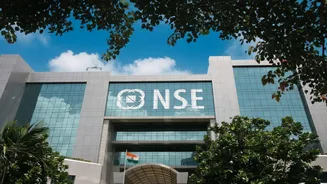









The Making of a Mega IPO
India's largest bourse, the National Stock Exchange, is preparing for what could be the nation's biggest-ever public listing. People familiar with the matter suggest a September timeline for an IPO valued at approximately ₹30,000 crore, potentially valuing
the exchange at over ₹5 lakh crore. This landmark event involves an Offer For Sale (OFS), where existing shareholders will sell a portion of their stake, rather than the exchange issuing new shares to raise capital. The draft papers filed in June indicate that around 14.89 crore shares, or roughly 6% of the company's equity, will be offered by major stakeholders like the State Bank of India and MS Strategic (Mauritius) Ltd. Notably, the largest shareholder, Life Insurance Corporation of India (LIC), is not expected to sell its shares in this offering. The sheer scale of this IPO is poised to surpass previous records, including Hyundai Motor India's ₹27,870-crore offering in 2024.
A Ten-Year Journey to Market
The road to this IPO has been long and fraught with challenges. The NSE first filed for a public listing back in December 2016, with plans to raise around ₹10,000 crore. However, the plan was put on hold by the market regulator, the Securities and Exchange Board of India (SEBI), due to significant governance concerns, most notably the co-location controversy. This scandal involved allegations that certain brokers were given preferential access to NSE's servers between 2010 and 2014, allowing them to get market data milliseconds ahead of others. The subsequent investigations, penalties, and legal battles delayed the IPO for years. It was only after a management overhaul and significant efforts to improve governance and settle regulatory issues that the exchange received a no-objection certificate from SEBI in February 2026, paving the way for the current IPO attempt.
Why Now? Unpacking the Timing
Several factors have aligned to make a September 2026 launch feasible. The primary driver is the resolution of long-standing regulatory roadblocks. SEBI's 'no-objection' earlier this year was a critical green light, indicating that the regulator is now more confident in the exchange's governance framework. With these issues largely in the rearview mirror, existing shareholders are keen to unlock the value of their investments in one of India's most important financial institutions. The NSE's dominant market position also makes it a highly attractive asset. As of FY26, it commanded a near-monopoly in several segments, including a 92.99% market share in cash equities turnover and over 99% in equity futures. This market leadership, combined with the increasing financialisation of the Indian economy, presents a compelling growth story for potential investors.
What's at Stake for Investors?
For the first time, retail and institutional investors will have the chance to own a piece of the infrastructure that powers Indian finance. The NSE's business model is fundamentally tied to trading volumes; every time someone trades, the exchange earns. Its financial performance is robust, with a reported net profit of ₹10,302 crore in FY26. However, potential investors must also consider the risks. A significant portion of the NSE's revenue is derived from derivatives trading, a segment that has faced increased regulatory scrutiny aimed at protecting retail investors. This reliance on a single, highly regulated income stream is a key vulnerability. Furthermore, the draft prospectus highlights risks such as cybersecurity threats and technology failures, like the major trading halt in February 2021, as factors to watch.
The Broader Market Impact
The successful listing of the NSE would be a watershed moment for India's capital markets. It would create a new listed giant, providing a valuation benchmark for market infrastructure companies globally. The IPO is also expected to inject significant liquidity into the market and could lead to a re-rating of other listed financial services companies. As the exchange prepares for international and domestic roadshows to market the IPO, all eyes will be on investor appetite. The final pricing and success of the offering will serve as a barometer of confidence not just in the NSE, but in the long-term growth story of the Indian economy itself.