





Why Robots are the Ultimate Builders for Space
Launching heavy construction materials and structures from Earth is incredibly expensive and logistically complex. A lasting human settlement on the Moon will require landing pads, roads, radiation shields, and habitats, all built before astronauts make
it their long-term home. This is where autonomous robots come in. Unlike human astronauts, they can operate for extended periods in the harsh lunar environment, which features extreme temperatures, abrasive dust, and dangerous radiation. Furthermore, the communication delay between Earth and the Moon makes real-time remote control of machinery slow and inefficient. Therefore, space agencies like NASA and the European Space Agency (ESA) are increasingly focused on developing robots that can make their own decisions on-site, a concept known as autonomy.
Living Off the Land: Building with Moon Dust
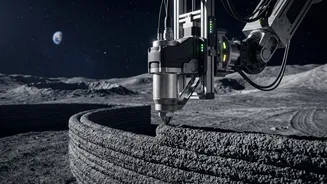
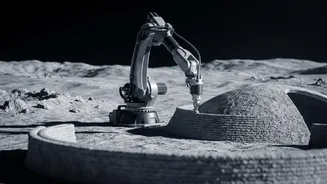
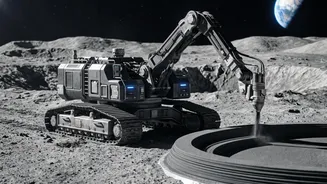
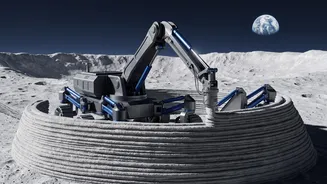
The key to cost-effective lunar construction is using local resources, a strategy called in-situ resource utilization (ISRU). The Moon's surface is covered in a layer of dust and broken rock called regolith, which turns out to be a surprisingly versatile building material. Various projects are exploring how robots can transform this lunar soil into durable construction components. One leading concept involves robotic 3D printing. In this scenario, a mobile robot would scoop up regolith, mix it with a binding agent, and then print structures layer by layer. The ESA has explored a concept where an inflatable dome is sent from Earth, and a robot then covers it with a protective shell printed from regolith, creating a habitat shielded from radiation and micrometeorites. Other techniques being explored include using microwaves or concentrated sunlight to fuse the regolith into solid, brick-like blocks.
The Power of Teamwork: Swarm Intelligence
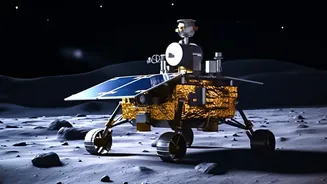
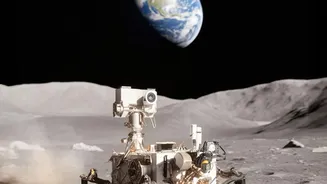
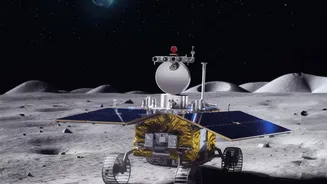
The true innovation lies not just in a single robot, but in teams of them working together. This is where 'swarm intelligence' comes into play—a concept inspired by social insects like ants. Instead of one large, complex machine, the idea is to deploy a fleet of smaller, specialized robots. For example, a construction project might involve a mixed team: surveyor rovers to map the area, excavators to dig and haul regolith, and mobile 3D printers to build the structures. Companies like Lunar Outpost are developing software that allows each robot in a swarm to choose its next action based on the team's shared goal and the data collected by its peers. This decentralized approach makes the mission more resilient; if one robot fails, the others can adapt and continue the job without waiting for instructions from Earth.
What Will They Build First?
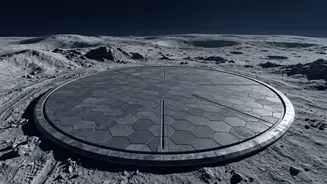
The first priority for robotic builders will be foundational infrastructure. A NASA roadmap outlines a phased approach, starting with relatively simple but crucial projects. First up would likely be landing pads. These are essential to prevent the powerful rocket exhaust from kicking up clouds of abrasive lunar dust, which can damage landers and other nearby equipment. Following that, robots could construct blast walls for protection, basic roads to make transportation easier, and radiation shielding for habitats. Eventually, these robotic teams could assemble entire bases, including garages for rovers and platforms for scientific instruments, paving the way for a sustainable lunar economy built on activities like resource mining and manufacturing.
Overcoming the Lunar Challenges
Building on the Moon is not without its difficulties, even for robots. The fine lunar dust is extremely abrasive and can clog mechanical parts. The extreme temperature swings from day to night put immense stress on materials and electronics. Furthermore, the lack of a GPS-like system means robots must rely on other methods for precise navigation, such as local beacons or advanced mapping techniques like LiDAR. Engineers are designing specialized hardware, like dust-resistant bearings and modular components, to cope with these conditions. Extensive testing is being done in simulated lunar environments on Earth to refine both the hardware and the AI software before these robotic construction crews are sent on their ultimate mission.