






The Rise of Minimalist Trekking
Minimalist trekking is more a philosophy than a set of rules. The core idea is to carry less so you can experience more. It’s about intentionally shedding the non-essential, trading heavy gear and cluttered itineraries for a lighter pack and a clearer
mind. Proponents argue that when you’re not weighed down, physically or mentally, your senses sharpen. You move with greater freedom, your focus shifts from managing your belongings to immersing yourself in the environment. It’s a deliberate choice to value simplicity and agility, finding luxury not in gear, but in the quality of the experience itself. This approach encourages self-reliance and a deeper connection with the trail, where knowledge and skill become more important than the equipment on your back.
The Sahyadris' Secret Pools
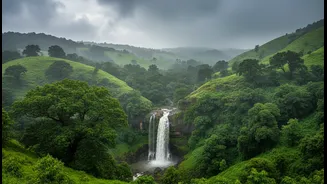
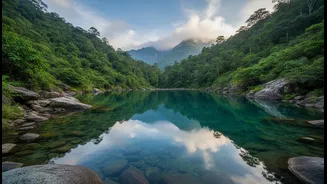
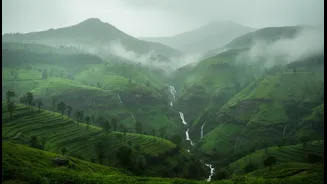
While the term ‘tarn’ originally described a small mountain lake formed by glaciers, it has come to more broadly mean any small, secluded mountain pool. The Sahyadri range in Maharashtra, while not glaciated, is dotted with its own version of these natural treasures. Carved by millennia of monsoon rains, countless depressions on high-altitude plateaus and at the foot of waterfalls fill with water, creating serene, often hidden, pools. These rain-fed tarns and kunds (ponds) become destinations in themselves—quiet, reflective bodies of water tucked away in the rugged landscape, offering trekkers a place of profound tranquility far from the crowded viewpoints.
A Journey to Devkund's Emerald Pool
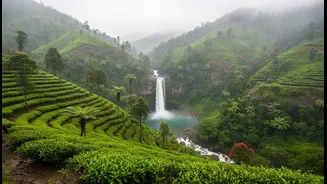
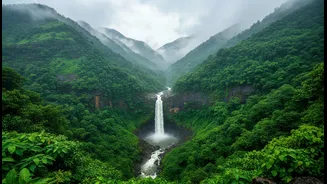
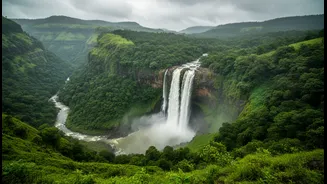
A prime example of this magic is the Devkund Waterfall. The name literally translates to 'the bathing pond of the gods'. Hidden deep inside a forest near Bhira village, the trek to Devkund is an accessible, 6-kilometre walk that is a perfect introduction to minimalist trekking. The trail winds through dense foliage and involves a few stream crossings, building a sense of earned reward. The destination is a stunning plunge waterfall that cascades into a natural pool of impossibly clear, blue-green water. This isn't a landmark visible from a highway; it’s a sanctuary that demands effort and rewards it with a feeling of true discovery. The simplicity of the trek and the pristine nature of the pool make it a poster child for minimalist adventure.
The High-Altitude Allure of Harishchandragad
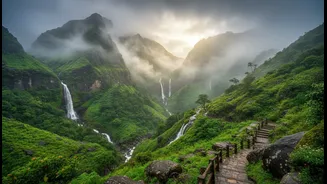
For those seeking a more challenging journey, the ancient hill fort of Harishchandragad offers a different kind of reward. This massive plateau, standing at over 4,600 feet, is a treasure trove of history and natural beauty. Multiple trekking routes lead to the top, some more demanding than others. Once there, trekkers are greeted by panoramic views from the famous Konkan Kada cliff, ancient temples, and the Kedareshwar Cave, which houses a Shiva lingam surrounded by water. The fort's expansive top also features several water bodies, including the Saptatirtha Pushkarni, an ancient temple tank. These high-altitude water sources, surrounded by ruins and mist, create a powerful atmosphere that perfectly complements the minimalist ethos—connecting with history, nature, and spirituality all at once.
The Perfect Minimalist Backdrop
So why are these tarns the perfect backdrop for this style of trekking? Because they mirror the philosophy itself. A mountain tarn is not a grand, sprawling lake demanding attention. It is a simple, contained, and perfect feature of the landscape. Reaching one often requires navigating lesser-known trails, pushing you to be more prepared and aware. The reward is not about ticking off a famous landmark, but about the quiet satisfaction of arriving at a beautiful, secluded spot. It’s an experience that values intimacy over scale, and personal connection over public acclaim. In the quiet presence of a mountain pool, the clutter of modern life fades away, leaving only the essential: the trekker, the trail, and the profound beauty of the natural world.