





The Big Question: Will You Pay More for UPI?
Let’s clear this up immediately: for the average consumer, UPI payments will remain free. The new changes effective October 15, 2026, do not introduce any fees for you, the customer. Sending money to friends or family, known as peer-to-peer (P2P) transactions,
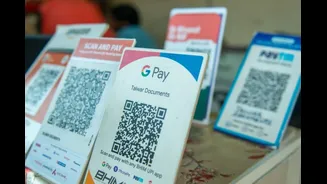
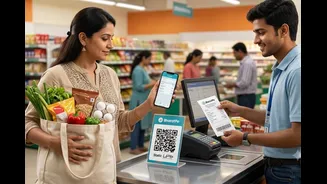
continues to be completely free, regardless of the amount. Likewise, when you scan a QR code at a local shop to pay for your groceries or chai, you will not be charged anything extra. The money deducted from your bank account will be exactly what you owe the merchant.
So, What Is This New Fee All About?
The change is the introduction of a Merchant Discount Rate (MDR) on certain UPI transactions. An MDR is a fee that merchants pay to their bank or payment service provider for processing digital payments. From October 15, a standard MDR of 0.4% will apply to person-to-merchant (P2M) payments that are over ₹2,000. This is not a tax that goes to the government; it's a charge that is shared among the banks and payment platforms that keep the UPI system running. The government and the National Payments Corporation of India (NPCI) have explicitly stated that merchants are not supposed to pass this cost on to consumers.
Which Transactions Are Affected?
The new 0.4% MDR is specifically targeted at higher-value merchant payments. If you make a UPI payment to a business for ₹2,000 or less, it remains free of this charge. According to the Finance Ministry, this threshold ensures that roughly 96% of all merchant transactions will remain untouched by the new fee structure. For payments above ₹2,000, the 0.4% fee applies. For example, on a UPI payment of ₹5,000 to a large retailer, the merchant would incur an MDR of ₹20. For very large transactions, this fee is capped at ₹300, which applies to any payment of ₹75,000 and above.
Are There Any Exemptions?
Yes, there are several important exemptions to protect small businesses and essential services. Small merchants who receive up to ₹1 lakh per month through UPI QR codes are exempt from this MDR, meaning your neighbourhood kirana store or street vendor will likely not be affected. Furthermore, certain essential service categories have special, lower rates. For instance, payments for railways, telecom bills, insurance, and fuel will attract a flat fee of ₹5 for transactions over ₹2,000, instead of the 0.4% rate. Recurring payments set up via UPI AutoPay for things like subscriptions or utility bills are also exempt from this new MDR framework.
Why Is This Change Happening Now?
For years, UPI has operated on a zero-fee model, which has been instrumental in its massive adoption across India. However, maintaining and scaling this vast digital infrastructure has significant costs for banks and payment service providers. The introduction of a targeted MDR on high-value commercial transactions is seen as a step towards creating a financially sustainable ecosystem. By applying the fee only to a small fraction of high-value merchant payments, the goal is to fund the system's growth and security without burdening the vast majority of everyday users and small businesses who rely on free UPI.