



Choose Your Strategic Location
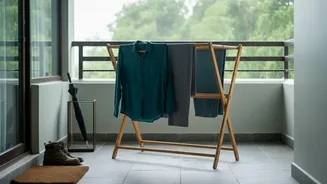
The first step in establishing your monsoon command centre is choosing the right location. You aren’t just looking for empty space; you’re looking for strategic space. An ideal drying zone has good air circulation to combat humidity. Consider a spot near
a balcony door, a large window you can crack open, or in a utility area. The key is to select an area where air can move freely, which is more important than heat for drying clothes indoors. This dedicated spot will contain the dampness, preventing it from spreading throughout your home and creating that all-too-familiar musty monsoon smell. Avoid high-traffic hallways or the centre of your living room. The goal is a functional zone that doesn’t disrupt daily life.
The Laundry Drying System
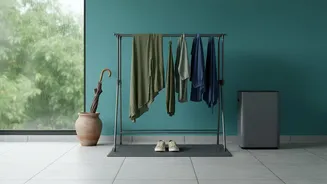
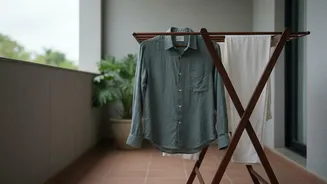
Your laundry is the biggest player in this seasonal battle. Start at the source: use the high-spin cycle on your washing machine to remove as much excess water as possible before hanging. When you hang the clothes, space them out generously on a foldable drying rack; letting fabric touch slows down drying and invites mildew. A multi-tiered stand is excellent for maximising vertical space without overcrowding. To significantly speed up the process, place a pedestal or table fan pointing towards the rack. The constant airflow helps whisk moisture away from the fabric, mimicking a breezy day. For persistent humidity, a dehumidifier can be a game-changer, pulling moisture directly out of the air.
Managing Wet Shoes and Footwear
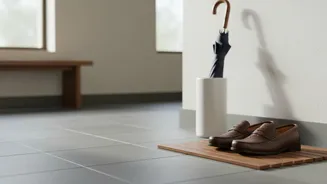
Wet shoes are a notorious monsoon problem, leaving puddles and a distinct odour if not handled correctly. The golden rule is to never use direct heat like a hairdryer, as it can warp materials and cause leather to crack. Instead, the moment you get home, wipe off any excess mud and water. Then, stuff the shoes generously with crumpled newspaper. The paper acts as a brilliant absorbent, drawing moisture out from the inside while helping the shoe maintain its shape. Change the newspaper every few hours for very wet shoes. Place them on an open shoe rack or a dedicated mat in your drying zone, never in a closed cabinet while damp. Rotating between at least two pairs of daily footwear is also a smart strategy, ensuring one pair can dry completely for 24 hours.
Containing Dripping Umbrellas
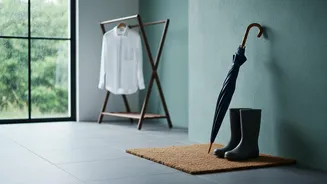
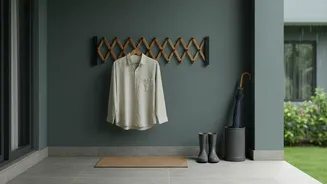
A dripping umbrella can make a floor slippery and messy in seconds. Instead of leaning it in a corner where water pools, designate a proper home for it. A tall, waterproof umbrella stand placed right at the entrance is the simplest and most effective solution. This contains the water runoff and keeps floors safe. For a more integrated approach within your drying zone, consider installing a few sturdy hooks on the wall over a waterproof mat. This allows umbrellas and wet raincoats to hang and drip-dry in a controlled way without taking up floor space. This simple step is less about drying and more about containment, which is a crucial part of a balanced system.
Fighting Dampness and Odour
Even with a perfect system, high humidity can lead to a lingering musty smell. This is where you bring in reinforcements. Place natural moisture absorbers in and around your drying zone and wardrobes. Small bags of silica gel, activated charcoal, or even traditional remedies like dried neem leaves or camphor can be very effective at managing ambient moisture and deterring pests. A small bowl of white vinegar or salt can also act as a natural odour absorber. Good ventilation remains your primary weapon; even on rainy days, opening windows for short periods when it stops raining allows damp air to escape and fresh air to circulate, which is essential for a healthy, fresh-smelling home.