
What You Are Looking For
Spotting the International Space Station (ISS) doesn't require a telescope or any special equipment. It is one of the brightest objects in the night sky, often outshining every star and rivalling the planet Venus in brilliance. Unlike an airplane, the ISS appears
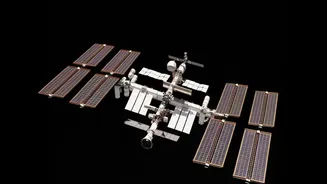
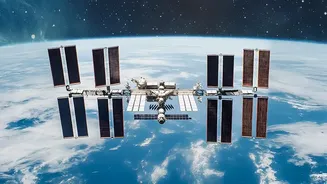
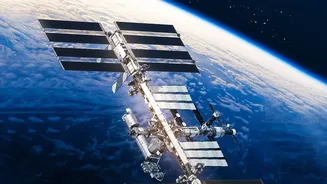
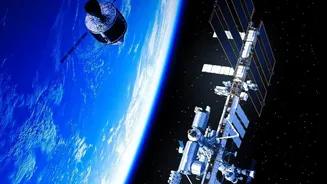
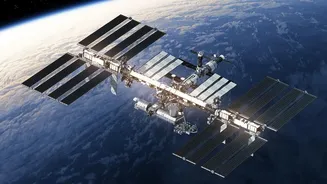
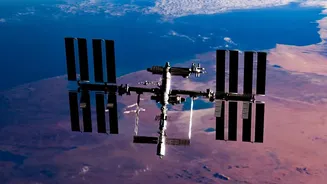
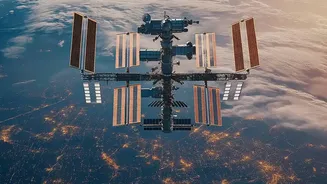
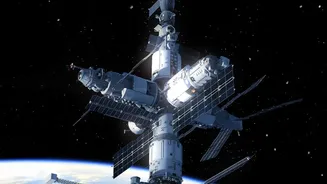
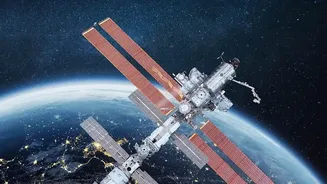
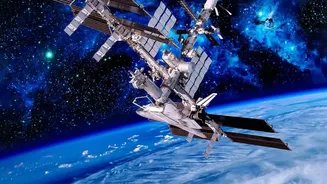
as a solid, steady point of white light moving smoothly and quickly across the sky. It does not have flashing or blinking lights. A typical flyover lasts between three and six minutes as the station transits from one horizon to the other. The reason we can see it is simple: its massive solar panels and structure reflect sunlight. This is also why the best viewing opportunities occur shortly after sunset or just before sunrise. During these twilight hours, the sky on the ground is dark, but the station, orbiting at an altitude of about 400 kilometres, is still high enough to be bathed in sunlight.
Your Personal Mission Control
The key to a successful sighting is knowing exactly when and where to look. This is where mobile phone applications come in, acting as a personal mission control for your backyard. These apps use your phone's GPS and internal clock to do the complex calculations for you. They access real-time orbital data for the ISS, which is travelling at a staggering 28,000 kilometres per hour, and determine its precise path relative to your specific location on Earth. Instead of manually consulting complicated charts, you can receive simple, timely alerts that tell you the exact minute the station will appear, the direction it will come from, how high it will get in the sky, and where it will disappear.
Top Apps for Simple Alerts
For skywatchers who want straightforward, reliable notifications, NASA’s official Spot The Station app is an excellent starting point. Available for both iOS and Android, this free app allows you to sign up for push notifications tailored to your location. It will alert you to high-quality viewing opportunities, typically when the station will rise more than 40 degrees above the horizon, ensuring it is clear of most trees and buildings. Another popular and highly-rated app is ISS Detector. It provides clear countdowns to upcoming passes and gives detailed information about the path and brightness. Both apps function on a simple premise: set your location and let the app tell you when to head outside and look up.
For an Augmented Reality View
If you want a more interactive experience, several apps use augmented reality (AR) to overlay information directly onto your view of the sky. Apps like SkyView and the AR mode within NASA's Spot The Station app use your phone's camera and motion sensors. When you hold your phone up, they display the station's trajectory as a line across your screen, showing you exactly where the ISS will travel. Some web-based tools like Orbital Radar's Skylens feature even let you do this directly in your phone's browser without downloading an app at all. This technology is incredibly helpful for first-time spotters, as it removes any guesswork about which bright dot is the correct one.
Tips for the Perfect Sighting
To make the most of a flyover, a little preparation goes a long way. First, find a location with a clear view of the horizon, like a park or open field, away from tall buildings and bright city lights. Head outside a few minutes before the predicted pass time to let your eyes adjust to the darkness; try to avoid looking at your bright phone screen right before the event. The app will give you the direction to face, such as 'appears in the West-Southwest'. Remember that 90 degrees of elevation is directly overhead, so a pass with a 'maximum height' of 90 degrees will be a spectacular one. Finally, remember that you are watching a football-field-sized laboratory with astronauts on board, orbiting the Earth every 92 minutes. Waving is optional, but highly encouraged.