






A Foundation of Moisture
Before you even think about parting your hair, the first step to a successful, voluminous twist-out is ensuring your hair is properly prepared. Great styles are built on a foundation of clean, hydrated, and well-detangled hair. Start your routine with
a gentle, sulfate-free shampoo to cleanse your scalp and strands of any product buildup without stripping them of their natural oils. Follow this with a deep conditioner, focusing on letting it penetrate your strands to deliver a powerful dose of moisture. This step is crucial, as moisturised hair is more flexible and less prone to snapping. Once rinsed, apply a leave-in conditioner to damp, not soaking wet, hair. This provides the necessary slip for detangling, which should always be done gently with a wide-tooth comb or your fingers, working from the ends up to the roots to minimize breakage.
The Art of Gentle Sectioning
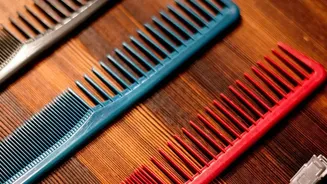
Sectioning is where the magic of a voluminous twist-out begins. The goal is to create clean, manageable parts without causing tension on your scalp or hair follicles. Instead of reaching for a fine-toothed comb which can scrape the scalp and pull at the roots, consider using your fingers or the smooth, long tail of a rat-tail comb to create your parts. The key is to be gentle. Your sections should be distinct but not severely straight, as this can create a very visible scalp once the twists are taken down. Some stylists recommend a slightly diagonal or brick-lay pattern, where the parts are staggered. This allows the finished twists to fall over the parts, creating an illusion of greater fullness and density.
How Section Size Creates Volume
The size of your sections directly impacts the final look of your twist-out. While it might seem counterintuitive, larger sections are often the key to more volume. Chunky twists, created from bigger sections of hair, result in a looser, wavier pattern with more body and a softer finish. Conversely, smaller sections create tighter, more defined curls. While highly defined, a style with many small twists can sometimes appear less voluminous and may have more visible scalp. For those seeking that big, fluffy look, opting for fewer, larger twists is the way to go. Don't be afraid to experiment to find the perfect size that matches your hair density and desired outcome.
Perfecting Your Twisting Technique
Once your hair is sectioned, apply a twisting butter or cream for hold and moisture. The way you twist is just as important as the sections themselves. To avoid damage and ensure a uniform look, maintain consistent but gentle tension. Twisting too tightly at the root can cause scalp tension and potential breakage, so aim for a firm but comfortable start. Some experts suggest braiding the first inch of the hair before transitioning into a twist, which can help lock the root in place and prevent it from unraveling. As you twist down the hair shaft, you can slightly loosen your grip to create a fuller-looking twist. Finally, ensure the ends are sealed, either by twirling them around your finger with a bit of product or using a tiny amount of gel for hold.
The Takedown: Unraveling for Fullness
Patience is a virtue, especially when it comes to drying your twists. For a frizz-free result, your hair must be 100% dry before you take it down. This can be achieved by air-drying (which may take a day or two) or sitting under a hooded dryer on a low heat setting. Once completely dry, it's time for the reveal. Lightly coat your fingertips with a natural oil, like jojoba or grapeseed oil, to minimise frizz as you unravel. Gently separate each twist. To boost volume even further, you can carefully separate the unraveled twists one or two more times at points where the hair naturally wants to part. For a final lift, use an Afro pick at the roots, gently fluffing upwards without combing through the ends to maintain definition.