





More Than Just a Visit
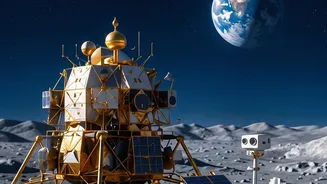
For decades, going to the Moon meant short, Apollo-style missions. The new goal under the Artemis program is fundamentally different: to stay. NASA plans to establish a permanent 'Moon Base' near the lunar South Pole, an outpost for astronauts to live,
work, and conduct long-term research. This ambitious project is not the final destination. Instead, NASA considers the Moon a crucial proving ground. It’s a relatively close, high-stakes environment to figure out how to live and operate on another celestial body before undertaking the much more perilous journey to Mars.
An Interplanetary Survival Guide
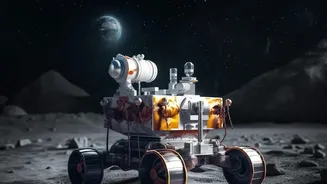
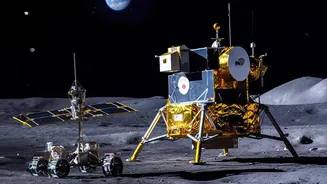
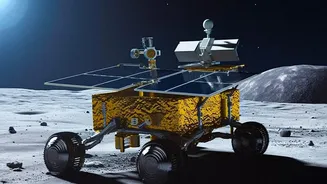
To build a sustainable outpost, you first need to understand the territory. In late September 2026, NASA selected three new sets of scientific investigations through its PRISM program to do just that. These robotic missions, delivered by commercial partners, are designed to create an 'interplanetary survival guide' for future astronauts. The first is the Lunar Environment Monitoring Station (LEMS-SP), a durable monitoring station that will act like a lunar weather outpost, tracking micrometeoroid impacts and seismic activity to assess hazards. Another, the Geophysical Investigation for Mapping Lunar Interior (GIMLI), will investigate the Marius Hills Pit to see if it leads to a large, underground lava tube that could shield future astronauts from radiation and extreme temperatures. The third, an instrument suite called DISCO, will hunt for water ice hidden in shadows and study how rocket exhaust affects the surface.
The Ultimate Proving Ground
Every challenge of living on the Moon is a scaled-down version of a challenge on Mars. The Moon's 14-day nights and Mars's planet-engulfing dust storms both demand power systems that don't rely solely on the sun. To that end, NASA is developing fission surface power, with plans for the first lunar nuclear reactor to be operational by 2030, providing a template for Martian power grids. Both worlds lack a protective magnetic field, making radiation a constant threat. Finding and using natural shelters like lava tubes on the Moon, as the GIMLI investigation hopes to do, provides crucial data for identifying similar havens on Mars.
From Lunar Dust to Martian Soil
Perhaps the most important link between Moon and Mars exploration is learning to live off the land, a concept known as In-Situ Resource Utilization (ISRU). Launching every single kilogram of water, oxygen, and building material from Earth is prohibitively expensive. The key is to find and use local resources. The DISCO investigation's search for lunar water ice is vital, as that ice can be converted into breathable air, drinkable water, and even rocket propellant. Learning to extract these resources on the Moon is a necessary precursor to doing it on Mars. Similarly, technologies for 3D printing structures using local lunar dust, or regolith, are being developed. Projects like MMPACT are testing construction methods that could one day be used to build habitats on either world, reducing the cargo load and making long-term settlement a realistic possibility.