







What 'Low-Impact' Really Means
First, let's clear up a common misconception: low-impact does not mean low-intensity or low-benefit. The 'impact' in question refers to the amount of force exerted on your joints. High-impact exercises, like running and jumping, involve moments where
both feet are off the ground. When you land, your joints absorb a significant amount of force. In contrast, low-impact workouts are defined by keeping at least one foot on the ground at all times. Think of activities with smooth, controlled motions like brisk walking, cycling, or using an elliptical machine. This simple difference dramatically reduces the stress on your ankles, knees, and hips, making it a much gentler approach to getting your heart rate up.
The Heart of the Matter
Any form of cardiovascular exercise, by definition, challenges your heart and lungs. Regular cardio workouts strengthen the heart muscle, allowing it to pump blood more efficiently throughout your body. This improved circulation helps lower blood pressure, reduce harmful cholesterol levels, and manage blood sugar. Low-impact cardio delivers all these essential benefits. By sustaining a moderately elevated heart rate, you are training your cardiovascular system to become stronger and more resilient, significantly reducing your long-term risk of heart disease. You can achieve a fantastic cardiovascular workout without a single jump.
Why Safety Is Paramount for Beginners
For individuals who are heavy-set, joint protection is not just a minor detail—it's the foundation of a sustainable fitness plan. Carrying extra weight already places significant additional stress on weight-bearing joints like the knees and hips. Research shows that for every extra pound of body weight, the knees can experience an additional four pounds of pressure during movement. Plunging into high-impact activities like jogging can multiply this force, increasing the risk of pain, inflammation, and serious injury, which can derail a new fitness routine before it even gains momentum. Low-impact exercise breaks this cycle. By minimising jarring forces, it allows you to build fitness without punishing your joints, making it the safest starting lane.
Building Consistency and Confidence
One of the biggest hurdles for any beginner is consistency. The 'all-or-nothing' approach of starting with overly intense workouts often leads to burnout, extreme soreness, or injury—all of which kill motivation. Low-impact exercise, on the other hand, is far more forgiving. You can get a great workout and feel energized rather than completely wiped out. This positive reinforcement is crucial. It builds confidence and helps establish a regular habit, which is more important than any single, grueling session. Because it’s easier on the body, you can exercise more frequently without needing as many recovery days, helping you build momentum and see results sooner.
Your Low-Impact Starter Pack
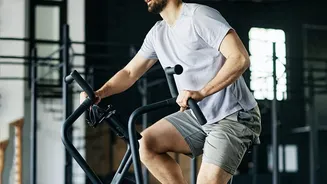
Ready to get started? Here are some of the best low-impact cardio workouts for beginners: Brisk Walking: Simple, free, and incredibly effective. It's one of the most accessible ways to improve heart health. Cycling: Whether on a stationary bike or outdoors, cycling is excellent for building leg strength and cardiovascular endurance with zero impact. Swimming and Water Aerobics: The buoyancy of water supports your body weight, removing almost all stress from your joints while providing a full-body workout. Elliptical Trainer: This gym machine simulates a running motion without the impact, making it a popular choice for getting your heart rate up while protecting your knees. * Rowing: A fantastic full-body workout that engages your legs, core, and upper body in a smooth, seated motion.