




The Climate Data Dilemma
Imagine trying to measure your child's growth over two decades using different measuring tapes, some old and some new, made in different factories. How could you be certain about their exact height change? This is the problem climate scientists face.
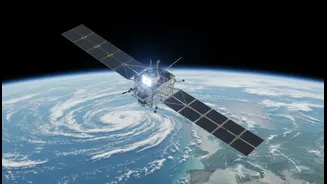
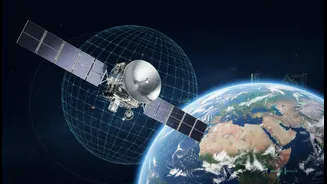
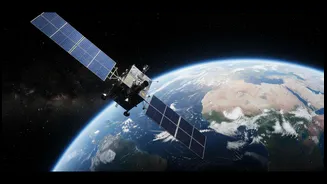
We have a fleet of Earth-observing satellites, each with its own set of instruments, launched at different times. Over the years, the harsh environment of space causes these instruments to degrade, slightly altering their measurements. This makes it incredibly difficult to stitch together a single, highly accurate, long-term record of Earth's climate. When trying to detect subtle but critical changes in things like Earth's reflectivity, even tiny inconsistencies between satellites can create significant uncertainty in climate models. We need a way to ensure all these different 'measuring tapes' are calibrated to the same standard.
A 'Tuning Fork' for Climate Science
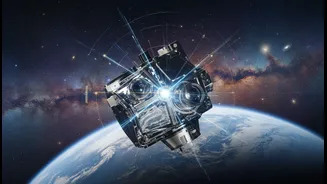
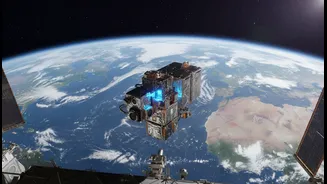
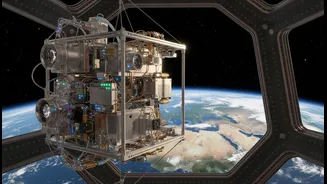
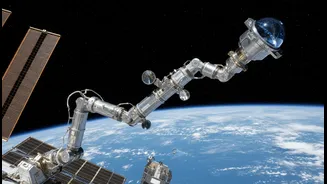
Enter NASA's CLARREO Pathfinder. The name stands for Climate Absolute Radiance and Refractivity Observatory Pathfinder, and its job is to act like a tuning fork for other climate instruments in orbit. Hosted on the International Space Station (ISS), its primary goal is not just to collect more data, but to provide a definitive, highly accurate benchmark that other satellites can be compared against. This process is called inter-calibration. By measuring sunlight reflected from Earth with unprecedented accuracy—five to ten times better than existing sensors—CLARREO Pathfinder provides a 'gold standard' reference. This allows scientists to cross-check and correct the data from other satellites, like the CERES and VIIRS instruments, ensuring their measurements are consistent and reliable over time.
How the Pathfinder Achieves Unrivaled Accuracy
The key to CLARREO Pathfinder's precision lies in its ability to calibrate itself directly in space. The instrument, a sophisticated spectrometer, regularly points away from Earth to measure a known, stable source: the Sun. By constantly checking itself against the well-understood solar radiation, it can account for any degradation or changes in its own performance over its mission lifetime. It also takes measurements of the Moon, another stable celestial body, to further enhance its calibration capabilities. This self-checking ability, anchored to internationally recognised standards (SI-traceability), is what makes its measurements so trustworthy. The instrument itself, called a hyperspectral imager, captures a wide spectrum of reflected light, providing a rich dataset that helps diagnose the health of our planet.
A Clearer Picture for India and the World
Why does this level of accuracy matter? For a nation like India, which is acutely vulnerable to climate change, better data means better preparation. More reliable long-term climate records lead to more accurate climate models. This can translate into improved predictions for monsoon patterns, a better understanding of Himalayan glacier melt, more precise tracking of sea-level rise affecting coastal megacities, and more effective management of agricultural resources. By reducing the uncertainty in our climate observations, CLARREO Pathfinder helps scientists detect climate trends decades sooner than would otherwise be possible. This provides policymakers in India and around the globe with the clear, irrefutable evidence needed to make informed decisions to protect communities and economies from the impacts of a changing climate.