








The Challenge of the Classic Text
For generations, teachers have faced a fundamental challenge: how do you teach a complex piece of literature, like a Shakespearean play or a dense historical novel, to a classroom of students with wildly different reading abilities? Some students fly
through the text, while others get bogged down by complex vocabulary and convoluted sentences, quickly losing confidence and interest. The traditional approach often meant leaving some students behind or holding others back. This disparity is particularly acute in India's diverse classrooms, where students from various linguistic and educational backgrounds come together.
How Adaptive Technology Works
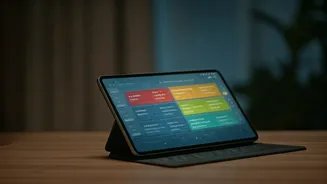
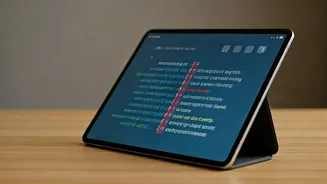
Enter personalised Edtech systems. These platforms use sophisticated algorithms to do something quite remarkable. First, they assess a student's reading level through a series of initial diagnostics. Then, when a teacher assigns a text—say, 'The Adventures of Huckleberry Finn'—the software presents a version tailored to that student. This doesn’t mean changing the plot or the characters. Instead, the 'rewriting' is a form of dynamic support. For a student struggling with vocabulary, the system might proactively define difficult words within the text. For another who has trouble with syntax, it might simplify a particularly long sentence, showing the original alongside it for comparison. The goal is to create a 'scaffold'—a temporary support structure that helps the student access the core content without being overwhelmed.
The Promise of Personalised Learning
The benefits, according to proponents, are significant. By meeting students where they are, these tools can reduce reading anxiety and build confidence. A student who previously felt excluded from class discussions can now participate because they understand the basic plot and themes. As the student's reading skills improve—which the software constantly monitors—the system gradually removes the scaffolds, presenting more of the original, complex text. This process, known as 'adaptive learning', aims to gently push the student into their 'zone of proximal development', where real learning happens. It ensures that every student is challenged but not defeated, fostering a love for reading rather than an aversion to it.
The Critic’s Concern: Losing the Literature
However, this technological leap is not without its critics. Literacy experts and educators raise an important question: are we sacrificing literary integrity for accessibility? The power of great literature often lies in the author's specific word choices, the rhythm of their sentences, and the very complexity that these tools seek to simplify. When you 'rewrite' a sentence by Mark Twain or Jane Austen, do you lose the unique voice and style that made them literary giants? Critics worry that relying too heavily on these systems could prevent students from developing the crucial skill of 'grappling' with a difficult text. The struggle to decode a complex passage, they argue, is what builds resilient, analytical readers. By smoothing over every difficulty, we might be denying students the productive struggle that leads to deep comprehension and critical thinking.
A Tool, Not a Teacher
In the Indian context, where the National Education Policy (NEP) 2020 champions the integration of technology, these platforms are gaining traction. They offer a potential solution for bridging learning gaps in large, diverse classrooms. However, successful implementation depends heavily on the teacher. These systems are most effective not as a replacement for teachers, but as a powerful tool in their hands. A skilled educator can use the data from the platform to identify which students need extra help and on what specific skills. They can use the adapted text as a starting point for a deeper discussion about authorial intent, style, and the richness of the original language.