


The Sun’s 11-Year Rhythm
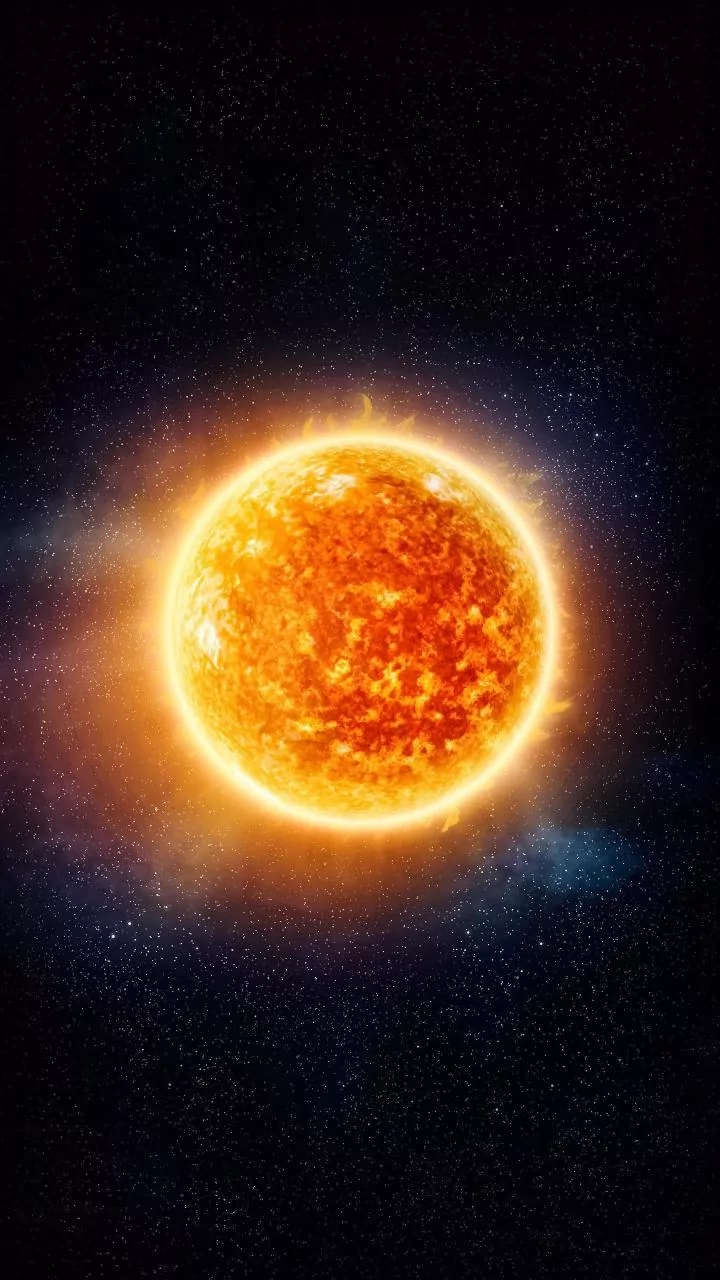
The Sun operates on an approximately 11-year cycle, swinging between periods of low activity, known as solar minimum, and high activity, called solar maximum. This rhythm is driven by the Sun's powerful and complex magnetic field. Imagine it as a giant
ball of electrically-charged hot gas, constantly in motion. This movement generates a magnetic field that, over the course of about 11 years, becomes increasingly tangled and complex before eventually flipping, with the north and south poles switching places. After this reset, the Sun calms down, entering a solar minimum, and a new cycle begins. This entire process governs the level of activity we see on the solar surface.
Welcome to Solar Maximum
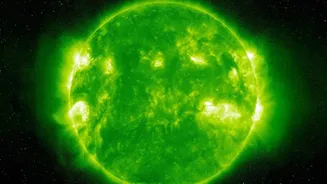
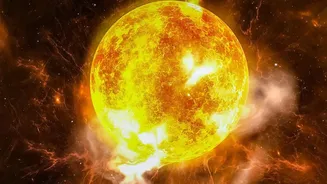
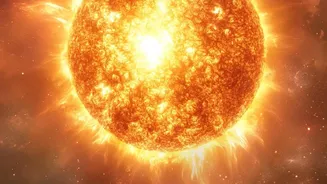
Solar maximum is the peak of this 11-year cycle. It's the period when the Sun's magnetic field is at its most chaotic and energetic. This isn't a single moment but a phase that can last for more than two years, characterized by a significant increase in solar phenomena. Scientists are constantly monitoring our star, and predictions for the current cycle, Solar Cycle 25, suggest its peak activity is occurring between late 2024 and early 2026. During this time, the Sun's energy output increases slightly, but more importantly, the surface becomes a hotbed of activity.
Sunspots: Windows into Solar Storms
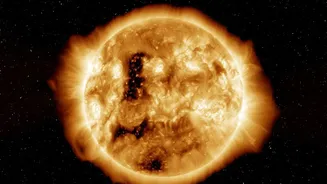
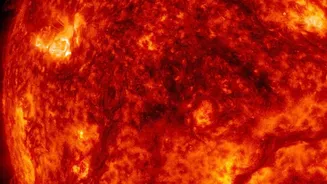
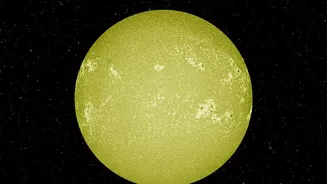
The most visible indicator of solar maximum is the proliferation of sunspots. These are temporary dark patches on the Sun's surface that appear darker because they are cooler than their surroundings. This coolness is caused by intense, concentrated magnetic fields poking through the solar surface. These magnetic fields are so strong—thousands of times stronger than Earth's—that they inhibit the flow of hot gas from the Sun's interior, creating a cooler spot. As the Sun's overall magnetic field becomes more tangled and stressed during its approach to solar maximum, these magnetic disruptions become much more frequent and larger, leading to a higher number of sunspots.
Solar Eruptions: Flares and CMEs
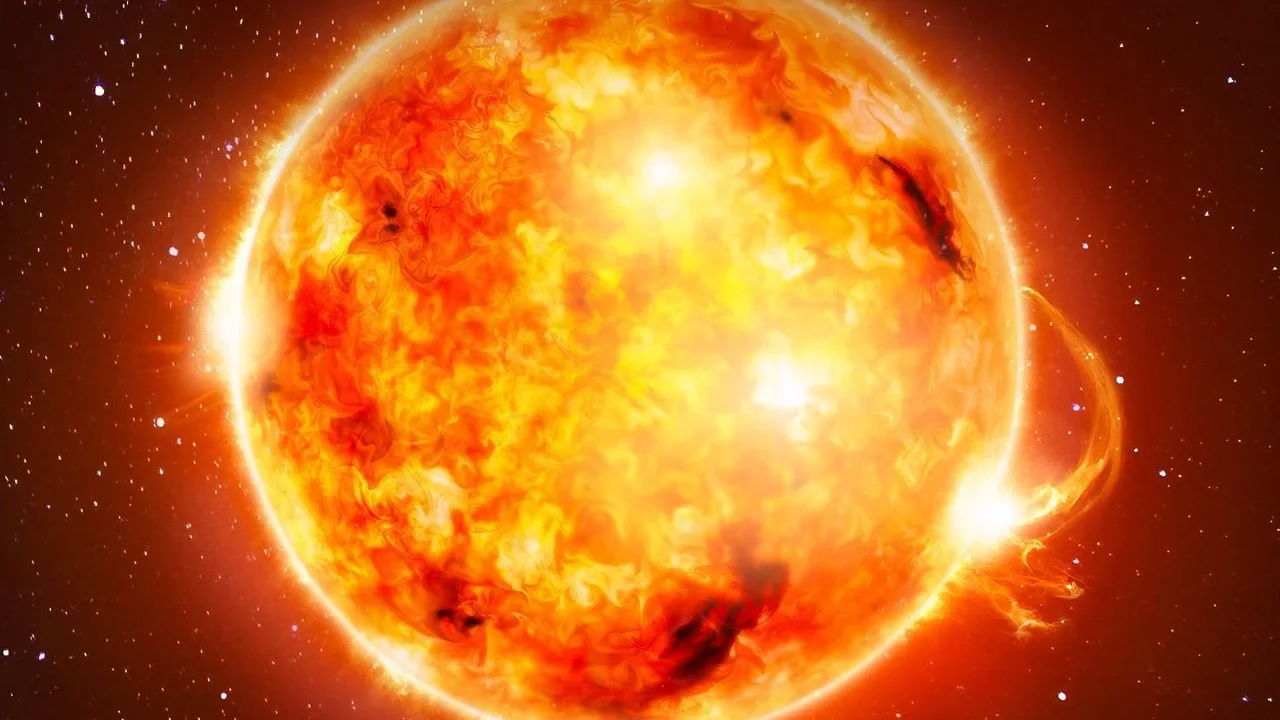
Sunspot regions are also the launchpads for the Sun's most dramatic events: solar flares and coronal mass ejections (CMEs). When the tangled magnetic field lines around a sunspot suddenly snap and realign, they can release a tremendous burst of energy in the form of a solar flare—a flash of intense radiation that travels at the speed of light. Sometimes, these events are accompanied by a CME, which is a massive eruption of solar plasma and magnetic fields into space. Think of it as the Sun flinging a giant, magnetized cloud of particles out into the solar system. During solar maximum, the frequency of both flares and CMEs increases dramatically.
The Beautiful Result: Auroras
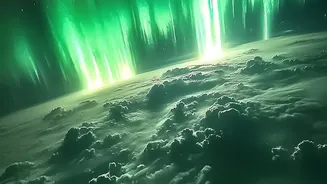
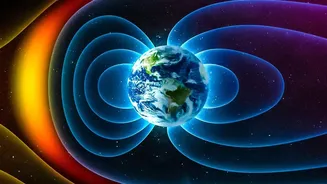
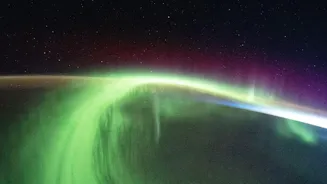
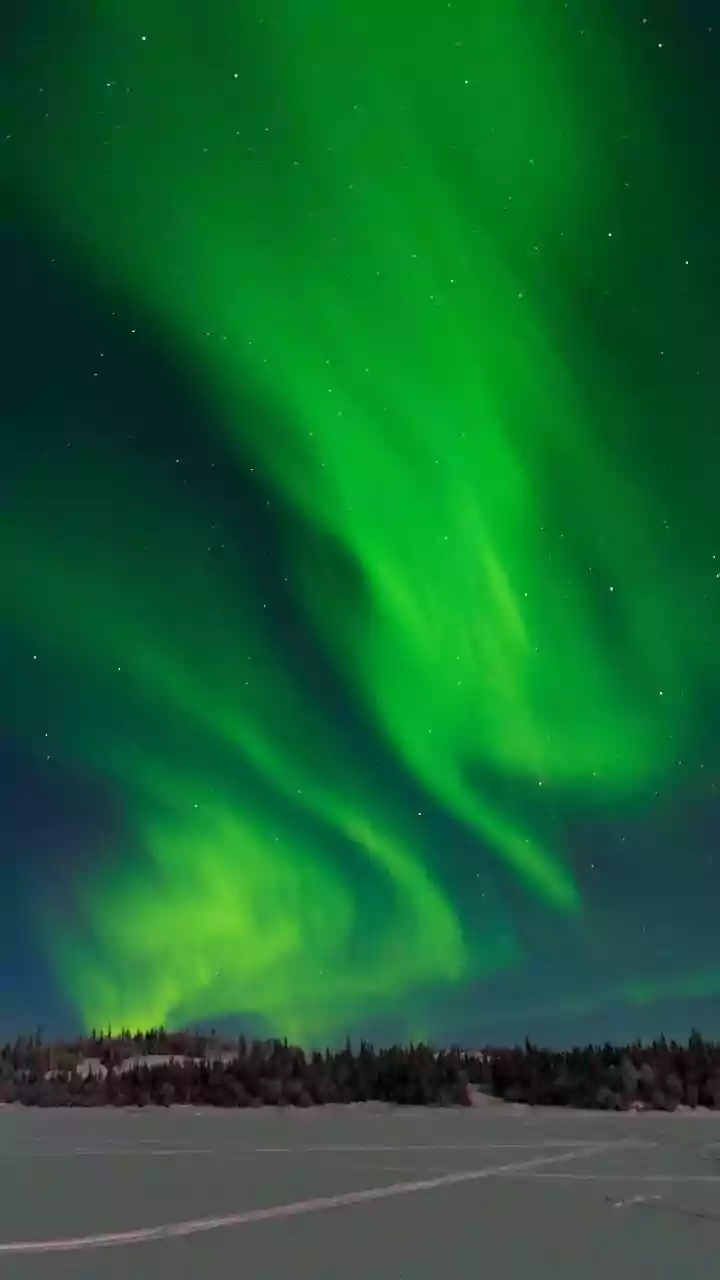
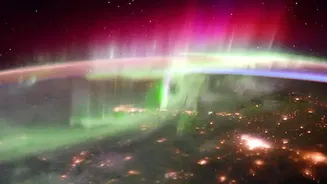
When a CME or a high-speed stream of particles from the Sun heads toward Earth, it interacts with our planet's protective magnetic field, the magnetosphere. This interaction can trigger a geomagnetic storm. During these storms, energetic particles from the Sun are funnelled down along Earth's magnetic field lines toward the poles. As these high-energy particles slam into atoms and molecules—primarily oxygen and nitrogen—in our upper atmosphere, they excite them, causing them to glow. This glowing light is what we see as the aurora, or the Northern and Southern Lights. More intense solar activity from solar maximum means stronger geomagnetic storms, which can produce brighter, more dynamic auroras that are visible at lower latitudes than usual.
The Disruptive Side: Signal Noise
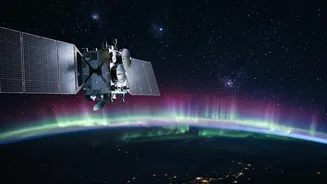
While auroras are beautiful, the same solar activity can wreak havoc on our technology. The radiation from a solar flare can disrupt high-frequency radio communications on the sunlit side of Earth almost immediately. The charged particles from CMEs and solar winds that cause auroras also impact the ionosphere, a layer of our atmosphere crucial for reflecting some radio signals and through which satellite signals must pass. These disturbances can cause GPS signals to become inaccurate or lost, a phenomenon known as scintillation. Satellites themselves can be damaged by high-energy particles, and in extreme cases, geomagnetic storms can even induce currents in power grids on the ground, potentially causing blackouts.