




Understanding the 'Sail Effect'
The same physics that allows a sailboat to harness wind for power can work against your potted plants. A plant with large leaves, dense foliage, or numerous branches acts like a sail, catching the wind and creating a powerful force. This force generates
leverage, and if the tipping force is greater than the anchoring force of the pot's weight, it will fall over. The problem is magnified with tall, slender plants, where the force is applied high above the container, creating a long lever arm that can easily overcome a heavy base. It’s not just about the total weight of the pot, but about its ability to counteract this top-heavy pressure.
Plants That Are Most at Risk
Certain plants are more susceptible to the sail effect than others. Be extra cautious with top-heavy varieties or those with a large surface area. Common examples include ficus trees, ornamental grasses, hibiscus standards, and many types of palms. Broadleaf tropical plants can also act as powerful sails. If your plant is tall and its foliage starts high up on the stem, it’s a prime candidate for tipping. Assessing which of your plants have these characteristics is the first step toward preventing a windy disaster.
Choose a Pot Built for Stability
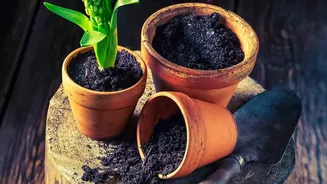
Your choice of container is your first line of defense. While heavy materials like ceramic, stone, or concrete are good, the pot's shape is just as crucial. Opt for pots that are low and wide rather than tall and narrow. Shapes like wide cylinders, rectangular troughs, or pots that are wider at the base provide a more stable footprint. A container with a low center of gravity is inherently more resistant to tipping. Avoid trendy, tapered pots that are narrow at the bottom and flare out at the top; their high center of gravity makes them unstable in windy conditions.
Add Weight, but Do It Right
If you love the look of a lighter pot or are using plastic containers, you can still add stability by strategically adding weight. The key is to place the weight at the very bottom of the planter before adding soil. This lowers the center of gravity and makes the container much harder to tip. Fill the bottom few inches of your pot with heavy materials like gravel, river stones, or even broken bricks. This provides an anchor without compacting the soil around the roots. For very lightweight pots, this internal ballast is non-negotiable for preventing them from blowing over.
The Power of Strategic Placement
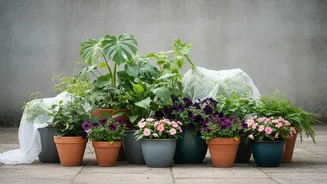
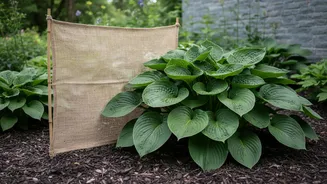
Where you place your pot can make all the difference. Exposed, open areas will naturally experience stronger gusts. Try to position vulnerable plants in more sheltered locations, such as against a house wall, in a corner, or behind garden furniture. Grouping several pots together can also create a micro-shelter, where the containers shield and support one another. Observe the wind patterns in your garden or on your balcony; some areas will be natural wind tunnels, while others remain relatively calm. Place your most at-risk plants in these calmer zones.
When You Need Extra Support
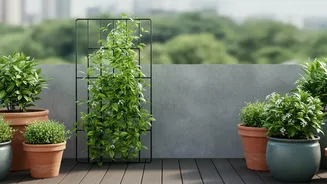
For exceptionally tall plants or in very windy locations, you may need to provide additional physical support. Driving a sturdy stake into the pot and loosely tying the plant's main stem to it can prevent the plant from swaying excessively and generating tipping force. For vining or climbing plants, a trellis or cage provides a secure structure for them to grow on. In extreme cases, you can even find ways to tie the pot itself to a railing or other fixed structure, ensuring it stays put no matter how hard the wind blows.