


An Unbelievable Velocity
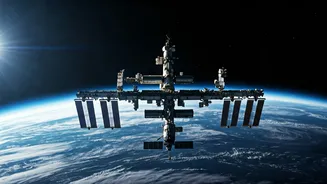
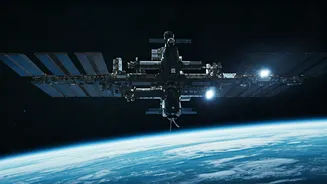
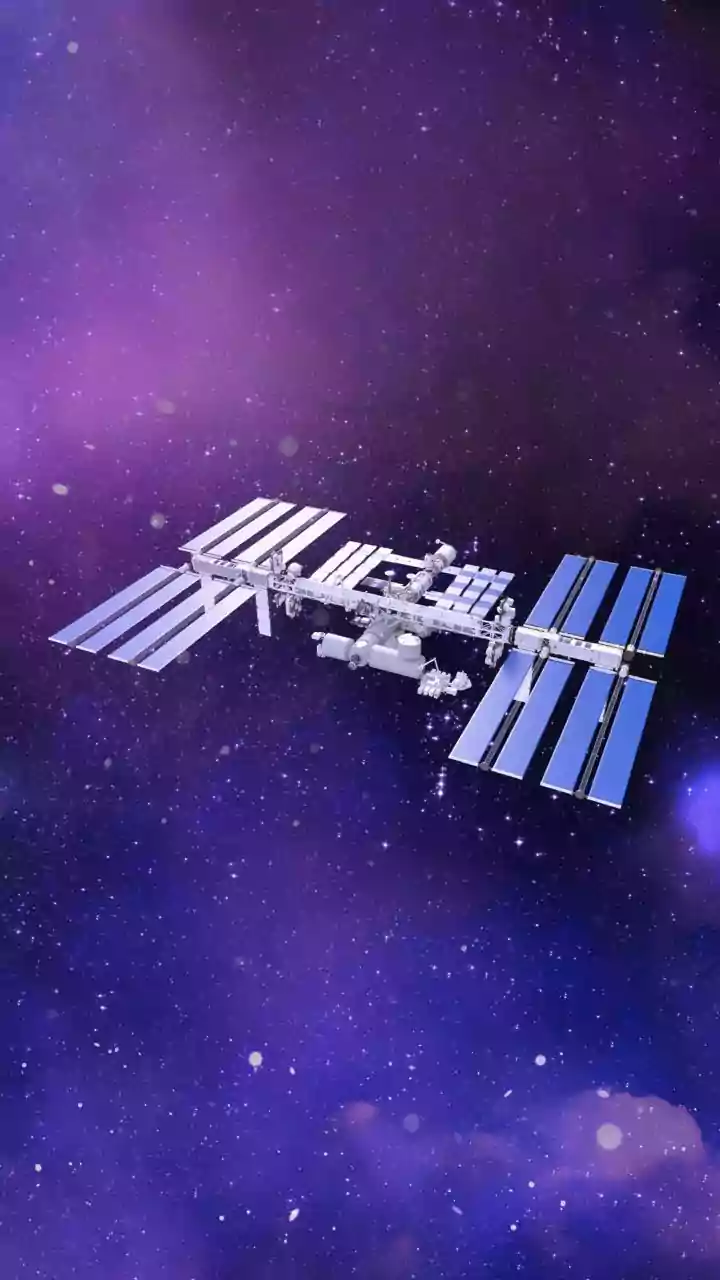
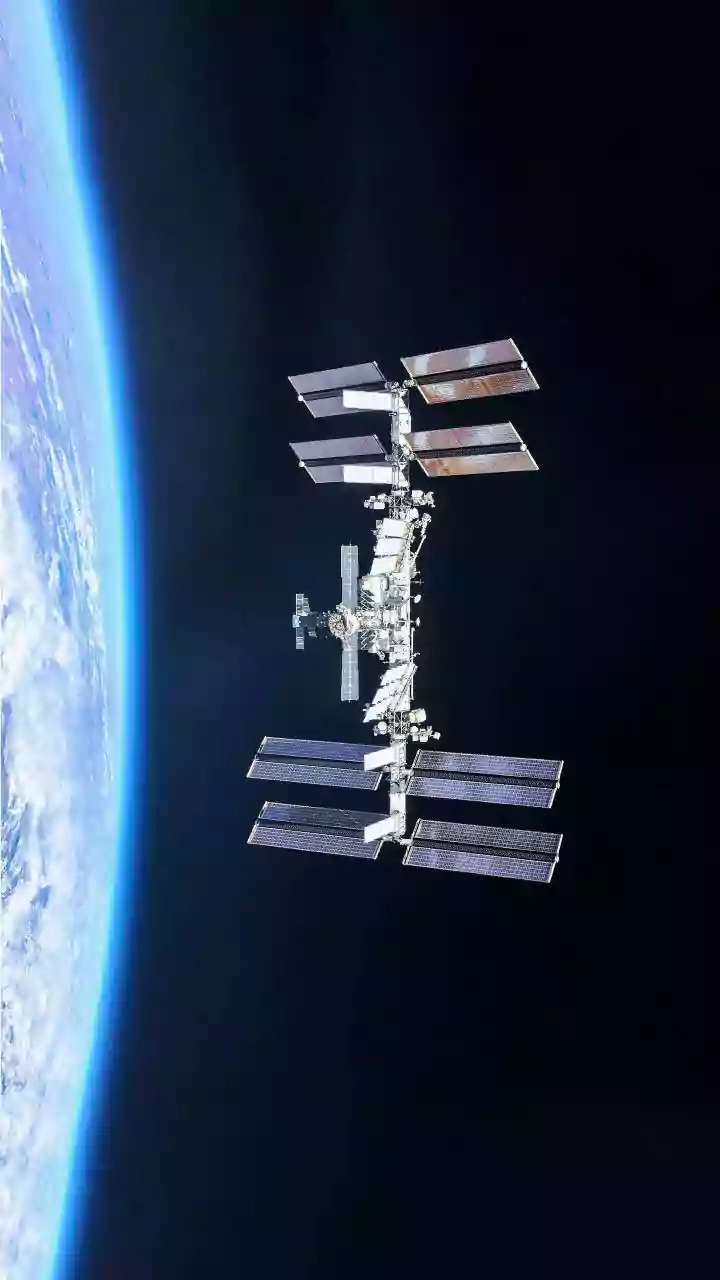
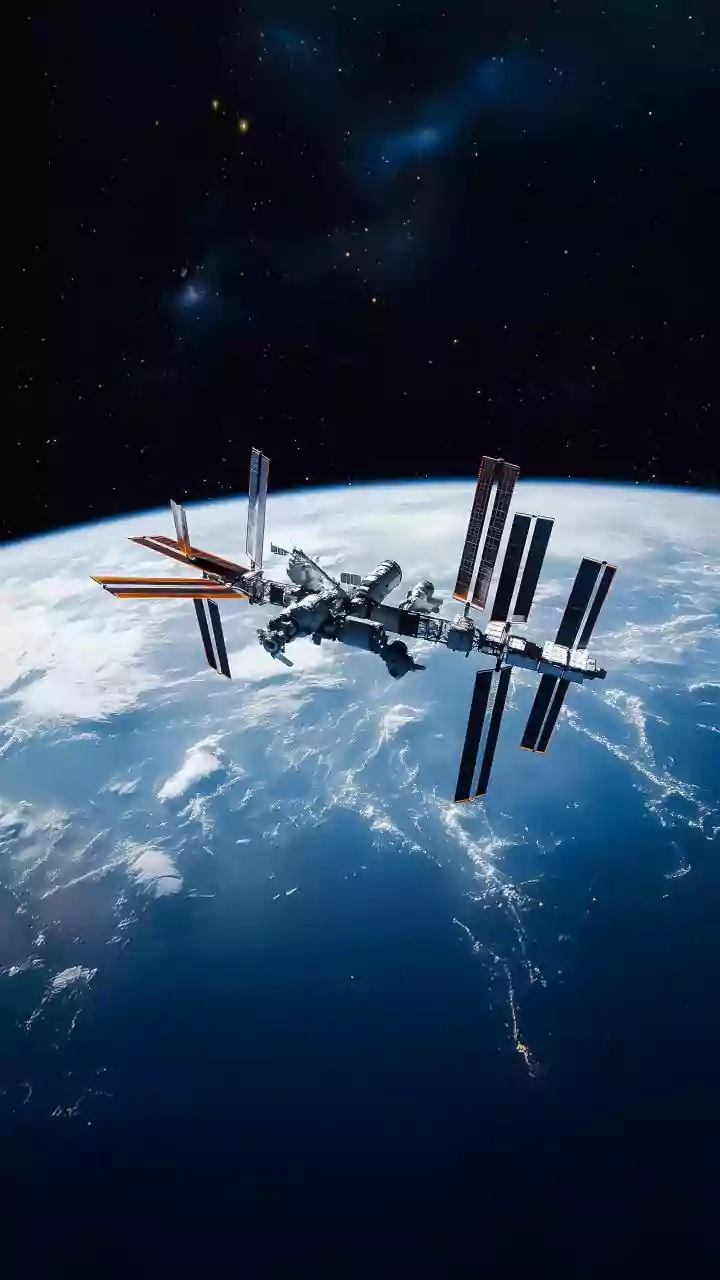
The single most mind-bending fact about the International Space Station (ISS) is its speed. It hurtles through the vacuum of space at approximately 28,000 kilometres per hour. That's not a typo. It is roughly 8 kilometres every single second. This incredible
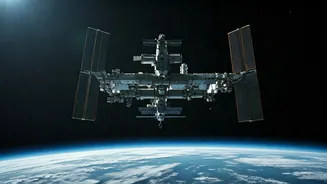
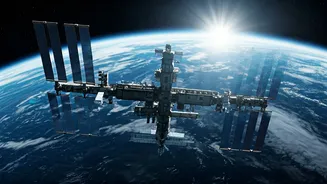
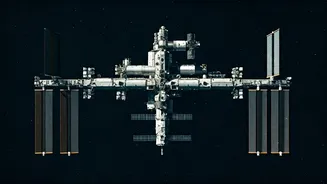
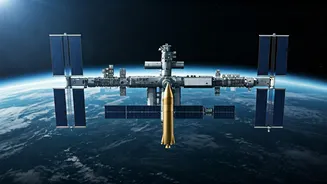
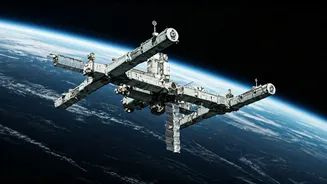
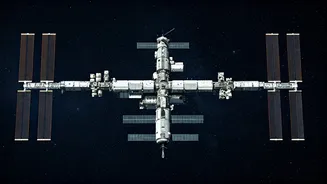
velocity is the secret to its constant presence above us. The ISS is in a perpetual state of falling towards Earth, but its immense forward speed means it constantly misses, tracing a circle around our planet. This journey completes one full orbit in about 90 to 92 minutes. So, while you go about your day, the football-field-sized laboratory above has already circled the globe once and is well on its way to doing it again.
Putting Speed in Perspective
Numbers like 28,000 km/h are hard to grasp. Let's try some analogies. It's about ten times faster than a speeding bullet. If the ISS could fly at that speed at sea level, it could travel from Delhi to Mumbai in under three minutes. For the astronauts on board, however, this speed is completely unnoticeable. Because the station and everything inside it are moving at the same velocity and there is no air resistance, there is no sensation of movement. It's the same principle that allows you to walk around a moving train without being thrown backward. This constant, high-speed freefall is what creates the weightless environment, or microgravity, that is essential for the unique scientific research conducted on board.
A Day of Sixteen Sunrises
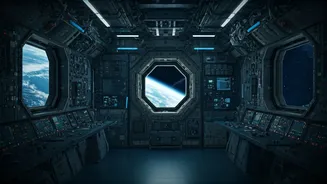
One of the most poetic consequences of this immense speed is the effect it has on day and night. Because it completes an orbit every 90 minutes, the crew aboard the ISS witnesses 16 sunrises and 16 sunsets every 24 hours. Imagine seeing the sun rise, only to have it set again 45 minutes later as the station passes into Earth's shadow. This rapid cycle of light and dark has a profound impact on life aboard the station. Astronauts' schedules are not governed by the natural light outside their windows but by Coordinated Universal Time (UTC) to maintain a regular work-sleep pattern. Many astronauts report that one of their favourite pastimes is simply floating in the seven-windowed Cupola module, watching the world and its stunningly fast sunrises sweep by below.
A Monument to Human Collaboration
The station's speed isn't just a physical phenomenon; it’s a testament to an unprecedented engineering and collaborative achievement. No single rocket was powerful enough to launch the 420,000-kilogram station into orbit at once. Instead, it was assembled piece by piece over more than a decade, requiring over 40 separate missions. Modules built in the United States, Russia, Europe, Japan, and Canada were launched and then painstakingly connected in space by astronauts on spacewalks and with robotic arms. The ISS, the single most expensive object ever built at an estimated cost of over $150 billion, is proof that when nations work together, they can build something that truly defies belief and literally circles the globe every hour and a half.