



The Foundation: Vrksasana and Ardha Chandrasana
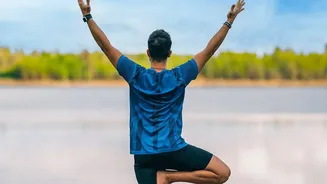
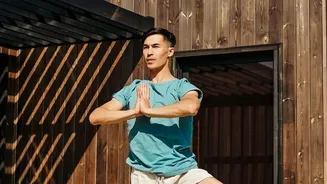
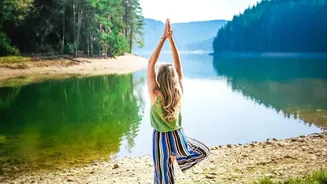
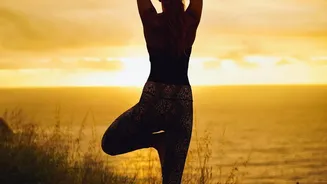
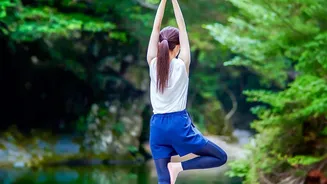
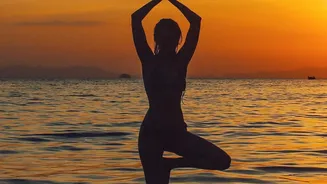
Before blending, it's essential to understand the two core postures. Tree Pose, or Vrksasana, is a masterclass in stability. By rooting down through one leg and opening the other hip, you build strength in your ankles, thighs, and core while improving
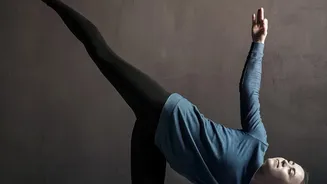
concentration. Half-Moon Pose, or Ardha Chandrasana, is about expansive balance. Extending from a single hand and foot, you open your body to the side, stretching the hamstrings and groin while strengthening the legs and core. Both poses are fundamental for developing hip stability and balance. Merging their distinct energies offers a creative path to deepen your practice.
Variation 1: Sugarcane in a Tree (Ardha Chandra Chapasana Hybrid)
This variation is a beautiful entry point into combining the two asanas. It introduces the backbend and hip-opening elements of Sugarcane Pose—a variation of Half-Moon—into the upright stability of Tree. Start in Tree Pose on your right leg, with your left foot on your inner thigh or calf. Find your 'drishti', or focal point. From here, begin to hinge forward slightly at the hips, reaching your right hand towards a block or the floor, about a foot in front of your right foot. As you tilt, release your left foot from your thigh and bend the knee, reaching back with your left hand to grasp your left foot or ankle. This creates a gentle bow shape, known as Chapasana. Kick your foot into your hand to open the chest and front of the thigh, creating a feeling of expansion while your standing leg remains strong and rooted.
Variation 2: The Floating Tree
This variation focuses on the transition between the two poses, building strength and control. Begin in a stable Half-Moon Pose, supported by a block under your bottom hand if needed. Feel the length from your lifted heel to the crown of your head. From here, the challenge is to rise back to a one-legged standing position without touching the lifted foot down. Engage your core and press firmly through your standing foot. Slowly bend your standing knee, then push off the block and lift your torso upright, drawing the lifted leg into a Tree Pose position against your standing inner thigh. The key is a slow, controlled movement that proves balance is not static, but a constant, fluid adjustment. You can then reverse the movement, flowing back down into Half-Moon.
Variation 3: The Side-Bending Tree
While not a direct Half-Moon hybrid, this variation borrows its principle of lateral, or side-body, extension. Begin in a strong Tree Pose with both arms reaching overhead. Ground firmly through your standing leg. Inhale to lengthen your spine, and as you exhale, begin to arc your upper body to the side of the lifted leg, creating a crescent shape with your torso. For example, if your left leg is lifted, you would bend towards the left. This movement challenges your core stability and the outer hip of your standing leg, forcing them to work harder to maintain your centre of gravity. It mimics the side-body opening of Half-Moon Pose while demanding the vertical grounding of Tree, creating a powerful test of balance and focus.
Tips for a Safe and Stable Practice
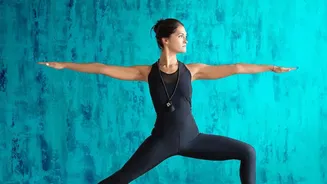
Exploring these hybrids requires patience and awareness. Always warm up properly, with poses like Triangle (Trikonasana) and Warrior II (Virabhadrasana II) to prepare your hips and legs. Use a block under your hand; it brings the floor closer and helps maintain alignment, preventing you from collapsing your chest toward the floor. Keep a micro-bend in your standing knee to avoid locking the joint and to engage the leg muscles fully. Most importantly, focus on your breath. A steady, even breath will calm the nervous system and help you find stillness within the challenge. If you fall, simply re-ground and try again with a playful spirit.