



The Sweet Science of Virality
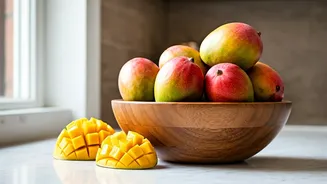
So, why mangoes? And why now? The answer lies in a perfect storm of social media alchemy. First, there’s the undeniable visual appeal. The mango’s brilliant, sunset-hued flesh is practically engineered for Instagram and TikTok. It’s a color that screams
warmth, happiness, and tropical escape—a powerful visual antidote to the mundane. Unlike a slice of brown-hued banana bread (the star of a previous viral era), a scoop of mango sorbet or a glistening cube of mango sticky rice doesn't need a filter to look incredible. The fruit does the work for you, creating thumb-stopping content that’s both aspirational and accessible. This trend also taps into a broader cultural shift. As global cuisines become more mainstream in the U.S., ingredients that were once considered exotic are now pantry staples. The mango, with its deep roots in South Asian, Southeast Asian, and Latin American cuisines, is a familiar comfort food for millions and a delicious discovery for others. Social media has simply accelerated that cross-cultural conversation, one recipe at a time.
The Main Attraction: Mango Sticky Rice
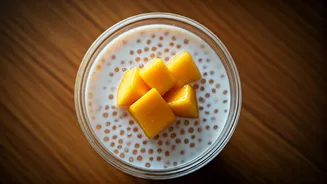
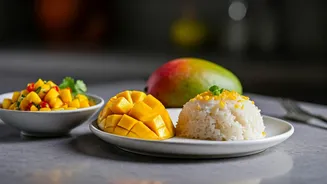
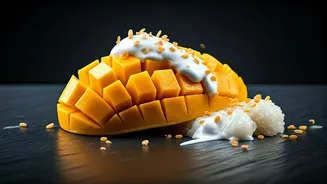
At the heart of the mango craze is a titan of Thai cuisine: mango sticky rice. Known as *khao niao mamuang*, this dessert isn't new, but its online fame has reached a fever pitch. Its renewed popularity can be traced to high-profile moments, like its feature at the Coachella music festival, which introduced it to a massive new audience. Videos showcasing the dish are a masterclass in sensory appeal. You see the glossy, coconut-infused sticky rice, the perfectly ripe mango slices arranged alongside it, and the final drizzle of sweet coconut cream, often sprinkled with toasted mung beans for crunch. It’s a study in contrasts—warm, sticky rice against cool, fresh fruit; sweet against slightly salty. For content creators, it’s a dream to assemble on camera. For viewers, it’s an immediate craving. The dish feels both luxurious and surprisingly straightforward, inspiring countless people to either seek it out at their local Thai restaurant or try making it themselves.
The DIY Darling: 3-Ingredient Sorbet
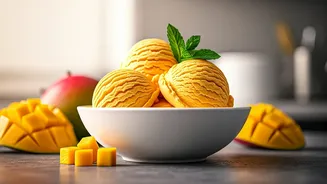
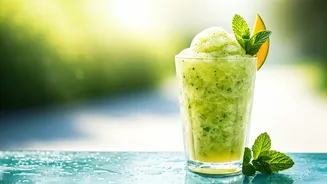
If mango sticky rice represents the authentic, restaurant-worthy side of the trend, the viral three-ingredient mango sorbet is its hyper-accessible, DIY counterpart. Flooding TikTok “For You” pages, this trend speaks to the platform’s love of low-effort, high-reward recipes. The formula is almost laughably simple: frozen mango chunks, a splash of coconut milk or lime juice, and a touch of sweetener like honey or maple syrup, all blitzed in a high-powered blender. The result is a vibrant, creamy, and healthy-ish dessert that looks and tastes like a million bucks. This isn’t about complex culinary skills; it's about empowerment in the kitchen. The videos are short, punchy, and satisfying, often set to a trending audio track. They communicate a simple, powerful message: you, too, can make this beautiful, delicious thing in under five minutes. It democratizes the dessert-making process, making it less about a formal recipe and more about a fun, easy-to-replicate food hack.
The Wild Card: Candied Mango Peels
Perhaps the most surprising—and uniquely viral—offshoot of the mango obsession is the candied mango peel trend. This one feels born entirely of the internet, a quirky kitchen experiment that caught fire. Driven by a no-waste ethos, creators started showing how to turn leftover mango skins into a chewy, sweet-and-sour candy. The process involves boiling the peels to soften them and reduce bitterness, then simmering them in a simple syrup until they become translucent and jewel-like. The final step often involves a coating of sugar or a pinch of citric acid for an extra-sour kick. The appeal is twofold. First, there’s the novelty factor; it's a food most people have never considered eating, let alone making into a treat. Second, it taps into the popular sustainability narrative of using every part of an ingredient. While the jury is still out on whether candied mango peels will become a classic, their brief, strange, and fascinating time in the viral spotlight perfectly encapsulates the playful and experimental nature of online food culture.