






What Is Breath Awareness?
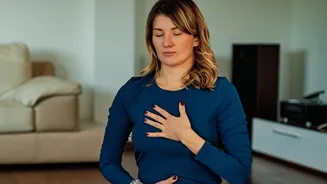
At its core, breath awareness is simply the practice of paying attention to your breath without trying to change it. Most of the day, our breathing happens automatically, often becoming shallow and quick when we're stressed or distracted. Breath awareness interrupts
this autopilot mode. It's not about forcing a deep breath or achieving a state of total emptiness in your mind; it's about gently observing the natural rhythm of your inhales and exhales. This simple act anchors you in the present moment, as your breath is something that is only ever happening right now. By consciously focusing on this fundamental bodily function, you can influence your nervous system, signaling to your body that it is safe to relax.
The Power of Starting Small
The idea of starting a new wellness habit can be intimidating. The beauty of short, five-minute sessions is that they remove the pressure. Committing to just five minutes a day feels achievable and is easy to slot into even the most packed schedule, such as before your morning coffee or right after you finish work. Research has shown that even daily five-minute breathwork exercises can significantly improve mood and reduce anxiety. These brief sessions act as a powerful reset button, helping to lower stress hormones like cortisol, decrease blood pressure, and improve focus. Starting small makes the practice sustainable, helping you build consistency, which is more important than the length of any single session when you're just beginning.
Your First Five-Minute Exercise
Ready to try it? 'Box breathing' is a simple and effective technique for beginners. It's easy to remember because it has four equal sides, just like a box. Find a comfortable place to sit or lie down where you won't be disturbed for a few minutes. You can close your eyes if that feels right for you. Now, follow these four steps: 1. Inhale slowly through your nose for a count of four. 2. Gently hold your breath for a count of four. 3. Exhale slowly through your mouth or nose for a count of four. 4. Hold the breath out for a count of four.Repeat this cycle for about five minutes. The counting itself gives your mind something to focus on, helping to anchor you in the present moment and away from distracting thoughts.
Tips for Building a Habit
The key to reaping the long-term benefits of breath awareness is consistency. The easiest way to build a new habit is to 'tack' it onto an existing one. For example, practice your five minutes of breathing right after you brush your teeth in the morning or while you wait for the kettle to boil. Setting a daily reminder on your phone can also be helpful. Choose a time and place where you can be relatively quiet and undisturbed, at least when you're starting out. Most importantly, be patient with yourself. Don't worry about doing it 'perfectly'. The goal is simply to show up for those few minutes each day.
Common Hurdles for Beginners
It's completely normal to face a few challenges when you start. The most common one is a wandering mind. You might sit down to focus on your breath and find your mind is busier than ever, thinking about emails, errands, or conversations. This is not a sign of failure; it's just what minds do. The practice is not to have a blank mind, but to gently notice when your mind has wandered and guide it back to your breath, over and over again. Another common issue is feeling restless or impatient. If five minutes feels too long, start with just one or two minutes. Finally, don't get discouraged if you don't feel profound bliss immediately. The benefits are often subtle at first and accumulate over time.