

Cosmic Hide-and-Seek
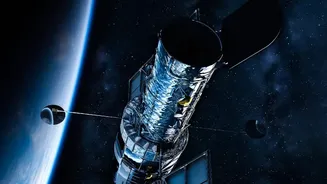
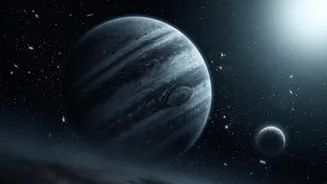
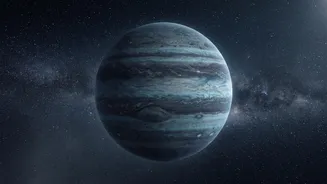
For seven years, from 2019 to early 2026, scientists using NASA's Transiting Exoplanet Survey Satellite (TESS) kept a close watch on TOI-2535 b, a 'hot Jupiter' located about 1,000 light-years from Earth. This type of giant gas planet orbits incredibly
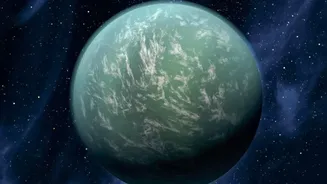
close to its star, completing a full 'year' in just over eight days. Astronomers detect such planets by observing a 'transit'—the tiny, regular dip in a star's brightness when a planet passes in front of it from our perspective. But with TOI-2535 b, something strange began to happen. The transits grew shorter, fainter, and less predictable, with the planet arriving up to six hours early or late. Then, in 2026, the transits stopped altogether. The planet was gone.
The Unseen Influence
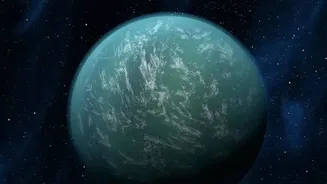
Of course, the planet didn't actually vanish into thin air. The real culprit, scientists have concluded, is a hidden neighbour. The erratic timing and disappearing act of TOI-2535 b are tell-tale signs of a powerful gravitational tug from another, as-yet-unseen planet in the same system. This unseen world, likely a giant planet itself, is in a slightly tilted orbit relative to TOI-2535 b. Their mutual gravitational pull causes both of their orbits to 'wobble' like spinning tops. For years, this wobble was shifting TOI-2535 b's path across its star, moving from a central crossing to a grazing one, until its orbit tilted completely out of our line of sight. It's the first time astronomers have witnessed a planet's transits cease in real-time around a single star due to this effect.
A Window into Planetary Formation
This disappearing act is more than just a cosmic magic trick; it provides crucial clues about how planetary systems form and evolve. Hot Jupiters like TOI-2535 b have long puzzled scientists. They are thought to form far from their star, where ice is plentiful, and then migrate inwards. One theory suggests a violent migration, where a planet is 'flung' inwards after a near-collision. Another proposes a slower, gentler spiral through the gas disk of the young solar system. A violent journey would likely eject any nearby planets, but the presence of a massive neighbour pulling on TOI-2535 b suggests it probably underwent a slower, more stable migration. This makes the system an extremely rare and valuable laboratory for studying planetary dynamics.
What Happens Now?
While TOI-2535 b may have slipped out of view, it is not lost forever. Based on their models of the gravitational dance between the two planets, astronomers predict its orbital wobble will eventually bring it back into our line of sight. However, the wait could be a long one. Current estimates suggest TOI-2535 b will not perform another transit for at least 30 to 50 years. In the meantime, the focus shifts to the hidden companion. There's a chance that as its own orbit precesses, this second planet could begin transiting the star, giving scientists their first direct look at the world responsible for this captivating cosmic mystery. The ongoing observation of the TOI-2535 system highlights a dynamic and often chaotic universe, where planetary orbits are not always the clockwork mechanisms we imagine them to be.