



A Policy Shift Opens the Skies
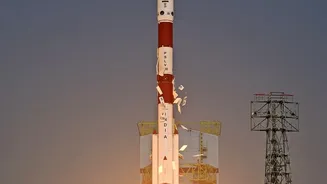
The catalyst for this transformation is the Indian Space Policy 2023. For years, the Indian Space Research Organisation (ISRO) was the sole developer, operator, and promoter of space activities. The new policy redefines these roles, encouraging private
companies—referred to as Non-Governmental Entities (NGEs)—to participate in everything from satellite manufacturing to launch services. Spearheading this change is the Indian National Space Promotion and Authorisation Centre (IN-SPACe), a single-window agency created to facilitate, authorize, and supervise all private space activities. This move is designed to unleash innovation and attract investment, with projections showing India's space economy growing from around $8.4 billion to $44 billion by 2033.
Startups Take Flight
The policy shift has sparked a boom in entrepreneurial activity, with over 400 space startups emerging in recent years. These agile companies are not just suppliers; they are building entire launch vehicles and satellite constellations. Hyderabad-based Skyroot Aerospace, founded by former ISRO scientists, recently became India's first private company to launch a rocket into orbit with its Vikram-1 mission. This success makes India only the third country, after the US and China, with a private orbital launch capability. Another key player is Agnikul Cosmos, a startup incubated at IIT Madras, which is developing rockets with 3D-printed engines and has established India's first private launchpad. These companies are focused on the booming global market for small satellite launches, offering more frequent and cost-effective access to space.
Universities as the New Launchpad for Talent
Behind this startup surge is a growing academic ecosystem. Universities are no longer just sources of recruitment but active partners in research, development, and incubation. The connection is often direct; Agnikul Cosmos, for example, was founded within IIT Madras and uses its campus to house a factory for 3D-printing rocket engines. Recognizing the need for a skilled workforce, the government is also investing in academia by planning to set up space laboratories in universities to give students hands-on training in satellite and rocket technology. Institutions like the Indian Institute of Space Science and Technology (IIST), established by ISRO, have been dedicated to creating a talent pipeline for years, offering specialized programs in space science and technology. This synergy ensures a steady flow of both ideas and skilled engineers to fuel the growing private space industry.
A Symbiotic Orbit: ISRO's New Role
The rise of the private sector does not diminish ISRO's importance; it refocuses it. By outsourcing routine activities like building launch vehicles for small satellites, ISRO can dedicate its resources to more ambitious and complex missions, such as deep-space exploration, human spaceflight (Gaganyaan), and advanced scientific research. Furthermore, ISRO is acting as a crucial enabler, sharing its decades of expertise and state-of-the-art facilities with startups. IN-SPACe facilitates this access, allowing companies like Skyroot and Agnikul to use ISRO's testing facilities and launch infrastructure, which significantly reduces their development costs and timelines. This collaborative model positions ISRO as a mentor, enabling the entire ecosystem to grow faster and more robustly.