





More Than Just a Meal
In India, food is a language of love, devotion, and community. A festive menu is not merely a collection of dishes but an expression of gratitude, heritage, and joy. Each festival, from Diwali to Eid to Onam, has its own unique culinary traditions that
tell a story of regional identity and faith. Preparing a wide array of dishes is a way of honouring guests, celebrating abundance, and creating an atmosphere of shared happiness. The act of cooking together and sharing a diverse meal strengthens family and community bonds, making the feast itself a central part of the celebration.
The Ancient Wisdom of Six Tastes
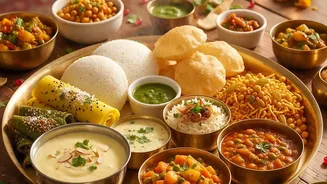
The variety in a festive menu is also guided by the ancient wisdom of Ayurveda, which identifies six essential tastes, or 'Shatrasas': sweet, sour, salty, bitter, pungent, and astringent. A balanced meal should ideally include all six to ensure complete nourishment and satisfaction. This principle explains why a traditional thali features a complex assortment of flavours—the sweetness of a kheer, the sourness of a tamarind-based curry, the saltiness of a pickle, the bitterness of fenugreek, the pungency of ginger, and the astringent quality of lentils. This balance not only pleases the palate but also aids digestion and promotes overall well-being, turning the meal into a holistic experience.
A Tapestry of Regional Pride
India's immense cultural and geographical diversity is vividly reflected in its festival foods. A varied menu is a celebration of this regional pride. In Kerala, the Onam Sadya is a legendary feast featuring over two dozen vegetarian dishes served on a banana leaf, each with its specific place and purpose. For Diwali in North India, homes are filled with the aroma of rich sweets like gujiya and savoury snacks called 'faral'. Meanwhile, Eid celebrations across the country are marked by lavish meat preparations like biryani and kebabs, alongside the sweet vermicelli pudding, sheer khurma. Each regional spread showcases local ingredients, seasonal produce, and time-honoured cooking techniques, making every festival a unique culinary journey.
An Offering of Gratitude and Devotion
In Hindu tradition, food is often first offered to the gods in a ritual called 'naivedya' or 'bhog' before being shared as 'prasad' (a blessed offering). The variety and richness of the meal symbolise profound respect and gratitude. One of the most extravagant examples is the 'Chappan Bhog', an offering of 56 distinct dishes to Lord Krishna. Legend holds that this tradition began when villagers offered Krishna 56 dishes to compensate for the seven days he spent without food while protecting them by lifting the Govardhan Hill. This concept of a grand, diverse offering underscores the idea that food is a powerful medium for expressing devotion and receiving divine blessings.
Ensuring Hospitality for All
On a practical level, variety is the cornerstone of Indian hospitality. When families and friends gather, a diverse menu ensures there is something for everyone to enjoy, regardless of their age, dietary preferences, or spice tolerance. From mild, comforting dals to fiery curries, and from crispy fried snacks to an array of sweets, the spread is designed to be inclusive. This thoughtful approach makes every guest feel welcomed and cared for, embodying the spirit of 'Atithi Devo Bhava'—the guest is God. The sheer choice on offer is a host’s way of showing generosity and ensuring that every person leaves the table happy and satisfied.