





India's massive textile industry, a cornerstone of its economy, faces a constant battle with raw material costs. A key government policy—easing the import duty on cotton—acts as a critical shield. But how does this financial lever work?
The Core Challenge: A Volatile Market
For Indian textile
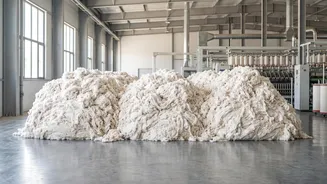
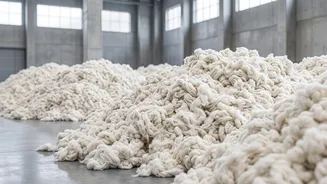
mills, the price of cotton is the single most important variable. When raw cotton prices swing wildly, it sends shockwaves through the entire production chain. This volatility makes it difficult for spinning mills to price their yarn, for weavers to cost their fabric, and for garment exporters to quote competitive prices to international brands. In late 2026, domestic cotton prices surged, exceeding the government's Minimum Support Price (MSP), creating significant pressure on manufacturers. This uncertainty not only squeezes profits but also threatens the stability of a sector that is India's second-largest employer.
What is the Cotton Import Duty?
To understand the solution, we first need to understand the tool. India normally imposes an 11% import duty on cotton, which is a combination of a Basic Customs Duty, an Agriculture Infrastructure and Development Cess, and a Social Welfare Surcharge. The primary purpose of this duty is to protect domestic cotton farmers from a flood of cheap, often subsidised, foreign cotton. By making imported cotton more expensive, it encourages mills to prioritise buying from local growers, supporting farm incomes.
How Easing the Duty Provides a Safety Valve
When domestic cotton prices climb too high or when there's a shortfall in domestic supply, the import duty can become a burden. By temporarily removing the 11% duty, as the government did from June to October 2026, imported cotton becomes a more financially viable option for mills. This doesn't mean mills will stop buying Indian cotton. Instead, it creates a price ceiling. If domestic prices rise significantly above the landed cost of duty-free imported cotton, mills have an alternative. This access to global supply at competitive prices prevents domestic prices from spiralling out of control, giving mills a crucial buffer against volatility and ensuring they can continue operations without massive cost escalations.
Stabilising the Entire Value Chain
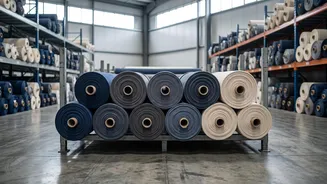
The benefits ripple outwards from the spinning mills. When mills can access cotton at predictable prices, they can produce yarn at a stable cost. This stability is passed on to fabric and garment manufacturers, who can then offer competitive and reliable pricing to their clients, both domestic and international. In a global market where Indian exporters are fighting for orders against rivals in Bangladesh and Vietnam—countries that have duty-free access to cotton—this cost competitiveness is not just an advantage; it's a necessity. The policy aims to help India reach its ambitious goal of $100 billion in textile and apparel exports by 2030.
The Other Side of the Coin: The Impact on Farmers
While textile mills celebrate the duty waiver, cotton farmers have expressed concerns. Farmer unions argue that allowing duty-free imports, even temporarily, can depress domestic prices. When the market anticipates an influx of foreign cotton, local buyers may offer lower prices to farmers, potentially pushing market rates below the MSP and impacting their livelihoods. This creates a delicate balancing act for policymakers: supporting the industrial value chain without undermining the agricultural base it depends on. The government's strategy of applying the waiver during the 'off-season' for cotton harvesting is an attempt to mitigate this negative impact.
A Strategic Tool, Not a Permanent Fix
Industry experts and bodies like the Confederation of Indian Textile Industry (CITI) have welcomed the temporary duty relief. However, many note that while it addresses immediate cost pressures, it doesn't solve deeper structural issues. Challenges like lower farm productivity, contamination in domestic cotton, and quality gaps still need to be addressed for the long term health of the sector. Furthermore, the effectiveness of the duty waiver can sometimes be limited if global prices, freight costs, and currency fluctuations offset the savings from the tax removal. Ultimately, the easing of the import duty is a powerful, tactical tool used by the government to navigate short term crises and maintain equilibrium in a vital economic sector.