





The Foundation: Whole Pulses (Sabut)
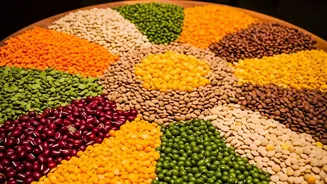
Whole pulses, known as 'sabut' in Hindi, are the entire seed, complete with their outer skin. Think of whole moong (green gram), whole masoor (brown lentils), and whole urad (black gram). Because they are in their most natural, unprocessed state, they are packed
with dietary fibre. This fibre-rich skin means they take the longest to cook and often require soaking for several hours or even overnight to soften. When cooked, whole pulses tend to hold their shape well, providing a chewier, more substantial texture and an earthy, complex flavour. They are the stars in robust, slow-cooked dishes like Dal Makhani (made with whole urad) and hearty curries where you want the pulse to remain distinct.
The Quick Compromise: Split Pulses with Skin (Chilka)
Next are the split pulses that retain their skin, often called 'chilka' dal, with 'chilka' meaning peel or husk. Moong dal chilka (split green gram with skin) and urad dal chilka (split black gram with skin) are common examples. These are simply whole pulses that have been split in half but not skinned. This form offers a middle ground in terms of cooking. They cook faster than their whole counterparts but slower than fully skinned dals. The presence of the skin adds a pleasant, slightly rustic texture and retains more fibre than fully processed dals. They are incredibly versatile and are perfect for everyday dals where you want a bit of texture but don't have the time for a long soak and slow cook.
The Speedy Softie: Split and Skinned Pulses (Dhuli)
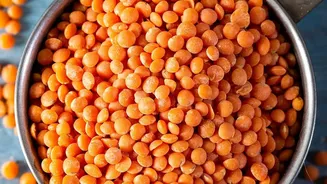
Split and skinned pulses, or 'dhuli' (washed) dals, are the most common type you'll find. This category includes the familiar yellow toor (arhar) dal, red masoor dal, and yellow moong dal. Having been both split and de-husked, they are the quickest to cook, often needing only 15-25 minutes and sometimes no soaking at all. Their main characteristic is their ability to break down completely, creating a smooth, creamy, and soupy consistency. This makes them the ideal choice for simple tadka dals, South Indian sambar, and the comforting rice-and-lentil dish, khichdi. Because the fibrous skin is removed, they are also considered the easiest to digest.
Why It Matters for Your Dish
Choosing the right type of pulse is crucial because it directly impacts three key elements of your final dish: cooking time, texture, and nutrition. If a recipe calls for the creamy consistency of a simple tadka dal and you use whole masoor, you will be waiting much longer, and the texture will be completely different. Conversely, using quick-cooking red lentils (masoor dal) in a dish that requires the pulses to hold their shape will result in a mushy outcome. Whole pulses, with their skins intact, provide the most fibre. Removing the skin reduces the fibre content but makes the pulse quicker to cook and easier to digest. So, checking the recipe ensures you achieve the intended result, both in taste and texture, and helps you plan your cooking time effectively.
A Simple Guide to Substitution
What if you don't have the exact pulse a recipe calls for? You can often substitute, but you must adjust your method. If a recipe requires split and skinned moong dal and you only have whole moong, you must significantly increase the cooking time and soak the dal beforehand. Your final dish will also have a firmer texture. If you are substituting in the other direction—using split dal instead of whole—be prepared for a much shorter cooking time and a creamier result. As a general rule, toor dal and chana dal can sometimes be used interchangeably, though chana dal takes longer to soften. Similarly, red masoor dal and yellow moong dal are often swapped due to their quick cooking times. The key is to be mindful of how the change will affect the final consistency and adjust your expectations and cooking process accordingly.