




Safety First, Always
Before Indian astronauts, or 'Gaganauts', can journey to low Earth orbit, ISRO must ensure their vessel is as safe as humanly and technologically possible. Every phase of the mission, from launch to landing, presents unique challenges. Recently, ISRO focused
on three of the most crucial moments for crew safety: the splashdown in the ocean, the separation of modules high above Earth, and the deployment of parachutes during the final descent. In a series of ground-based qualification trials, engineers rigorously tested the complex systems designed to protect the crew during these high-stakes events. These tests are not mere formalities; they are the bedrock of the entire human spaceflight program, proving that every component can withstand the extreme forces and environments of space travel and re-entry.
The Anatomy of a Safe Return
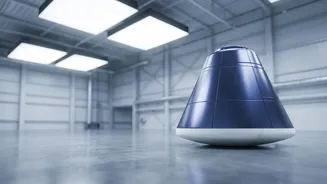
One of the key systems tested was the Crew Module Up-righting System (CMUS). After the capsule splashes down in the sea, it could land tilted or even upside down. The CMUS is a clever solution using stored cold gas to inflate flotation bags, which automatically rotate the module into an upright position, keeping the astronauts safe until recovery teams arrive. Another critical test involved the umbilical connection between the Crew Module (where the astronauts sit) and the Service Module (which provides power). This connection must sever cleanly at a precise moment before re-entry; any snag could be catastrophic. The test confirmed a smooth separation, ensuring the Crew Module's integrity. Finally, ISRO verified the capsule's structural strength when the apex cover, which protects the parachutes, is jettisoned. The test applied 1.75 times the expected force to prove the module can handle the explosive event that precedes the parachute deployment.
A Crucial Piece of the Gaganyaan Puzzle
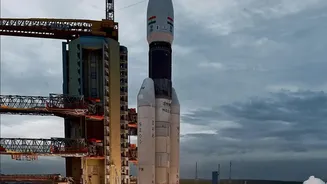
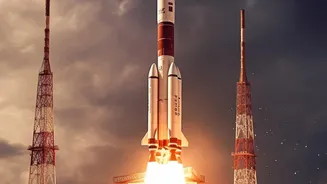
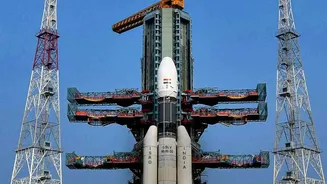
These successful tests are a massive vote of confidence for the Gaganyaan mission's architecture. They complement other vital safety systems, like the Crew Escape System (CES), which is designed to pull the crew capsule away from the rocket in case of an emergency during launch. That system was validated during the TV-D1 test mission, proving it could function effectively during flight. Together, these ground and in-flight tests form a comprehensive safety net. ISRO is methodically ticking off every box on a long checklist of requirements before it can commit to a crewed launch. The Gaganyaan programme is structured with multiple uncrewed test flights to validate all systems before the final manned mission. This phased approach ensures that every piece of technology, from life support to re-entry shielding, is proven to be reliable.
The Road Ahead to Orbit
With these major qualification tests successfully accomplished, ISRO moves another step closer to the first uncrewed Gaganyaan mission, designated G1. This flight, carrying the humanoid robot Vyommitra, will serve as a full dress rehearsal, testing all systems in an integrated manner from launch to splashdown. Following the uncrewed flights, and after analysing mountains of data to ensure every system is perfect, ISRO will proceed with the historic first crewed mission. Four Indian Air Force test pilots have been selected and have undergone extensive training for this purpose. The successful completion of these safety tests is not just a technical achievement; it is a promise to the nation and to the future Gaganauts that their safety is, and will always be, the highest priority on India's journey to the stars.