

A Star's Ghostly Afterlife
To understand this cosmic detective story, we first need to meet the main character: a white dwarf. A white dwarf is the super-dense core left behind after a star like our Sun runs out of nuclear fuel. Before it gets there, the star swells into a massive
'red giant', a fiery expansion expected to consume any inner planets. What remains is a small but incredibly hot stellar remnant that slowly cools over billions of years. This is the fate awaiting our own Sun, making the study of white dwarf systems a glimpse into our solar system's distant future. Astronomers have found planets that have survived this violent process, but this new claim is something different entirely.
Phoenix from the Ashes
The excitement surrounds a candidate planet orbiting a white dwarf named HS 0209+0832. This isn't just any planet; it's potentially a 'second-generation' world. While the planets in our solar system are 'first-generation'—formed from the same cloud of gas and dust that created the Sun—a second-generation planet is one that forms from the material the star casts off as it dies. These cosmic phoenixes are thought to be extremely rare, with previous candidates only suspected around pulsars, which are different, highly magnetic stellar remnants. Finding one around a much more common white dwarf was completely unexpected.
The Chemical Clues
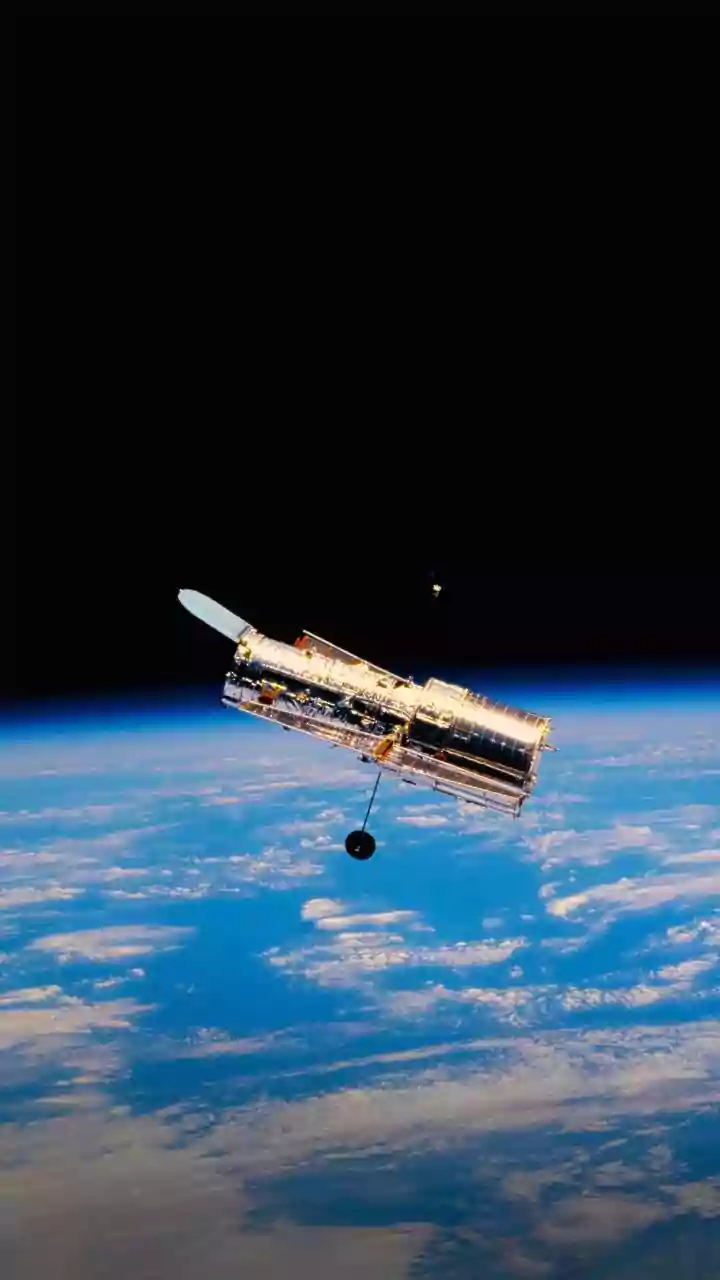
So, how can you spot a planet you can't directly see? The evidence is indirect, hidden in the light from the white dwarf itself. Decades-old data from the Hubble Space Telescope revealed strange chemical signatures in the star's atmosphere that couldn't be identified. Recently, a team of astronomers cracked the case by matching these signatures to an element called niobium. The atmosphere of HS 0209+0832 had niobium levels 1,000 times higher than our Sun's. This is the smoking gun, because niobium is a heavy element forged only in the extreme conditions inside a dying star. Its presence suggests that material from the dead star itself was recycled to form a new planet, which is now slowly 'raining' this material back onto the white dwarf's surface.
Why the Evidence Is Indirect
Despite the compelling chemical fingerprint, the claim remains tentative because no one has actually seen the planet. The entire case is built on interpreting the white dwarf's polluted atmosphere. Adding another layer of evidence, data from NASA's TESS satellite detected a faint, repeating dip in the star's brightness every 4.4 days. This is consistent with a Jupiter-sized gas giant orbiting extremely close to the star, getting blasted by intense heat that strips away its outer layers, creating a tail of material that falls onto the star. However, other stellar phenomena could potentially mimic this signal. Scientists believe it's the most likely explanation, but confirming the planet's existence will require more observation and ruling out all other possibilities.
A New Chapter in Planetary Science
If confirmed, this discovery would be a game-changer. It suggests that the end of a star's life isn't an epilogue, but potentially the start of a new chapter of planet formation. It proves that planetary systems can be resurrected from stellar debris. The potential planet around HS 0209+0832 is currently being scorched by the hot young white dwarf, but as the star cools, the planet could settle into a stable habitable zone for millions or even billions of years. This opens up the incredible possibility that life could arise on worlds long after their original sun has died. It challenges our understanding of planetary resilience and offers a fascinating, if speculative, look at the potential for cosmic rebirth across the universe.