




The Twin Crises of Water and Power
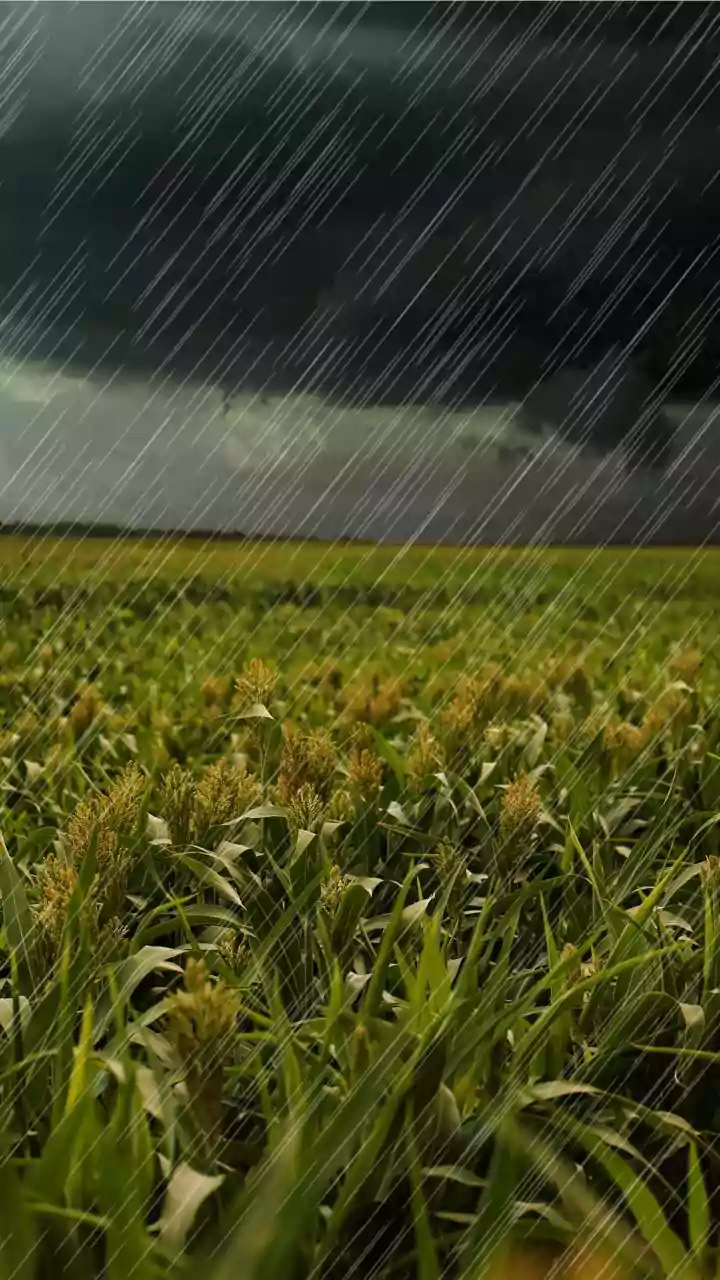
Maharashtra's agriculture is the backbone of its rural economy, but it exists in a state of constant challenge. A significant portion of the state is drought-prone, with erratic rainfall patterns making traditional farming a gamble. This has led to an over-reliance
on groundwater, with borewells being a primary source of irrigation for a majority of farmers. However, this has resulted in a severe depletion of groundwater levels across many regions. Compounding this water crisis is an energy crisis. Farmers in rural areas often face an irregular electricity supply, making it impossible to run water pumps when their crops most need it. This double bind of water scarcity and power insecurity traps farmers, limiting crop yields, increasing costs, and threatening their livelihoods.
A Smarter, Self-Reliant Solution
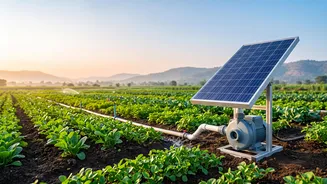
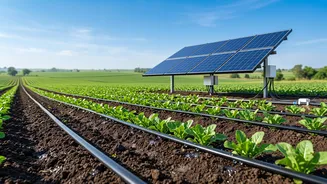
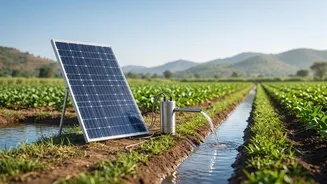
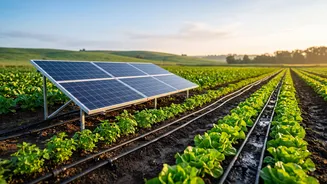
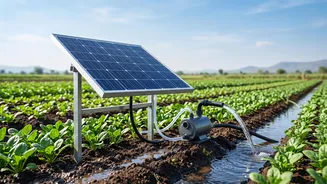
Off-grid drip irrigation tackles both these problems head-on. The system combines two key innovations: solar-powered water pumps and drip irrigation networks. Solar panels generate clean, free electricity on-site to power a pump that draws water from a well, pond, or canal. This frees farmers from dependence on the unstable grid and eliminates recurring diesel costs. The water is then fed into a drip irrigation system—a network of pipes and emitters that delivers water slowly and directly to the roots of each plant. This precision method is a stark contrast to flood irrigation, which wastes enormous amounts of water to evaporation and runoff. For smallholders, who often have fragmented land holdings, portable and easy-to-install drip kits are becoming increasingly accessible.
More Crop Per Drop, More Power Per Ray
The benefits of this integrated system are transformative. Drip irrigation can reduce water consumption by up to 70% compared to conventional methods. For a water-stressed state like Maharashtra, this efficiency is critical. It allows a farmer to irrigate more land with the same amount of water, or to cultivate crops through dry periods. When paired with the reliability of solar power, farmers can apply water exactly when crops need it, preventing stress and significantly boosting yields. A recent project in Palghar district, for instance, helped increase the total cultivated land from just a few acres to nearly 96 acres, enabling year-round farming and reducing distress migration. Farmers can diversify from staple crops to higher-value vegetables and fruits, leading to a substantial increase in income.
The Economic and Policy Push
While the initial investment for a solar pump and drip system can be a barrier for small farmers, the long-term economics are compelling. With no fuel costs and minimal maintenance, the operational expenses are extremely low. Recognizing this potential, both central and state governments are actively promoting these technologies. Under schemes like the Pradhan Mantri Krishi Sinchayee Yojana (PMKSY) and its 'Per Drop More Crop' component, farmers can receive significant subsidies—sometimes up to 85% of the installation cost in Maharashtra—for adopting micro-irrigation. State-level initiatives for solar pumps further reduce the financial burden, making these systems an attainable reality for many. These policies are crucial for accelerating adoption and helping farmers make the capital investment needed to secure their future.