





NASA's New Playbook: Partnering for the Planets
For decades, exploring the solar system was a job reserved for national governments and their space agencies. Today, that model is undergoing a radical transformation. NASA is embracing public-private partnerships as a core strategy to accelerate discovery
and lower costs. This approach allows the agency to focus on its primary mission—science and exploration—while harnessing the innovation and agility of the commercial sector.This isn't a brand-new idea, but its application to deep-space missions is a game-changer. We've seen private companies successfully ferry cargo and astronauts to the International Space Station and deliver scientific payloads to the Moon. Now, NASA is extending that model to the Red Planet. By treating missions to Mars like a commercial delivery service, the agency can get more science done, more often. Recent announcements show this strategy is moving full-steam ahead, with partnerships aimed at developing everything from atmospheric instruments to the next wave of surface rovers.
Meet STRIDE: The Next Generation of Martian Mobility
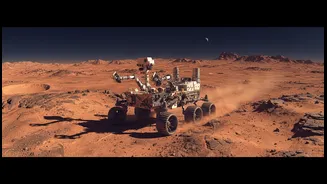
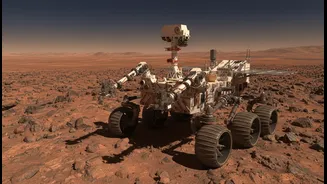
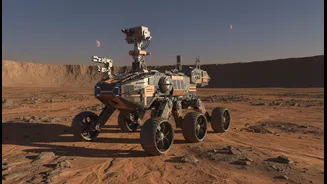
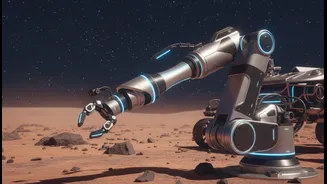
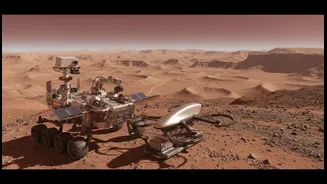
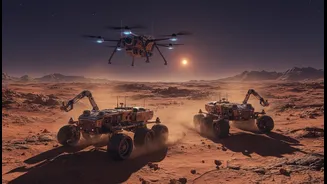
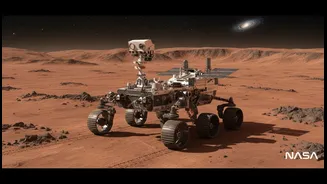
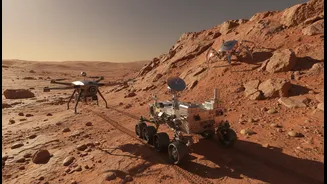
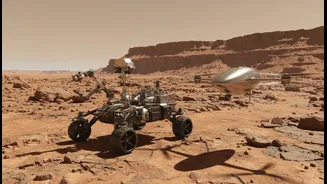
The headline-making news is the STRIDE program, which stands for Science Transport and Robotic Innovation for Deployment and Exploration. On July 8, 2026, NASA announced it had awarded contracts to seven US companies under this initiative. The goal is to develop the next generation of robotic mobility systems for the Martian surface. This isn't just about building a better rover; it's about creating platforms—both ground-based and aerial—that can travel farther and access challenging terrain that current rovers can't reach.These advanced systems are designed to carry and deploy scientific payloads, effectively acting as robotic field assistants for future missions. NASA is leveraging the rapid innovation seen in terrestrial and lunar robotics, adapting those advancements for the unique and harsh environment of Mars. This program invites a wide range of companies, from established aerospace giants to newer robotics firms, to help solve the challenges of Martian exploration.
The Seven Companies Driving the Change
So, who are the seven companies chosen for the STRIDE initiative? The list represents a mix of industry veterans and specialized innovators. The contracts, worth a combined potential total of approximately $17 million, were awarded to AeroVironment, Astrobotic, Venturi Astrolab, Ground Control Robotics, Honeybee Robotics, Intuitive Machines, and MEI Technologies. Work is expected to begin in the fall of 2026.Each of these companies brings unique expertise. For example, AeroVironment has a history with Mars aerial vehicles, while companies like Astrobotic and Intuitive Machines are key players in NASA's commercial lunar missions. Honeybee Robotics has a long track record of developing planetary drills and robotic arms. By funding early-stage design studies and prototypes, NASA is cultivating a competitive ecosystem of suppliers who can provide off-the-shelf or easily adapted mobility solutions for future missions, making exploration more cost-effective.
The Service Angle: A New Commercial Frontier
This shift toward commercial partnerships is more than just a new procurement strategy; it's the foundation of a burgeoning cislunar and interplanetary economy. For businesses, the service angle is clear: NASA is no longer the only customer in space, but it is a powerful anchor tenant. Programs like STRIDE create new markets for high-tech robotics, software, and autonomous systems. Companies that prove their technology on the Moon or Mars gain invaluable flight heritage, making them competitive for a wide range of future government and commercial contracts.This model also has a direct impact on the pace of exploration. Instead of spending a decade and billions of dollars on a single, bespoke rover, NASA can potentially deploy multiple, more specialized vehicles for a fraction of the cost. This increased mission cadence means more science, more data, and faster progress toward understanding Mars and preparing for human missions. It represents a fundamental change, turning planetary exploration from a series of monolithic government projects into a dynamic, multi-player industry.