



More Than Just Beans and Rice
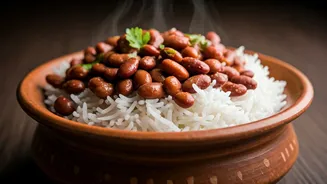
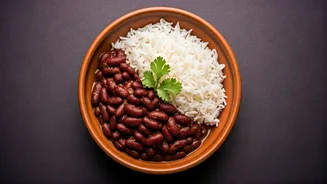
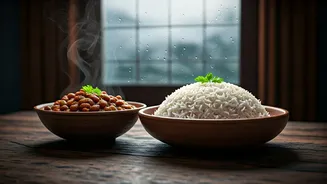
On the surface, the description is deceptively simple: kidney beans in a thick, spiced gravy, served with steamed rice. But to describe Rajma Chawal by its components is like describing a classic film by its running time. It misses the entire point. The
magic lies not in the individual parts, but in their perfect, soulful union. The fluffy, absorbent rice becomes a vessel for the rich, aromatic gravy. The kidney beans, cooked to a buttery softness, melt in your mouth, releasing the flavours of ginger, garlic, tomatoes, and a complex blend of spices that they have patiently absorbed over hours of slow cooking. It’s a partnership where each element elevates the other, creating something far greater than the sum of its parts.
The Sunday Lunch Ritual
For countless families, particularly in North India, Rajma Chawal is synonymous with Sundays. It’s the aroma that signals a day of rest, of family coming together, of lazy afternoon naps. The dish takes time; the beans need soaking, the gravy needs simmering. It's not a quick, weekday meal. This slow process is part of its charm, a ritual that builds anticipation throughout the morning. The sound of the pressure cooker’s whistle is a familiar, comforting soundtrack in many homes, promising that a hearty, satisfying meal is on its way. This deep-rooted association with family and leisure is what elevates Rajma Chawal from mere sustenance to a powerful vessel of nostalgia. Eating it is like revisiting a thousand happy, lazy Sundays.
A Global Bean's Indian Journey
Interestingly, the star of the show—the rajma or kidney bean—is not native to India. It's a traveller, originating in the Americas and journeying to Europe before being introduced to the subcontinent. But once here, it found its true calling. Punjabi cuisine, with its mastery of rich, tomato-based gravies and complex spice blends, adopted the humble bean and transformed it into a culinary icon. It’s a testament to the beautiful adaptability of Indian food culture. What was once foreign has been so thoroughly integrated that it now feels quintessentially Indian, a staple that defines comfort for generations.
The Art of the Perfect Plate
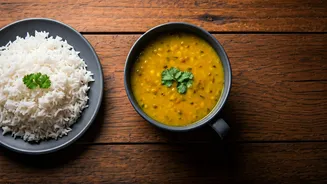
A plate of Rajma Chawal is a study in texture and flavour contrasts. While the core pairing is non-negotiable, the experience is often enhanced by a supporting cast of characters. A dollop of ghee melting into the hot rice adds an extra layer of richness. A side of crisp, thinly sliced onions, perhaps sprinkled with lemon juice and chaat masala, provides a sharp, crunchy counterpoint to the soft beans. A crunchy papad or a tangy pickle on the side adds another dimension of texture and taste. Some prefer a cooling raita to balance the warmth of the spices. Everyone has their own perfect version, a personalised ritual that makes the meal uniquely their own. This customisability is part of its widespread appeal—it’s a dish that invites you to make it perfect for you.
A Unifying Comfort
While its heartland is in the North, the love for Rajma Chawal has travelled far and wide. You'll find it on the menu at humble dhabas on the highway, in university canteens feeding hungry students, and in the kitchens of Indian homes across the world. It’s a dish that bridges gaps. It’s simple enough for a student to cook in a shared kitchen, yet flavourful enough to be the centrepiece of a family meal. In a country of immense culinary diversity, Rajma Chawal has achieved a rare status: a specific regional dish that has become a near-universal symbol of comfort. It’s the food you crave on a rainy day, when you’re feeling a little homesick, or when you simply need a meal that feels like a warm, reassuring hug.