



What Exactly Is a Solar Flare?
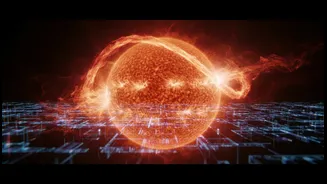
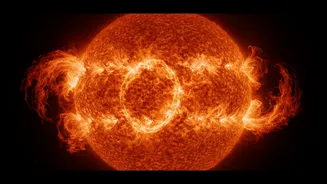
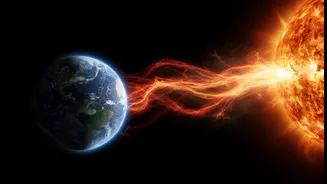
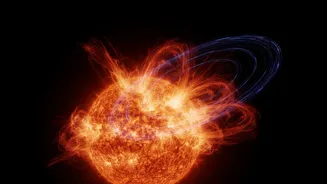
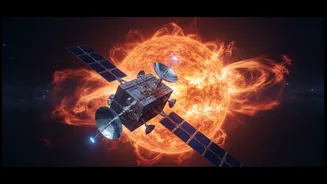
A solar flare is a gigantic explosion on the Sun's surface. It occurs when immense magnetic energy, often built up over sunspots, suddenly gets released. This process unleashes a massive burst of radiation across the electromagnetic spectrum, from radio
waves to X-rays. This radiation travels at the speed of light, meaning it can reach Earth in just over eight minutes. Scientists classify flares by their X-ray brightness into categories: A, B, C, M, and X. Much like the Richter scale for earthquakes, each letter represents a tenfold increase in energy. A and B-class flares are too weak to have a noticeable effect on Earth, but M-class and especially X-class flares can cause significant disruptions.
Flares vs. Coronal Mass Ejections (CMEs)
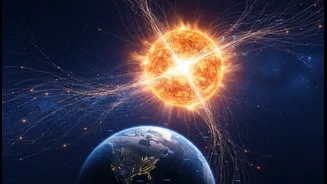
While a flare is a flash of radiation, it is sometimes accompanied by a more substantial event: a Coronal Mass Ejection (CME). A CME is a massive bubble of plasma and magnetic field that is flung from the Sun into space. Not all flares produce CMEs, and CMEs can occur without a flare. However, when a powerful flare and a CME happen together and are directed towards Earth, it presents the most significant threat. While the flare's radiation arrives in minutes, the CME is a slower-moving cloud, taking anywhere from one to three days to travel the 150 million kilometres to our planet. It is this cloud of charged particles that can cause the most damage to technology.
Real-World Consequences on Earth
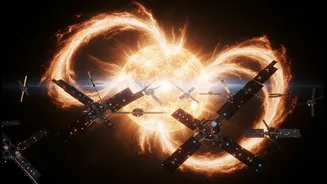
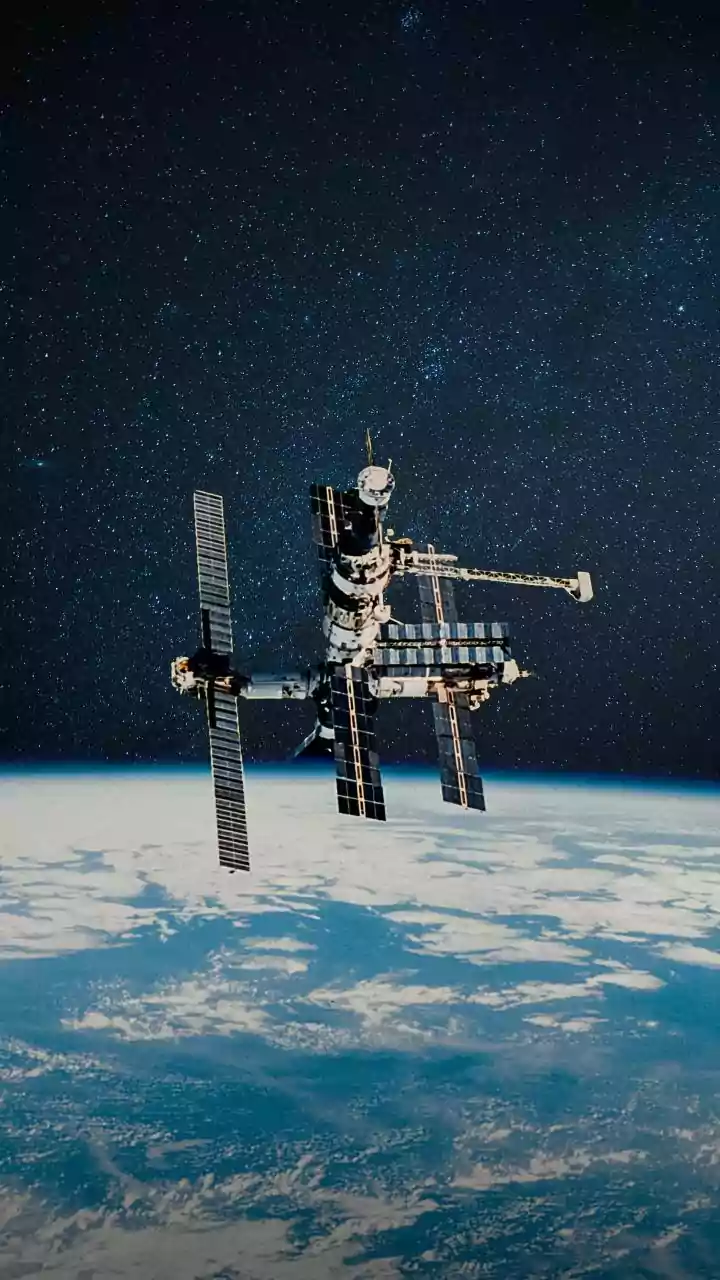
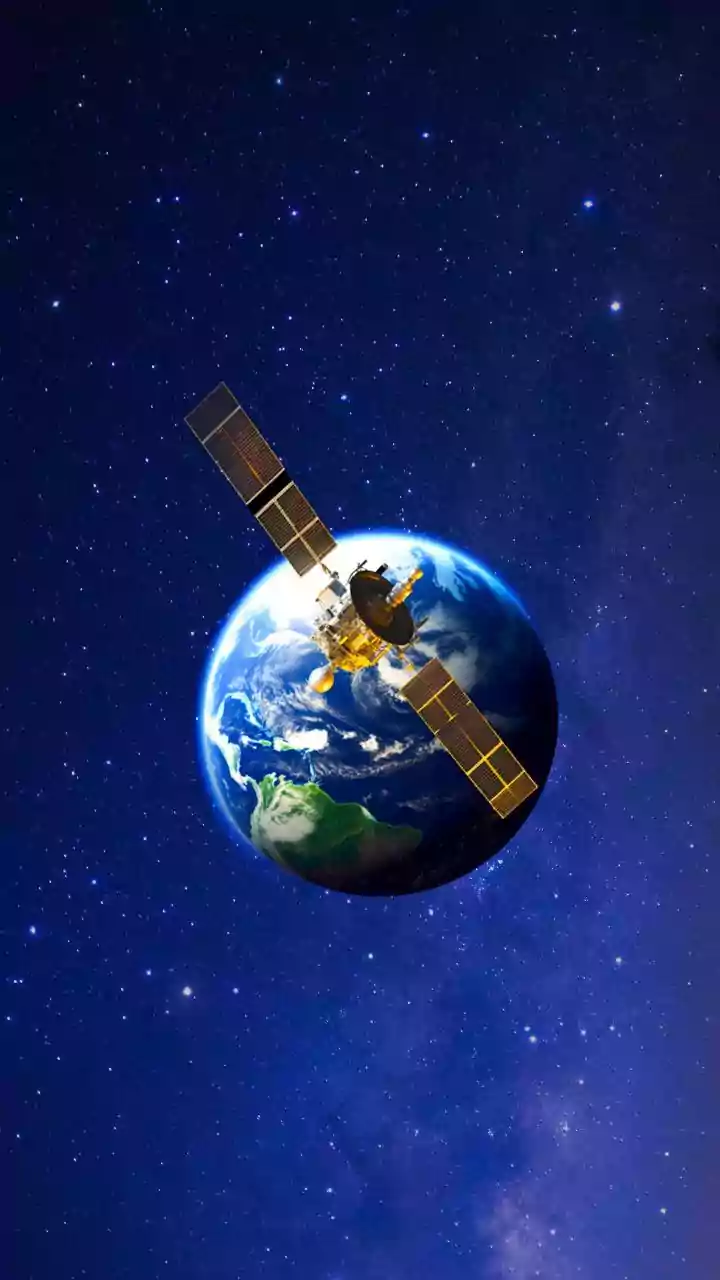
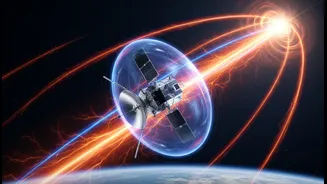
The impacts of a powerful solar event can be far-reaching. The intense X-rays from a flare can ionise Earth's upper atmosphere, causing blackouts of high-frequency radio communications on the sunlit side of the planet. This affects aviation and marine communication, as well as ham radio operators. When a CME arrives, it can interact with Earth's magnetic field, creating a geomagnetic storm. These storms can induce powerful electrical currents in long conductors on the ground, such as power lines and pipelines. In a worst-case scenario, this can overload transformers and cause widespread, long-lasting power grid failures, as famously happened in Quebec, Canada, in 1989. Satellites are also highly vulnerable, with their electronics susceptible to damage and their orbits altered by atmospheric drag. Even GPS signals can be disrupted, affecting everything from navigation to financial transactions.
The Science of Prediction
So, how do we see these events coming? Predicting space weather is a complex and evolving science. It is not about predicting a flare with the certainty of a weather forecast for rain, but rather about probabilities. Scientists and agencies, including India's Center of Excellence in Space Sciences India (CESSI) at IISER Kolkata, constantly monitor the Sun. They use a fleet of space-based and ground telescopes to watch sunspots and the complex magnetic fields that loop above them. The key is to identify when these magnetic field lines become so tangled and stressed that they are likely to snap and reconnect, releasing energy. By analysing this data, forecasters can issue warnings for potential flares. Once a CME is launched, scientists use coronagraphs to track its trajectory and speed, allowing them to predict if, and when, it will impact Earth.
The Rise of AI in Solar Forecasting
The next frontier in solar flare prediction is artificial intelligence. Researchers are now using AI and machine learning models to analyse vast amounts of solar data from observatories like NASA's Solar Dynamics Observatory. These models are trained to recognise subtle patterns in the Sun's magnetic fields that might precede a flare, patterns that a human analyst might miss. Projects like the NASA and IBM collaboration on the Surya AI model aim to significantly improve forecasting accuracy and provide longer lead times. In India, centres like the one at IISER Kolkata also utilise machine learning models to improve their flare forecasts. These tools don't offer perfect prediction yet, but they represent a major leap forward in our ability to anticipate space weather and protect our critical infrastructure.