





Bringing a piece of Mars back to Earth has been a dream for decades. But NASA's ambitious Mars Sample Return mission has hit a formidable obstacle: a budget spiraling out of control, forcing a major reconsideration of the entire project.
An Audacious, Multi-Part Plan
The Mars Sample
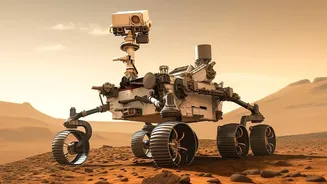
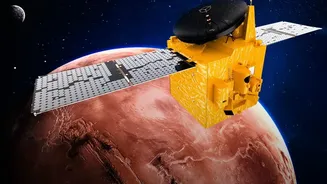
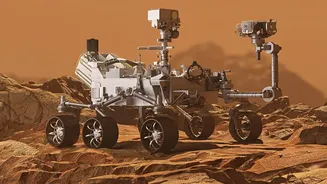
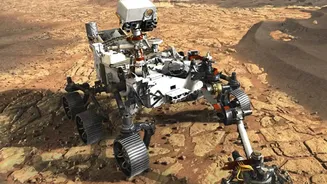
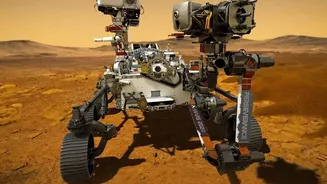
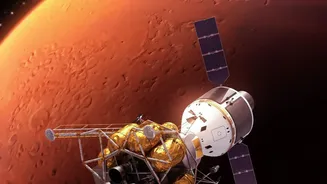
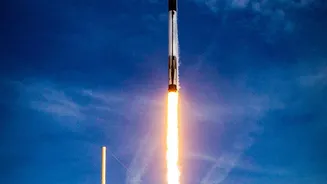
Return (MSR) mission is one of the most complex robotic endeavors ever conceived. The original plan, a joint effort with the European Space Agency (ESA), involves multiple spacecraft and several unprecedented feats of engineering. First, the Perseverance rover, which has been on Mars since 2021, collects and caches compelling rock and soil samples in titanium tubes. A future Sample Retrieval Lander would then touch down nearby, deploy a robotic arm or small helicopters to grab the tubes, and place them into a small rocket called the Mars Ascent Vehicle (MAV). That rocket would then perform the first-ever launch from the surface of another planet, carrying the sample container into Martian orbit. Finally, an ESA-built Earth Return Orbiter would rendezvous with and capture the container, flying it millions of miles back to Earth for analysis. The scientific prize is immense: the chance to study pristine Martian material in advanced labs, searching for signs of ancient life and clues to the planet's evolution.
A Staggering Price Tag
The mission's complexity has come with a shocking cost. An independent review board, established by NASA to evaluate the program, delivered a sobering report. It concluded that the mission was established with 'unrealistic budget and schedule expectations from the beginning'. The board found that the project's total cost was likely to reach between $8 billion and $11 billion, a massive increase from earlier estimates around $4 billion to $5.3 billion. The report stated there was a 'near zero' probability of meeting the planned 2028 launch date and that the existing architecture was not credible with the likely available funding. This budgetary crisis has forced NASA's hand, as continuing with the current plan would put 'extreme pressure' on the agency's entire science portfolio, potentially cannibalizing funds for other important missions.
Back to the Drawing Board
In response to the review board's findings and congressional pressure, NASA has officially hit pause on the original design. NASA Administrator Bill Nelson stated that an $11 billion budget is 'too expensive' and a potential 2040 return date is 'too far away'. As of November 2026, the agency has initiated a new effort called the Perseverance Sample Retrieval Architecture (PSRA). Announced in early November, this initiative will bring together a small team to develop a new, more efficient strategy. The goal is to find a faster, cheaper, and less complex way to get the samples home, with a kickoff planned for January 2027 and a final report due by winter 2027-2028. The agency is actively soliciting 'out-of-the-box' proposals from industry partners to see if the private sector can offer more innovative solutions.
The Geopolitical Clock is Ticking
While NASA re-evaluates its options, it isn't the only nation with its sights set on Martian soil. China is moving forward with its own ambitious sample return mission, named Tianwen-3. Current plans show China aiming to launch its multi-part mission around 2028 and return samples to Earth as early as 2031. This puts added pressure on NASA. What was once seen as a landmark scientific achievement could also become a 'Sputnik moment' if another nation succeeds first. The race to return the first samples from Mars has clear geopolitical implications, adding another layer of urgency to NASA's difficult decisions.
What's at Stake for Science
The reconsideration of the MSR mission creates a difficult crossroads for NASA and the global scientific community. The samples collected by Perseverance in Jezero Crater are considered a scientific treasure trove, holding the potential to answer fundamental questions about habitability and life beyond Earth. Canceling or significantly delaying their return would be a major blow to decades of strategic planning. However, proceeding with a mission that could consume a disproportionate share of the science budget for years would harm other vital areas of exploration, from missions to the outer planets to telescopes studying the cosmos. The challenge for NASA now is to find a path forward that preserves the core scientific goals of MSR without compromising the broader health of its planetary science program.