



The Unseen Barriers to Survival
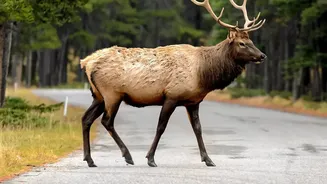
To an animal, a highway is not a pathway to progress; it's a terrifying, impassable barrier. India's rapidly expanding network of roads and railways, while connecting people, is severely fragmenting vital wildlife habitats. These linear structures slice
through forests and ancient migratory routes, creating islands of isolated animal populations. This fragmentation has multiple devastating effects: it leads to a surge in roadkills, prevents animals from finding mates which reduces genetic diversity, and blocks access to food and water. An animal's world is governed by instinct and learned behaviour passed down through generations. When a new road suddenly appears on a traditional path, it introduces a lethal element of unpredictability that wildlife is ill-equipped to handle, turning a routine journey into a life-or-death gamble.
Why Predictability is a Lifeline
Animals are creatures of habit because habit equals survival. They thrive on predictability—knowing where to find food, where to hide from predators, and which paths are safe to travel. When human infrastructure is built without considering this, it shatters their mental maps. A safe space is only useful if an animal can trust it will be there tomorrow. This is the core principle behind wildlife corridors and dedicated crossings. These structures are not just about providing a physical path; they are about creating a predictable, reliable route that animals can learn to use without fear. By consistently offering a safe alternative to a dangerous road or railway line, we allow wildlife to adapt their behaviour and incorporate these new, safe passages into their routines, ensuring their long-term survival.
Corridors of Hope: India’s Success Stories
Fortunately, India has become a global leader in mitigating the impacts of infrastructure on wildlife. A landmark example is the series of underpasses built on National Highway 44, which cuts through the critical Pench-Kanha tiger corridor. Long-term monitoring of these structures shows a dramatic increase in use by a wide range of species, including tigers, leopards, and their prey. These underpasses have proven that development does not have to come at the cost of conservation. Similarly, efforts are underway across the country to identify and protect vital elephant corridors, ensuring these gentle giants can continue their seasonal migrations. These projects serve as a powerful blueprint, demonstrating that with proactive planning and scientific input, we can build infrastructure that serves both people and wildlife.
Water Points: A Double-Edged Sword
While roads create linear barriers, artificial water points can create dangerous hotspots. In an effort to help wildlife during dry seasons, waterholes are often created within or near forest areas. While well-intentioned, poorly placed water sources can escalate human-wildlife conflict. For instance, a waterhole near a village or agricultural land can inadvertently lure animals like elephants out of the forest and into human-dominated areas, leading to crop-raiding and potentially dangerous encounters. Furthermore, a single, predictable water source can be exploited by predators, creating an ecological trap for prey species. The key is strategic placement. When waterholes are built deep inside forests, away from human settlements, they serve their intended purpose: providing a vital resource without increasing the risk of conflict.
The Path to Coexistence
Harmonising development and conservation requires a multi-pronged approach. The first and most important step is avoidance—rerouting projects away from sensitive ecosystems and corridors wherever possible. When that isn't feasible, mitigation becomes key. This includes building wildlife crossings like underpasses and overpasses, guided by scientific research on animal behaviour. Technology, such as camera traps and GIS mapping, plays a crucial role in identifying animal movement patterns to ensure these structures are built in the right places. Policy support from bodies like the National Tiger Conservation Authority is essential for enforcing these measures. Ultimately, fostering coexistence is a shared responsibility, involving planners, engineers, conservationists, and local communities working together to ensure that our path to progress does not lead to a dead end for India's magnificent wildlife.