





A beautiful fruit platter is more than a healthy snack; it’s a vibrant centrepiece that can elevate any gathering. Creating one that looks as amazing as it tastes is easier than you think. It all comes down to a few key principles.
Start With Your Canvas
Before you even think
about the fruit, consider the platter itself. A large, neutral-coloured platter—whether it's a simple white ceramic plate, a rustic wooden board, or a modern slate tile—allows the colours of the fruit to truly pop. The shape and size will dictate your arrangement. A round platter works well for circular, radiating designs, while a rectangular board is perfect for creating neat rows or flowing, S-shaped lines. Some experts even suggest using a slightly smaller platter to make the fruit appear more abundant and overflowing. If you plan on including dips like yogurt or chocolate, place those small bowls on the platter first. They will act as anchors for you to build the rest of your design around.
A Rainbow of Choices
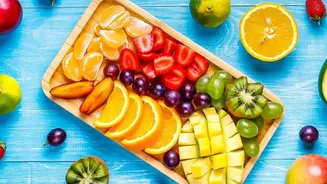
The key to a visually stunning platter is variety in colour and texture. Aim to create a rainbow on your board. Think in colour groups: reds (strawberries, raspberries, watermelon), oranges (cantaloupe, mango, citrus), yellows (pineapple), greens (kiwi, green grapes), and blues/purples (blueberries, blackberries, red grapes). Fresh, seasonal fruit will always provide the best flavour and vibrancy. Beyond colour, think about texture. Combine soft, juicy fruits like melon and berries with firmer, crisper options like grapes and apple slices. For an extra touch of sophistication, consider adding a more 'exotic' fruit like dragon fruit, star fruit, or fresh figs.
Cut for Visual Interest
How you cut the fruit is just as important as the selection. Uniformity can be pleasing, but a variety of shapes and sizes creates a more dynamic look. Don’t just cube everything. Try slicing kiwis into rounds, cantaloupe into thin wedges, and pineapple into spears or half-moons. Fanning out thin slices of strawberry or mango creates an elegant, layered effect. For a playful touch, especially for a party with children, use small cookie cutters to create fun shapes out of melon or pineapple slices. Keeping some grapes in small bunches on the stem adds height and a rustic feel. A few strategic cuts can transform simple fruit into a work of art.
The Art of Arrangement
Now for the fun part: assembly. The secret to a professional-looking platter is to make it look full and abundant, with minimal empty space. Start by placing your largest pieces of fruit first, such as melon wedges or pineapple spears, to create a basic structure. Then, begin to fill in the areas with medium-sized fruits. Arrange them in clusters or flowing 'rivers' rather than scattering them randomly. For instance, create a winding path of blueberries that snakes between the cantaloupe and the strawberries. Finally, use your smallest fruits, like individual raspberries or pomegranate seeds, to fill in any remaining gaps. Overlap slices slightly to create a sense of generosity and flow. Separating similar colours can also create a more striking visual contrast.
Finishing Touches and Freshness
A few final details can take your platter from great to gorgeous. Fresh mint leaves or even edible flowers tucked into the gaps add a pop of colour and a professional finish. If you're including fruits that brown quickly, like apples or bananas, it's best to slice them right before serving. A light brush of lemon juice can help slow down the oxidation process. To keep everything fresh, especially for an outdoor event, prepare the fruit as close to serving time as possible. If you must prep ahead, store cut fruits in separate airtight containers in the refrigerator. For a clever trick to keep a platter cool for hours, you can place your serving board on top of a larger tray filled with ice.