



A Groundbreaking Glimpse of Alien Atmospheres
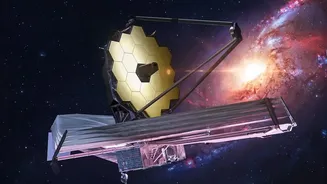
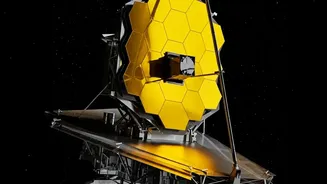
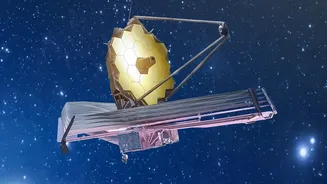
The James Webb Space Telescope has once again peered into the cosmos and sent back data that could reshape our understanding of planets outside our solar system. Recent analyses have revealed tantalizing hints of atmospheres, and even water vapor, around
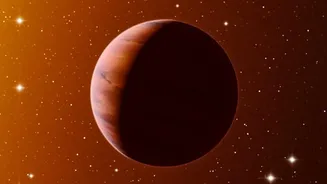
several rocky exoplanets. One prominent candidate in these studies is 55 Cancri e, a blistering-hot super-Earth located 41 light-years away. Another planet, GJ 486 b, also shows intriguing signs of water vapor, though scientists are carefully working to confirm the source. These aren't the Earth-like oases of science fiction, but their study is a critical step. Detecting any atmosphere around a rocky world is a huge achievement, suggesting these planets are not just inert balls of rock. It proves that even under extreme conditions, a planet can hold onto a gaseous envelope, a key ingredient for planetary evolution and, just maybe, habitability.
What Exactly Is a 'Super-Earth'?
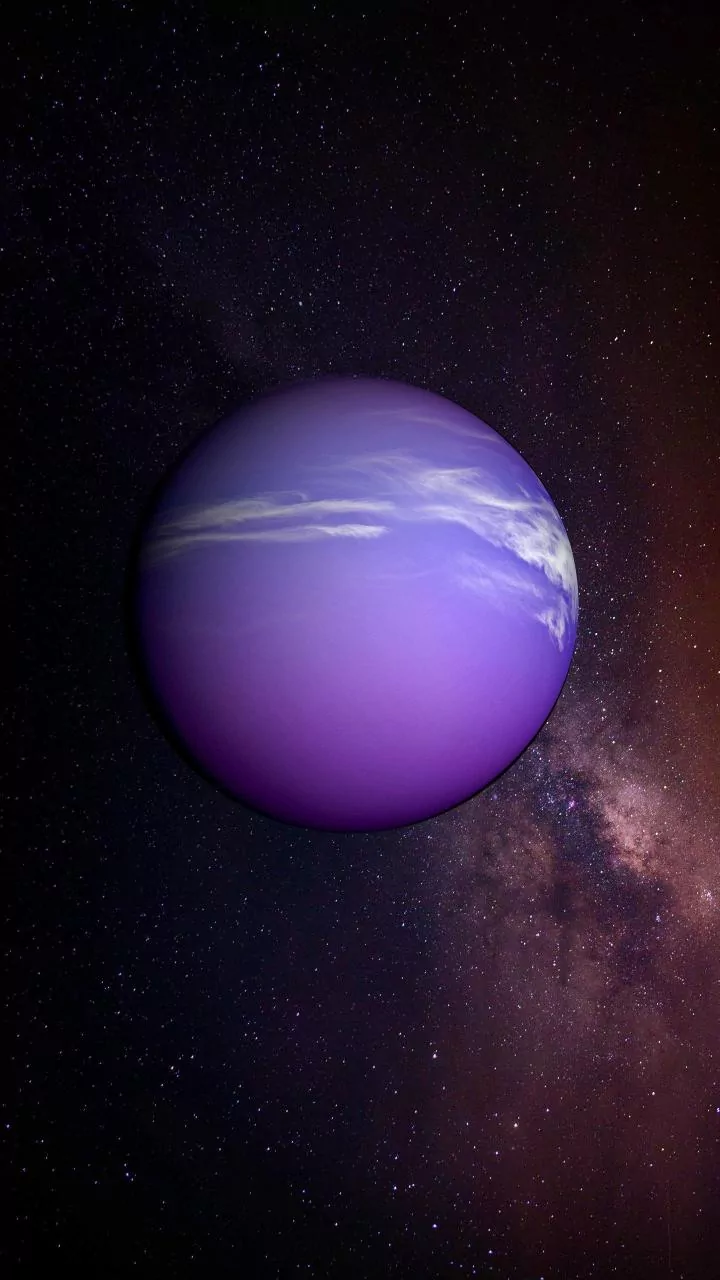
The term 'super-Earth' might conjure images of a bigger, better version of our own planet, but the reality is more complex. A super-Earth is a class of exoplanet with a mass higher than Earth's but substantially below that of our solar system's ice giants, Uranus and Neptune. These planets can be up to twice the size of Earth and ten times as massive. They are of particular interest to astronomers because our solar system doesn't have one, yet they appear to be common throughout the galaxy. 55 Cancri e, for instance, has a diameter nearly twice that of Earth and is significantly denser. These worlds can be rocky, like Earth or Mars, or they can be more like 'mini-Neptunes' with thick, gassy atmospheres. Understanding their composition is a major goal for JWST, as it helps scientists determine which of these common planets might be solid, rocky worlds capable of supporting an atmosphere.
How Webb 'Sees' Water From Light-Years Away
Detecting molecules across quadrillions of kilometres sounds impossible, but the JWST does it using a clever technique called transit spectroscopy. As an exoplanet passes in front of its host star from our perspective, a tiny fraction of the starlight filters through the planet's atmosphere, if it has one. The gases in that atmosphere absorb specific wavelengths, or colours, of light. By capturing a spectrum—a breakdown of this light—Webb's powerful infrared instruments can identify the missing slivers. Different molecules create unique absorption patterns, like a chemical fingerprint. Water, carbon dioxide, and methane all have distinct signatures. For a planet like 55 Cancri e, which is so hot its surface is likely a magma ocean, scientists believe the atmosphere they are detecting is a 'secondary' one, constantly being replenished by gases bubbling out of the molten rock. This makes the detection not just a sign of an atmosphere, but a clue into the planet's dynamic geology.
Hot Worlds and Cautious Optimism
It's crucial to temper expectations. The super-Earths currently showing these exciting signatures are not habitable. 55 Cancri e has a surface temperature estimated around 2,800 degrees Fahrenheit (about 1,540 Celsius), hot enough to melt rock. It orbits its star in a mere 18 hours. Similarly, GJ 486 b roasts at around 800 degrees Fahrenheit (430 Celsius). The water detected is in the form of vapor, or steam, not liquid oceans. Furthermore, scientists are exercising extreme caution. With GJ 486 b, for example, there's a possibility the water signature isn't from the planet at all, but from cool spots on its host star, a red dwarf. Distinguishing between a planetary atmosphere and stellar activity is a complex challenge that researchers are actively working to solve with further observations.
The Next Frontier in the Search for Life
So, if these planets are hellish lava worlds, why is this discovery so important? Because it's a proof of concept. Before now, finding a confirmed atmosphere on a rocky exoplanet was elusive. These findings show that rocky worlds can retain atmospheres even in extreme environments. This knowledge is invaluable for understanding how planets like Earth, Venus, and Mars may have evolved when they were young and covered in their own magma oceans. Each detection hones the techniques astronomers will use to study more temperate, Earth-sized planets in their stars' habitable zones—the region where liquid water could exist on a planet's surface. The Hubble telescope previously found water vapor on K2-18b, a super-Earth in the habitable zone, which JWST is also studying to learn more. These early findings from Webb are building the foundation for the ultimate search: identifying a truly habitable world and, perhaps one day, the chemical signs of life itself.