








Meet the Microscopic Cleanup Crew
In the complex world of environmental remediation, one of the most promising new tools comes in a very small package. Researchers have identified several types of bacteria, such as Geobacter and Shewanella, that have a remarkable ability to interact with
uranium. These microorganisms are not genetically engineered marvels but are often found naturally in soil and groundwater, including at contaminated sites. This field, known as bioremediation, seeks to use biological processes to clean up pollutants. Instead of costly and disruptive physical or chemical treatments, the idea is to stimulate these native bacterial populations to do the work, offering a potentially cheaper and more eco-friendly solution.
How Bacteria Neutralise a Toxin
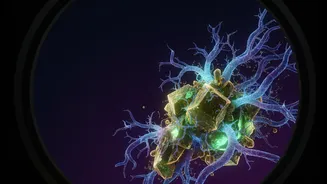
These bacteria don't 'eat' uranium in the conventional sense, nor do they make it less radioactive. Instead, they change its chemical state through their natural metabolic processes. The problem with uranium contamination is that one form, U(VI), is highly soluble in water. This allows it to travel easily through groundwater, spreading contamination far from its original source. Certain bacteria, however, can essentially 'breathe' metals. They transfer electrons to the soluble U(VI), converting it into the insoluble U(IV) form. This process, called bioreduction, effectively turns the mobile uranium into a solid mineral-like substance that precipitates out of the water. Once it's in a solid form, it is locked in place and no longer able to contaminate wider areas.
The Promise: Cleaner Water and Safer Sites
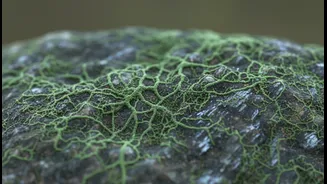
The potential gains from this technology are significant. The primary application is cleaning contaminated groundwater at former uranium mining sites or nuclear facilities. Traditional methods often involve pumping vast amounts of water to the surface for treatment, which is expensive and energy-intensive. Bioremediation could be done 'in situ'—that is, directly in the ground. By injecting simple 'food' sources like acetate or glycerol, scientists can encourage the growth of these uranium-fixing bacteria right where the contamination is. Research has shown that biofilms, or colonies of these bacteria, can immobilize substantial amounts of uranium, protecting the microbes themselves from its toxicity and enhancing their cleanup capacity. This could lead to more sustainable and less invasive long-term management of thousands of contaminated sites worldwide.
The Reality Check: What Still Needs Checking
While the science is promising, uranium-fixing bacteria are not yet a magic bullet. One of the biggest questions is long-term stability. The process of turning soluble uranium into a solid is reversible. If environmental conditions change—for instance, if oxygen is reintroduced into the groundwater—the solid uranium could re-oxidize and become mobile again. Researchers are actively studying how stable these immobilised uranium compounds are over decades and centuries. Furthermore, what works in a controlled lab setting doesn't always scale up to the complex and messy reality of a real-world contaminated site. Delivering the necessary nutrients to the bacteria deep underground can be challenging, and other minerals in the soil can interfere with the process.
The Path Forward in Research
Scientific investigation is now focused on overcoming these hurdles. Researchers are working to understand the precise genetic and molecular mechanisms that allow bacteria to perform these transformations, hoping to make the process more efficient. Recent studies have explored using specific materials, like red soil, to create more stable anaerobic environments for the bacteria to thrive in. Other work has shown that even at very low uranium concentrations, below what was previously thought possible for mineral formation, bacterial surfaces can act as nucleation sites, pulling uranium out of the water. Scientists are also looking into hybrid systems, combining microbial action with other geological barriers to ensure the uranium stays put for good. The goal is to move from promising laboratory results to reliable, predictable, and cost-effective field applications.