





The Illusion of a Perfect Summary
At their core, large language models (LLMs) like those powering popular chatbots are designed to predict the next most likely word in a sentence. They are pattern-recognition machines, not factual databases. This makes them excellent at generating fluent,
human-sounding text, which is why their summaries can seem so natural and helpful. However, their goal is to create a plausible version of the requested text, not to perform a precise, verbatim extraction. Paraphrasing is a natural outcome of this process. The AI rewrites an idea in what it determines to be a simpler or more concise way. The problem is that this process is prone to errors known as 'hallucinations', where the model confidently states false information. It might merge details from different sources, invent facts, or simply misinterpret the source material.
When 'Good Enough' Becomes Dangerous
In many everyday situations, a slightly imperfect paraphrase is harmless. But when dealing with high-stakes information, the consequences can be severe. Consider legal contracts, new government regulations, or a company's updated terms of service. An AI might summarise a change to a policy, but in doing so, omit a critical exception or alter the specific legal language, changing its meaning entirely. Research has shown that AI-generated summaries frequently miss crucial context, nuance, and contradictions present in the source document. This is particularly dangerous in fields like medicine, where an AI summarising a patient's history might omit a key symptom or incorrectly state a dosage, leading to potentially harmful outcomes. The risk is amplified because of our own biases; we may trust a plausible-sounding summary and not check the original, leading to a false sense of security.
Why This Happens: Attention and Training
The tendency to paraphrase inaccurately stems from the AI's architecture and training data. Studies indicate that as models process longer documents, their 'attention' can drift. They begin to reference their own previously generated text more than the original source document, which can lead to compounding errors. Furthermore, the models are trained on vast amounts of internet text, which is filled with opinions, paraphrased content, and inaccuracies. They learn to be helpful and conversational, and in some cases, are even rewarded for providing a confident answer rather than admitting uncertainty. This creates a system that defaults to generating a plausible-sounding response, even if it has to fabricate details to do so. It is not being deceptive; the model has no intent, only statistical probabilities.
How to Protect Yourself from Inaccurate Summaries
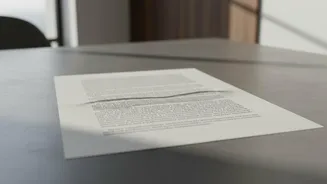
While AI is a powerful tool for productivity, it should be treated as a starting point, not a final authority. For any critical information, the best defence is simple: verify. Always go back to the original source document to confirm the details. If you're asking an AI to analyse a document, prompt it to provide direct quotes for any changes or key points, and then find those quotes in the source yourself. Treat AI summaries as a guide to help you navigate a document more quickly, not as a replacement for reading it. It's advisable not to use public AI tools for confidential or sensitive documents, as the data you input could be used for future training or become exposed. For legally binding documents or professional advice, the output of an AI is no substitute for human expertise.