

The Search for Serenity
The vibrant chaos of Navratri is a cherished part of the festivities, but within the home, many are now seeking a sanctuary of calm for their daily rituals. This move towards minimalism is more than just an aesthetic choice; it's a reflection of a broader
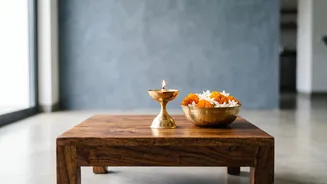
desire for intentionality and peace in our lives. Instead of overwhelming the senses, an uncluttered puja corner allows the focus to remain purely on devotion. The goal is to create a space that feels spiritually uplifting and mentally calming, where prayer and meditation can happen without distraction. This approach swaps dense, heavy decorations for clean lines, thoughtful arrangements, and a sense of breathing room, making the sacred corner a true retreat.
Declutter with Purpose
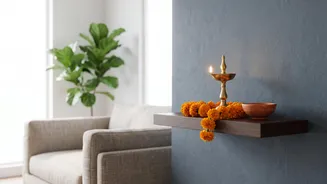
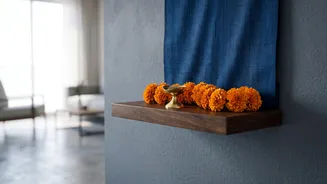
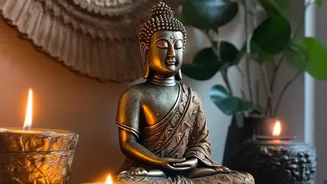
Achieving this serene look begins with decluttering. The first step is to clean the space thoroughly and remove any items that are not essential for the puja itself. Instead of numerous idols or pictures, choose a single, central murti or image of the Goddess to be the focal point. Organise prayer essentials like incense, diyas, and flowers in neat containers or a dedicated drawer to keep surfaces clear. Using floating shelves or wall-mounted units can create a sense of lightness and make a small space feel more open and organised. The idea is not about emptiness, but about giving each sacred object its own space to be honoured.
A Soothing Colour Palette
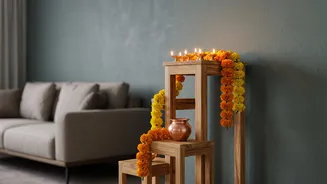
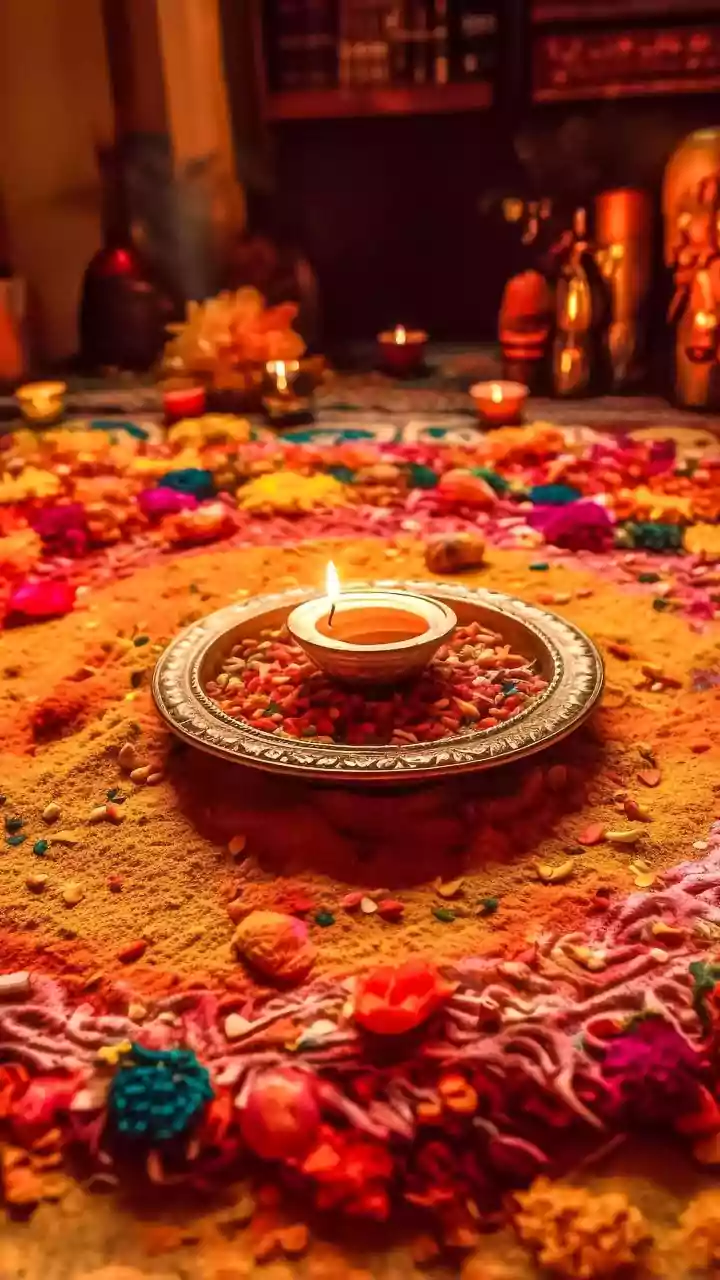
Colour plays a vital role in setting a tranquil mood. While Navratri is associated with a spectrum of bright colours, a minimalist approach favours a more subdued and cohesive palette. Light and calming colours like white, beige, light yellow, or soft pastels are excellent choices for the backdrop. You can introduce the traditional colours of Navratri in a more controlled manner. For example, use a single vibrant fabric as a backdrop, or incorporate colour through fresh flowers and the prasad offered each day. Using earthy tones found in materials like terracotta, brass, and wood also contributes to a grounded and peaceful atmosphere.
Embrace Natural Materials and Textures
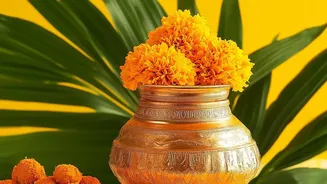
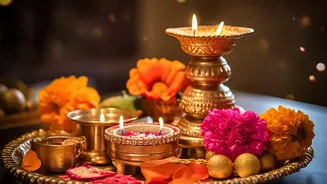
Texture and natural materials add warmth and depth to a minimalist space, preventing it from feeling cold or stark. Traditional elements like brass or copper lamps, bells, and plates are essential, as their warm glow creates a peaceful aura. Incorporate natural fabrics like cotton and silk for runners or as a cloth for the deity. Fresh flowers, such as marigolds, jasmine, or lotuses, are a must, not just for their beauty and fragrance but for the life they bring to the space. Using earthen elements like a clay garba pot for Ghatasthapana and simple terracotta diyas reinforces the connection to nature and tradition in a simple, elegant way.
Lighting for a Divine Glow
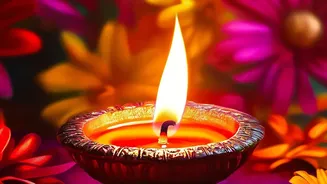
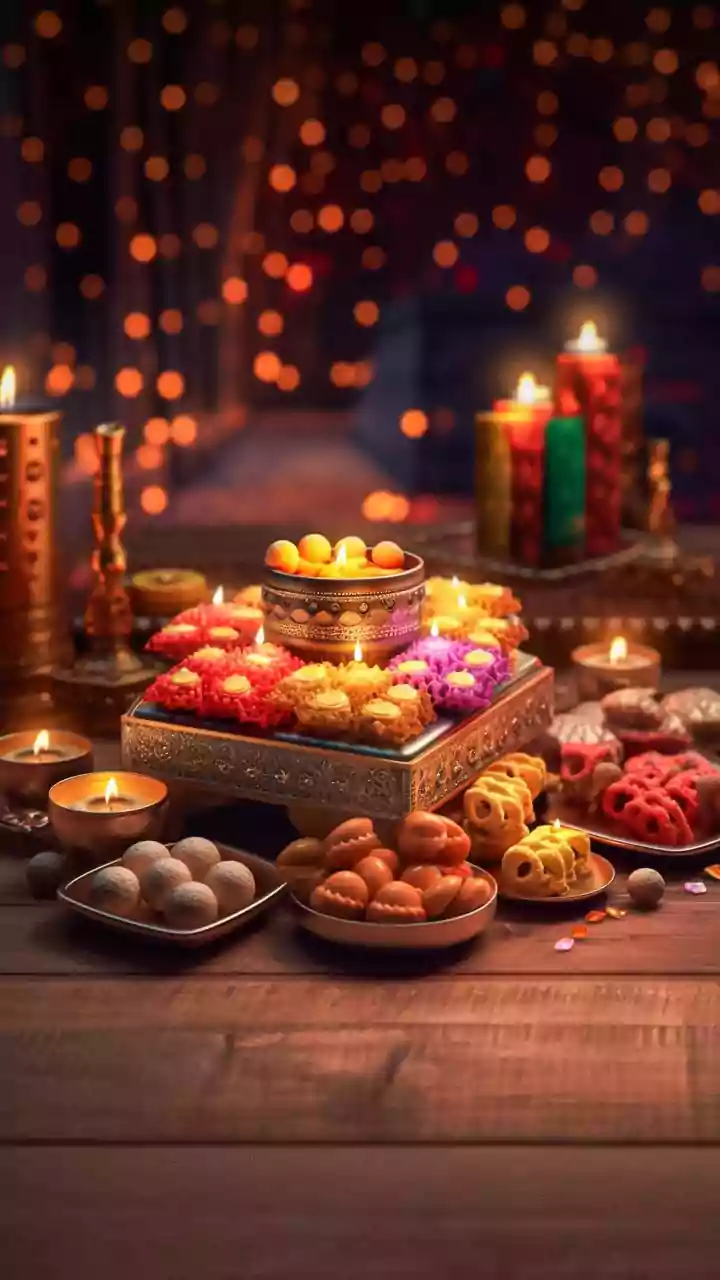
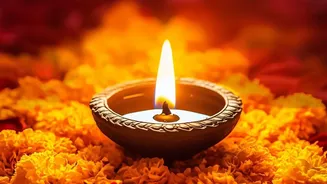
Lighting is perhaps the most critical element in creating a divine and serene atmosphere. Instead of harsh overhead lighting, opt for soft, layered light. The gentle flame of a traditional brass diya or an Akhand Jyoti should be the primary light source, creating a meditative focal point. This can be supplemented with the soft glow of fairy lights, perhaps arranged behind a sheer fabric backdrop or placed in glass jars. The interplay of light and shadow from intricate jaali partitions or candle holders can also add a layer of beautiful complexity without creating clutter. The aim is a warm, inviting glow that feels both festive and profoundly peaceful.