





What Is This So-Called Secret?
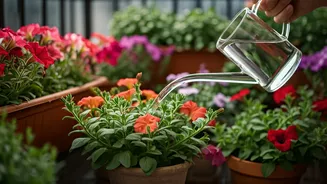
The “genius secret” circulating among urban gardeners is a powerful liquid fertilizer often called compost tea. Don't worry, you don't have to drink it—your plants do! It’s not a new invention but rather a time-tested organic gardening technique that’s
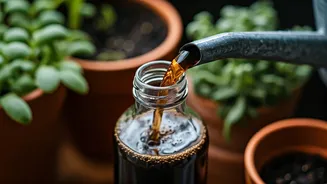
perfect for the unique challenges of container gardening. In essence, you are steeping compost in water to extract its valuable nutrients and, more importantly, its beneficial microorganisms. The resulting liquid is a dark, earthy-smelling “tea” that acts as both a fertilizer and a soil conditioner, delivering a potent boost directly to your plants' roots.
Why Your Balcony Plants Need It
Plants in pots are living in a closed system. Unlike a garden bed, they can't extend their roots to find new sources of nutrition. Over time, watering flushes nutrients out of the potting mix, leaving plants hungry and weak. Synthetic fertilizers can offer a quick fix, but they don’t improve soil structure or health. Compost tea does both. It provides readily available nutrients for quick absorption, leading to greener leaves and more abundant flowers or fruit. Critically, it also introduces a rich community of bacteria, fungi, and protozoa. These microscopic allies help break down organic matter, protect plants from diseases, and improve the soil’s ability to retain water and nutrients.
The Easiest Method: The Compost Soak
Forget complicated brewing setups. For balcony gardeners, the simplest method is a non-aerated compost soak. It’s low-effort, requires minimal equipment, and is less likely to produce strong odours in a small space.
Here’s what you’ll need:
- A 20-litre bucket with a lid
- An old pillowcase or a fine-mesh bag
- High-quality, finished compost (dark, crumbly, and earthy-smelling)
- De-chlorinated water (let tap water sit out for 24 hours)
Instructions:
1. Fill the pillowcase or mesh bag with about four to five cups of compost. Tie it off securely.
2. Place the compost “tea bag” into the bucket.
3. Fill the bucket with de-chlorinated water, leaving a few inches of space at the top.
4. Put the lid on loosely and let the mixture steep for 24 to 48 hours. Stir it once or twice a day.
5. After steeping, remove the bag. The remaining liquid is your concentrated compost tea. The solid compost can be used as a top dressing for your pots.
How to Use Your Liquid Gold
Your homemade compost tea is concentrated and needs to be diluted before use to avoid overwhelming your plants. A good rule of thumb is to dilute it with water until it has the colour of weak tea. A typical ratio is one part compost tea to ten parts water (1:10).
There are two main ways to apply it:
1. **Soil Drench:** This is the most effective method. Simply use the diluted tea to water your plants as you normally would. This delivers the nutrients and microbes directly to the root zone where they are needed most.
2. **Foliar Spray:** You can also strain the diluted tea through a cheesecloth and add it to a spray bottle. Misting the leaves can help deter some pests and diseases, and some nutrients can be absorbed directly through the foliage. Apply in the early morning or evening to avoid leaf burn.
Apply every two to four weeks during the active growing season for best results.
Pro Tips for Balcony Brewers
To ensure your brewing is a success, keep a few things in mind. First, the quality of your compost is paramount. Use a mature, rich compost; avoid anything that smells sour or contains undecomposed kitchen scraps. If you don't make your own, you can buy high-quality bagged compost from a nursery. Second, manage expectations on smell. A good batch should smell earthy and pleasant. If it smells foul or sour, the wrong kind of bacteria has taken over, and it's best to discard it and start over. Finally, this technique works wonders for heavy feeders like tomatoes, peppers, roses, and most annual flowers. It gives them the consistent nutrition they crave to thrive in pots.