




Anatomy of a Viral Soup
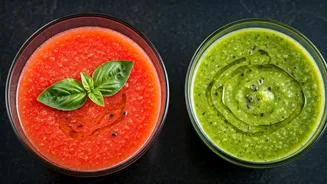
At its core, gazpacho is a classic Spanish cold soup, traditionally made from raw, blended vegetables like tomatoes, cucumbers, and peppers. It’s a staple in Andalusia, designed to be a refreshing liquid salad on scorching days. But the internet, in its endless
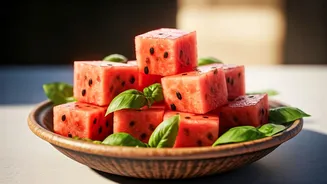
quest for innovation, has given this classic a fruity makeover. Enter watermelon gazpacho, which swaps the savoury tomato base for the sweet, hydrating flesh of summer’s favourite fruit. The result is a soup that’s lighter, sweeter, and incredibly refreshing. It retains the ‘no-cook’ appeal of the original, making it a perfect quick fix for hot weather, but its flavour profile is distinctly modern and playful.
The Indian Twist: Enter Sabja
What elevates this version from a simple fruit soup to a viral sensation in India is the addition of a familiar hero: basil seeds, or sabja. For generations, these tiny black seeds have been our go-to cooling agent. Soaked in water, they plump up, developing a gelatinous coating around a crunchy centre. We know them from falooda, rooh afza, and countless summer sharbats. Their inclusion in gazpacho is a stroke of genius. Texturally, they add a delightful pop, similar to chia seeds but with a unique heritage. Nutritionally, they are packed with fibre and are famed in Ayurveda for their body-cooling properties. This fusion isn't just about mixing ingredients; it’s about blending culinary philosophies—the rustic simplicity of Spanish peasant food with the timeless wisdom of Indian home remedies.
Why It’s Crashing Your Reels
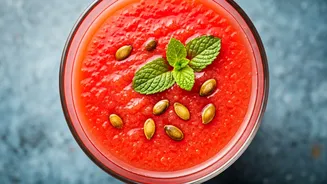
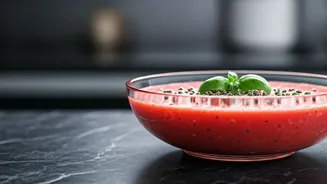
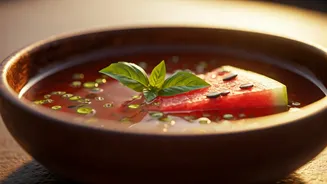
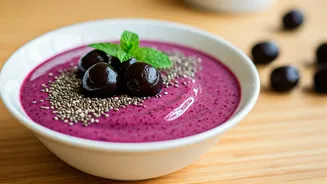
A trend this big doesn’t happen by accident. Several factors make this dish the perfect storm for social media. First, it’s ridiculously photogenic. The brilliant pink of the watermelon against the speckled black sabja seeds creates a high-contrast, visually stunning dish that practically begs to be photographed. Second, it aligns perfectly with modern wellness culture. It's hydrating, vegan, gluten-free, and low in calories but high in nutrients. It’s the kind of guilt-free indulgence people love to share. Third, it's incredibly easy to make. In a world of complex, multi-step recipes, a 'blend and serve' dish is a welcome relief, especially when it’s too hot to turn on the stove. This low barrier to entry means anyone can try it, film it, and share their creation, fueling the trend's exponential growth.
Make It At Home: A Simple Guide
Ready to try it yourself? The beauty of this recipe is its flexibility. Here’s a basic template to get you started.
Ingredients:
- 4 cups cubed, seedless watermelon
- 1 tablespoon basil seeds (sabja), soaked in 1/4 cup water for 15 minutes
- Juice of 1 lime
- A handful of fresh mint leaves
- 1/4 cucumber, peeled and roughly chopped (optional, for a fresher taste)
- A pinch of black salt (kala namak) or chaat masala
Instructions:
1. Prep the Sabja: Start by soaking the basil seeds in water. They will plump up in about 10-15 minutes. This is a crucial first step.
2. Blend: In a high-speed blender, combine the cubed watermelon, lime juice, fresh mint leaves, and optional cucumber. Blend until completely smooth. Avoid over-blending, as you don't want to heat the mixture.
3. Combine and Chill: Pour the blended watermelon mixture into a large jug or bowl. Stir in the plumped basil seeds. Add a pinch of black salt or chaat masala to enhance the flavour and give it a desi kick.
4. Serve: Chill the gazpacho in the refrigerator for at least 30 minutes before serving. Pour into small bowls or glasses. Garnish with a fresh mint sprig and a few extra soaked basil seeds on top.