





The Charter's Simple Rule
The entire formal process for selecting the leader of the United Nations boils down to a single sentence in the UN Charter. Article 97 states that the Secretary-General “shall be appointed by the General Assembly upon the recommendation of the Security
Council”. This two-stage process gives the Security Council the power to choose and recommend a single candidate, and the 193-member General Assembly the power to formally appoint them. While it sounds straightforward, this division of labour sets the stage for a complex interplay between global politics and procedural norms.
The Decisive Role of the Security Council
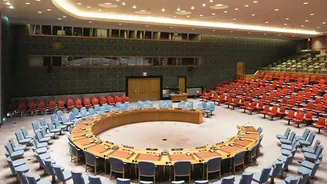
In practice, the real power lies with the 15-member Security Council, and more specifically, its five permanent members (P5): China, France, Russia, the United Kingdom, and the United States. To be recommended, a candidate needs at least nine affirmative votes from the council, but critically, they must not receive a 'no' vote—a veto—from any of the P5 nations. This veto power means that any candidate who is unacceptable to even one of these major powers cannot advance. Consequently, the selection is often a search for a candidate who is, at a minimum, not opposed by any of the P5, making their support paramount.
Informal Polls and Coloured Ballots
To gauge support and identify potential vetoes without holding a formal vote, the Security Council conducts a series of informal secret ballots known as 'straw polls'. In these polls, members vote to 'encourage', 'discourage', or offer 'no opinion' on each candidate. As the process narrows, the council uses a system of colour-coded ballots: the five permanent members use one colour (typically red) and the ten elected members use another (white). This immediately reveals whether a 'discourage' vote comes from a P5 member, signalling a potential veto and often leading candidates to withdraw. The latest polls in the 2026 race have shown all leading candidates facing at least one discouraging vote from a P5 member, leading to a deadlock.
A Push for Greater Transparency
Historically, the selection process was almost entirely shrouded in secrecy. However, starting with the 2016 selection, a significant push from the General Assembly and civil society groups led to reforms. The process now begins with a joint letter from the presidents of the General Assembly and Security Council inviting member states to nominate candidates. These candidates then submit vision statements and participate in open, webcast interactive dialogues, or 'town halls', where they answer questions from member states and the public. While these changes have made the process more open, they have not altered the fundamental power of the Security Council and its P5 members to make the final recommendation.
The Unwritten Rules of the Game
Beyond the formal charter and procedures, several unwritten conventions influence the choice. The most significant is the principle of regional rotation, which holds that the post should rotate between different geographical regions of the world. With the current race underway in late 2026, there is a strong expectation that it is the turn of Latin America and the Caribbean to lead the UN. There is also a powerful campaign to appoint the first-ever female Secretary-General, as all nine leaders to date have been men. These informal factors add another layer of political calculation to the horse-trading among member states.
The Final Appointment
Once the Security Council agrees on a single candidate, it passes a resolution recommending them to the General Assembly. The Assembly then holds a vote to formally appoint the candidate. While the Assembly can technically reject the nominee, this has never happened. Typically, the General Assembly approves the recommendation by acclamation, meaning a unanimous vote without a formal ballot, solidifying the choice. The selected individual is then sworn in, ready to take office on January 1 for a five-year term, which can be renewed once.