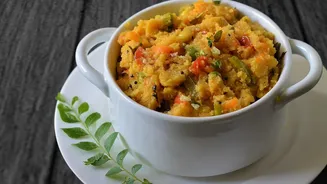

The Basic Blueprint: Sada Khichdi
At its heart, khichdi is a simple, nourishing porridge of rice and lentils, most commonly moong dal. Often seasoned with just turmeric and salt, this is the version many Indians associate with comfort and recovery. It’s gentle on the stomach, easy to digest,
and one of the first solid foods given to babies. Cooked to a soft, mushy consistency and often finished with a dollop of ghee, this elemental khichdi is the foundation upon which countless regional variations are built, proving that simplicity is sometimes the ultimate sophistication.
Bengal’s Festive Bhog'er Khichuri
In West Bengal, khichdi sheds its humble reputation and becomes a festive centrepiece known as Bhog'er Khichuri. This version is a rich, aromatic preparation traditionally offered to deities during Durga Puja. It’s made with fragrant Gobindobhog rice and roasted moong dal, which imparts a nutty aroma. The khichuri is cooked with a medley of vegetables like potatoes, cauliflower, and green peas, and seasoned with ginger and a blend of spices. Often cooked in mustard oil, it has a distinctively pungent and slightly sweet flavour, a far cry from the simple porridges made elsewhere.
Gujarat’s Flavourful Vaghareli Khichdi
Vaghareli Khichdi is a staple in many Gujarati households, a perfect example of how tempering can elevate a simple dish. The name comes from 'vaghar', the Gujarati word for tempering spices in hot oil or ghee. This khichdi often includes a mix of lentils like toor and moong dal, cooked with rice and sometimes vegetables such as potatoes, peas, and carrots. The magic happens in the tempering, where ingredients like mustard seeds, cumin seeds, cloves, and curry leaves are sizzled in ghee and poured over the cooked rice and lentils, infusing the entire dish with a complex aroma and flavour. It is traditionally served with a side of kadhi, a tangy yogurt-based curry.
Rajasthan’s Rustic Bajra Khichdi
Reflecting the arid landscape of the state, Rajasthani khichdi often swaps rice for heartier local grains. The most famous is Bajra Khichdi, made from pearl millet. Especially popular in winter, bajra is considered a 'warming' grain. The millet is cooked with moong dal until soft but still slightly chewy, resulting in a rustic and earthy dish. The preparation is simple, often without many spices, allowing the nutty flavour of the bajra to shine through. It’s almost always served with a generous amount of ghee, which adds richness and flavour, alongside accompaniments like yogurt or garlic chutney.
South India’s Savoury Ven Pongal
In Tamil Nadu and other parts of South India, khichdi finds its cousin in Ven Pongal, a beloved breakfast dish and temple offering. While it uses the familiar base of rice and moong dal, the flavour profile is distinctly southern. Cooked to a creamy, porridge-like consistency, Ven Pongal is seasoned with black pepper, ginger, cumin, and curry leaves. The final tempering in ghee often includes fried cashews, which add a delightful crunch. Though some argue it is a distinct dish, its composition of rice and lentils cooked together firmly places it within the diverse khichdi family.
Bihar’s Traditional Saturday Meal
In Bihar, khichdi is so integral to the food culture that it's a weekend tradition in many homes, especially on Saturdays. Often made with rice, a mix of lentils, and seasonal vegetables, it's a wholesome one-pot meal. What makes the Bihari experience unique are the accompaniments. A standard khichdi platter here is incomplete without its 'chaar yaar' or four friends: ghee, curd, pickles, and papad. It is also commonly served with chokha, a rustic mash of roasted and spiced vegetables like potato, brinjal, or tomato.
Maharashtra's Unique Vaalachi Khichdi
From Maharashtra comes Vaalachi Khichdi, a flavourful and spicy version that uses sprouted field beans (vaal) instead of lentils. Also known as Dalimbi Bhaat, this dish is particularly popular in the CKP community. The sprouted beans are cooked with rice, onions, and a fragrant paste of garlic, ginger, green chillies, and coriander. What makes it truly distinct is the addition of coconut milk, which gives the khichdi a creamy texture, and Goda Masala, a special Maharashtrian spice blend, which lends it a unique, aromatic flavour.